
Have you ever wondered what the difference is between indica and sativa marijuana? Although these terms are used every day in the cannabis world, their real meaning may surprise you. Today on the Cannactiva blog, we explain the differences between indica vs. sativa, and how they shape the effects of each strain. Stick with us to the end — this is one of the most fascinating topics in the cannabis world! And if you are looking for top-quality flower, explore our guide to the best CBD buds selected by Cannactiva.
The 3 key ideas
- Indica marijuana relaxes the body (the classic "couch lock"). Sativa stimulates the mind (cerebral high or "head high"). Hybrids combine both.
- Traditionally, indica and sativa differ in origin (Himalaya vs equatorial regions), morphology (short and compact vs tall and airy) and effects (body relaxation vs mental stimulation).
- Indicas tend to show Kush, sweet and earthy aromas (profiles rich in myrcene, linalool, caryophyllene and humulene). Sativas lean towards citrus and Haze aromas (limonene, pinene, terpinolene and ocimene).
Indica vs sativa: main differences
Origin, aroma and effect: these are the three key dimensions that mark the difference between indica and sativa marijuana varieties.
Feature | Indica 🛋️ | Sativa 🧠 |
|---|---|---|
Origin | Himalaya, Hindu Kush | Equatorial regions (Thailand, Mexico, Colombia) |
Aroma | Earthy, sweet, Kush, spicy | Citrus, Haze, diesel, pine |
Effect | Body relaxation, sedation ("couch lock" effect) | Mental stimulation, energy, creativity (cerebral or "head high") |
Which effect are you after? Choose by effect
- I want relaxation, rest or calm → indica strains
- I want focus, energy or creativity → sativa strains
- I want a balance between body and mind → hybrid strains
What do Indica and Sativa mean?
For some people, perfection would be that when you buy cannabis flowers you could pick the strain based on the precise effect you want to experience when you consume it. In cannabis shops, the labels indica and sativa are used to classify cannabis varieties depending on whether they deliver distinct physical or mental effects.
"Indica" strains are associated with body effects: relaxation, pain and anxiety relief, and help falling asleep, while "sativa" strains produce more cerebral effects of euphoria and creativity.
The indica/sativa classification is useful as a guide, but it is not perfect: the massive hybridisation of today's cannabis and the influence of minor cannabinoids (CBN, CBG, CBC, CBDV, THCV) and flavonoids present in each batch make it hard to predict the real effect from genetics alone.
What are the differences between indica and sativa?
Different origins and morphological features
Indica strains
Theory says that "indica" strains originated in the mountainous regions of the Himalaya, specifically in the Hindu Kush region (see the article on Hindu Kush). The physical features attributed to indica strains are shorter plants with broad leaves, dense foliage and dense, compact buds (although, as we now know, that's not really the case: there is cannabis with very different features that still produces relaxing effects).
The indica effect is a deep sensation of relaxation and calm. Picture yourself lying on the sofa filled with calm and inner peace.
INDICA-type strains | ||
|---|---|---|
Strain (genetics) | CBD | Aroma |
25% | 🌲 Sweet and earthy, resinous Kush base | |
23% | 🧀 Soft cheese with fruity and floral nuances | |
25% | 🍦 Sweet biscuit with an earthy base | |
22% | 🦍 Earthy and deep, wood and diesel |
Sativa strains
On the other hand, "sativa" plants are native to equatorial regions such as Mexico, Thailand and Colombia. Physically, they have been described as taller plants with narrower leaves and longer, airier buds (it's now known this isn't strictly true either: there is cannabis with different morphology that still produces cerebral effects).
The sativa effect is more mental, euphoric and stimulating. Like a spark that lights up your creativity and wakes up your motivation.
SATIVA-type strains | ||
|---|---|---|
Strain (genetics) | CBD | Aroma |
27% | 🍋 Citrus, floral and tropical, Haze base | |
26% | 🍪 Tropical and floral, resin-packed buds | |
22% | 🍋 Vibrant citrus, freshly-cut lemon with noble wood | |
23% | ⛽ Intense diesel, very resinous |
Finally there are the so-called hybrid strains, which represent the perfect harmony between the relaxing and motivating effects, showing mixed qualities of both classes.
HYBRID strains | ||
|---|---|---|
Strain (genetics) | CBD | Aroma |
25% | 🍒 Fruity, strawberry candy, citrus and resinous base | |
24% | 🍇 Wild berries, resin and earthy nuances | |
26% | 🫐 Sweet, fruity and resinous, Haze base | |
23% | 🍓 Ripe strawberry and fresh watermelon, dense and resinous | |
23% | 🌺 Sweet, fruity and tropical: peach, mango and pineapple | |
17% | 🌺 Sweet and tropical passion fruit with a Kush base | |
28% | 🥭 Tropical mango with a sweet, resinous base |
Today we know that the real origin of cannabis is in Central Asia, probably in the foothills of the Himalaya, supported by biological and biochemical evidence. The different physical features described in antiquity by region are linked to the different crosses that had been happening in each area where the plant was cultivated.
Today, breeding has produced such hybridisation in cannabis that classifying a plant as indica or sativa based on the appearance of the buds — their shape, colour or size — is almost impossible. For that reason, the "indica" and "sativa" classification refers to the effects of cannabis, not to clearly distinct physical traits.
Chemical differences between Indica and Sativa: cannabinoids and terpenes
Where there is some basis and consensus to classify cannabis as "indica" or "sativa" is by its chemical composition. The effects of cannabis vary depending on the specific terpene and cannabinoid profile of each strain.
Indica strains tend to have moderate levels of CBD and sedative terpenes, with myrcene standing out (along with others like linalool). These compounds deliver a relaxing body effect that may be useful for easing stress, sleeplessness and body discomfort.
In terms of tetrahydrocannabinol (THC) content, the main psychoactive compound in cannabis, indicas typically have lower THC levels — or levels more balanced with CBD — which makes them less psychoactive and without intense euphoric or mental effects.
On the other hand, sativa strains tend to have higher THC levels and stimulating terpenes, such as limonene, pinene and terpinolene. This contributes to their more euphoric cerebral effects and can be useful to spark creativity, lift mood and fight fatigue. That said, sativas with very high THC levels can cause intense psychoactive effects and may not suit every user.
Myrcene is the most abundant terpene in cannabis and appears in almost every marijuana strain. What determines whether the effect is indica or sativa is its proportion in each variety and the combination with other terpenes and minor cannabinoids present in the plant — such as CBN, CBG, CBC, CBDV or THCV — which also shape the final result.
Are CBD strains Indica or Sativa?
The amount of cannabidiol (CBD) does not determine whether a strain is indica or sativa. Although CBD is popularly associated with relaxing effects, the traditional classification comes from the terpene and cannabinoid profile, not from cannabidiol. We would like to quote the neurologist and renowned cannabis researcher Ethan Russo when he says (1):
“The alleged sedation of the so-called indica cannabis strains is mistakenly attributed to CBD content, but CBD is actually stimulating at low and moderate doses! The sedation in the most common Cannabis varieties is largely due to myrcene content, a terpene with a narcotic-like sedative effect. By contrast, a high limonene content will lift mood, while the presence of alpha-pinene may reduce the short-term memory impairment induced by THC.”
This shows that not only cannabinoids matter — terpenes also play a major, if not decisive, role in the "sativa" or "indica" effects of cannabis. This interaction between the plant's components is known as the entourage effect.
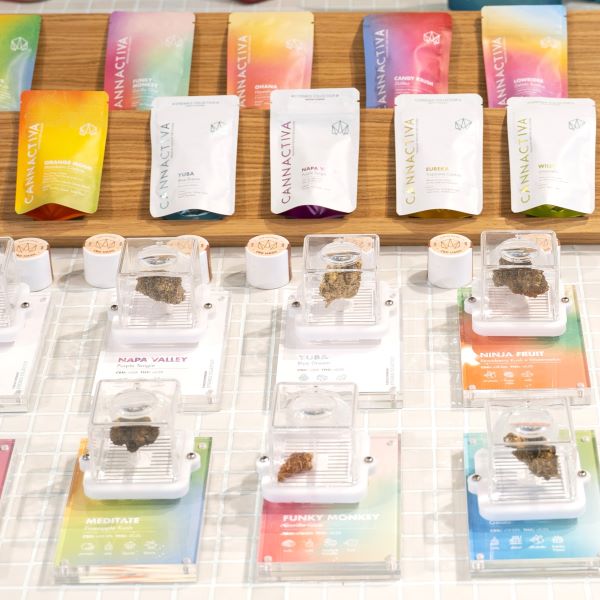
Aromas: can you tell indica from sativa by the smell?
While cannabinoids have no smell at all, terpenes are the aromatic compounds behind the flavour of our favourite strains.
The terpene compounds responsible for the indica effect usually show sweet, citrus, fruity and floral profiles, while sativa-effect strains tend to produce more earthy, woody, resinous and diesel-leaning terpenes... But only in theory. Not even the most trained cannabis connoisseurs would be able to tell an indica from a sativa just by aroma.
Quoting the smell scientist Avery Gilbert, each fragrance has its own intensity curve, and the mix of terpenes creates a distinct olfactory perception that cannot easily be attributed to the smell of each terpene on its own. That makes smell an unreliable technique to guess whether a bud is indica or sativa.
Uses of Indica and Sativa: when to choose each one?
Indica strains are usually chosen when you're looking for body relaxation, rest or calm, thanks to their terpene profile rich in myrcene and linalool. Sativa strains are the typical choice for moments of mental activation, focus or creativity, with profiles of limonene, pinene or terpinolene. Hybrids combine both profiles and are the most versatile option for beginners or for anyone after something all-rounder.
If you want to go deeper, we have dedicated guides on CBD for insomnia and CBD for anxiety.
Two species: Cannabis sativa and Cannabis indica
The names “indica” and “sativa” also have a connection with the history of cannabis and its botanical naming. Carl Linnaeus was the first to describe the cannabis plant cultivated in Europe, in 1753, which he named Cannabis sativa (sativa means “cultivated”) (2). It had a sparsely branched, lanky appearance and great height, and was used for grain and fibre production.
A few years later, in 1785, the botanist Jean-Baptiste Lamarck described what he believed was another species of the Cannabis genus, using plants from India, which he named Cannabis indica (2). These were more compact, rounded and bore very developed inflorescences (large buds).
We now know that the main difference between the cannabis plants described by Linnaeus and Lamarck back then comes down to the different uses given to the plant: for fibre, or for obtaining flowers and resin. Later, it was determined that botanically there is only one cannabis species: Cannabis sativa, which would include both plants. This classification is still in use today, although there is some controversy, and some taxonomists include subspecies such as sativa, indica, ruderalis and afghanica (or kafiristanica).
The takeaway is that “indica” or “sativa” refer only to the effects of the plant, not to the botanical name.
Flowering time and growing methods
Indica strains, originally from cold mountainous regions, have shorter flowering times and are the best fit for indoor growing. Sativa strains, adapted to tropical and warm climates, have developed greater height and narrower leaves that protect them against mould and pests; they are the best strains for outdoor growing. As with everything in modern cannabis, breeding has blurred these traditional boundaries.
What about Cannabis ruderalis?
In addition to indica and sativa, there is a third recognised species of cannabis: Cannabis ruderalis, native to Eastern Europe and Russia. It is low in THC and barely psychoactive, but its most interesting feature is autoflowering: it doesn't depend on the photoperiod to bloom but on the age of the plant. That's why it's commonly used in modern hybridisations to create autoflowering strains, very popular among beginner growers thanks to their hardiness and short cycles.

Discussion of the differences between indica and sativa
If you came to this post looking for the differences between indica and sativa, you've already found them. But it wouldn't be honest of us to stop here, because in reality there are many nuances around the differences between “indica” and “sativa”.
Indica and sativa: only to confuse us
Most experts agree that the terms "indica" and "sativa" as cannabis classifications are imprecise or outdated. The look of the plant doesn't predict its effect: neither the shape of the leaves, nor the size, nor whether the bud is compact or airy tell you anything about what it actually contains.
To paraphrase cannabis researcher Ethan Russo, one of the world's leading cannabis experts (1):
“There are Cannabis strains with different biochemical compositions, but the commonly applied distinction between sativa and indica is completely wrong and a useless exercise. Today, there is no way to determine the biochemical content of a cannabis plant from its height, branching or leaf morphology. The degree of hybridisation is so wide that only a biochemical analysis can reveal with certainty what the plant truly contains.”
The indica vs sativa debate is how to predict these effects: neither the appearance of the plant nor its genetics give reliable answers. Experts openly question it:
The chemistry of the cannabis plant is so sophisticated and complex that science has barely begun to understand it: it is an incredible plant that, no matter how much it's researched, we probably will never fully grasp. The massive hybridisation today makes it hard to predict the real effect from the terpene profile or cannabinoids alone — even within the same strain there can be distinct phenotypes depending on the growing environment and genetic selection (phenotypes are the physical traits the plant expresses, including its colour, shape, cannabinoid and terpenoid content).
Perhaps in the old days it was terminology that was part of the underground lexicon and made sense. But today, the diversity of cannabis is such that there are countless combinations of phenotypes.
Classifying by chemotype: a solution?
The alternative to the “indica” and “sativa” labels that scientists propose is a classification based on the chemotype of marijuana. That is, running a cannabinoid analysis and terpene analysis of each variety, so consumers can see the precise list of phytochemicals present in a strain.
Obviously, this is only proposed by scientists, because nothing would be more confusing for a customer than receiving a list of unreadable chemical names. It would only make sense for studies on medicinal cannabis.
Cannabis has multiple chemotypes distinguished by their chemical composition, such as a predominance of THC, CBD or a mix of both. Strains with high levels of THCV, cannabidivarin (CBDV), cannabichromene (CBC) and cannabigerol (CBG) have also been selectively bred. There are also varieties that produce almost no cannabinoids. If we add terpenes to the equation, the diversity multiplies.
That said, even knowing the chemotype wouldn't be a perfect solution, because studies on the entourage effect of cannabis, the synergy between the cannabis compounds, are still in their infancy.
Terpenes (the chemicals responsible for the aromas of cannabis) can produce effects in the body even at tiny doses, and they can also interact with cannabinoids and modify their effect.
All these reactions are not deeply studied, so a list of the five or six dominant terpenes and cannabinoids in a strain isn't 100% conclusive about the effects of that cannabis either.
Is it possible to predict the effect of cannabis on a person?
As if the biology of the plant itself weren't already intricate and complex enough, our endocannabinoid system finally enters the picture. It is scientifically proven that each person reacts differently to the same dose of cannabinoids.
There are also factors that can shape your personal experience with cannabis, such as your predisposition to relaxation, the fact that an aroma evokes different sensations in each person, or the setting in which it is consumed. This sociological view of the effects of cannabis was already captured by Howard Becker in his book about cannabis from the last century (1953).
Frequently asked questions about indica and sativa
Is indica or sativa better?
Neither is better: it depends on the effect you're looking for. Indica strains are associated with sensations of relaxation, rest and calm, and are usually chosen for late afternoon and evening. Sativa strains are associated with sensations of energy, focus and creativity, and are usually chosen for morning to midday. Hybrids combine both profiles and are the most versatile choice if you don't have a preference.
How can you tell whether a flower is indica or sativa?
By eye it's nearly impossible given the massive hybridisation of today's cannabis. The reliable way is to check the lab analysis of each batch: if myrcene and linalool dominate, it's an indica profile; if limonene, pinene and terpinolene dominate, it's a sativa profile. At Cannactiva we publish the downloadable CoA on every product.
Is CBD indica or sativa?
CBD is a cannabinoid present in both. There are no "indica" strains because they contain more CBD: the sedation attributed to indicas comes from the terpene myrcene, not from CBD. In fact, CBD at low to moderate doses is more stimulating than sedative; relaxation depends on the terpene profile, not on the type of plant.
Which marijuana strain should I choose if I'm a beginner?
Start with a balanced hybrid such as Candy Krush (Zkittlez CBD), with sweet aromas and an all-rounder effect. If you want to compare profiles without committing to a single strain, the Maxi-Pack 9 CBD Flowers includes nine strains with clearly different profiles (indica, sativa and hybrid) so you can discover your own.
In conclusion...
In short, for some people it would be ideal and very convenient to walk into a cannabis dispensary and ask for “something to lift my mood” or “a good relaxing strain for this weekend”, but reality paints a far richer and more complex picture. In the end, personal experience and individual preferences are a key, decisive factor in the sensations we live through.
Our recommendation is that, if you're looking for a specific effect from a strain, you take into account the information provided by the cannabis shop, but also your own sensations, the setting and your personal predisposition. And ultimately, dare to experiment!
If you want to compare several strains with indica, sativa and hybrid profiles in a single delivery, the Maxi-Pack 9 CBD Flowers is the most practical way: nine premium flowers handpicked for quality. Discover more in our CBD Flower Packs section!
Scientific references
- Russo EB. Taming THC: potential cannabis synergy and phytocannabinoid-terpenoid entourage effects. Br J Pharmacol. 2011 Aug;163(7):1344-64.
- McPartland JM. Cannabis Systematics at the Levels of Family, Genus, and Species. Cannabis Cannabinoid Res. 2018 Oct 17;3(1):203-212.
- Hazekamp A, Tejkalová K, Papadimitriou S. Cannabis: From Cultivar to Chemovar II. Cannabis Cannabinoid Res. 2016 Jan 1;1(1):202-215.
- Piomelli D, Russo EB. The Cannabis sativa Versus Cannabis indica Debate: An Interview with Ethan Russo, MD. Cannabis Cannabinoid Res. 2016 Jan 1;1(1):44-46.
- Russo EB. The Case for the Entourage Effect and Conventional Breeding of Clinical Cannabis. Front Plant Sci. 2019 Jan 9;9:1969.
- Watts G. Science commentary: Cannabis confusions. BMJ. 2006 Jan 21;332(7534):175.


