
Cannabinoid therapy has been gaining popularity in recent years within the veterinary field. Today both humans and animals can benefit from these treatments and, at the right doses, they are safe and effective for use in our pets.
Please remember that this is informational content, intended to bring the information available in scientific studies closer to the general public. You should consult a veterinarian before giving cannabis CBD oil to your pet or companion animal.
Many families look for information on CBD for dogs to help with conditions such as joint pain (osteoarthritis), epilepsy or dermatitis, as well as situational anxiety. In addition, every year around late June, veterinary services receive more enquiries about the use of CBD oils for dogs that experience fireworks with intense fear. The Bonfire Night–style fireworks, summer thunderstorms, car journeys, house moves or separation anxiety are situational triggers in which many families wonder whether CBD might help to calm their pet.
The essentials about CBD for dogs
- CBD is considered relatively safe and well tolerated in dogs, while THC is genuinely toxic for them.
- The dose depends on the dog's weight, the condition and the concentration of the CBD oil: studied ranges go from 0.5 to 4.12 mg/kg. Always start with the lowest dose and observe for 14 days before any adjustment.
- Before giving CBD drops to your dog, consult a veterinarian, especially if the animal is on medication.
Possible uses of CBD in dogs and cats: what the studies say
Various scientific publications have reported on cannabidiol (CBD) for treating canines, but what benefits does it have and what is the right amount to use in our dogs? The answer is more complex than it seems: the dose depends greatly on the condition being treated, and we explain why below.
The dog's endocannabinoid system
As you will find across the Cannactiva blog, cannabinoids act according to their ability to bind to the receptors (affinity) of the endocannabinoid system. The endocannabinoid system includes the cannabinoid receptors CB1 and CB2, as well as other sites in the body where cannabinoids act (cellular targets).
In dogs, CB1 receptors have been found distributed across the central nervous system (CNS) and the peripheral nervous system (PNS) in a similar way to other mammalian species (1). They are also present in the salivary glands, the lining of the gut (intestinal epithelium), the roots of the hair (hair follicles) and the skin (2; 3; 4; 5).
The location of these receptors is critical, since the effect of cannabinoids will be observed depending on where they are. In addition, it has been suggested that when certain pathologies (illnesses or medical conditions) occur, the expression of these receptors and their counterparts, the endocannabinoids, may increase (6).
What effects does CBD have in dogs? (epilepsy, pain, dermatitis)
For example, in dogs with epilepsy (7), atopic dermatitis (2; 8), degenerative myelopathy (a progressive neurological condition typical of certain breeds, 9) and osteoarthritis (10), an increase in the expression of cannabinoid receptors and endocannabinoids has been demonstrated, very likely due to the body's compensation as it tries to limit the progression of the disease.
This provides the basis for treating dogs with cannabis, and especially with cannabidiol, since there are more receptors to which cannabinoids such as CBD can bind to exert their therapeutic effect.
THC in dogs: why it is toxic
On the other hand, cannabinoid therapy should not be overused either: dogs naturally have a higher number of CB1 receptors in the brainstem and the cerebellum (11), which can be problematic with cannabinoids such as Δ-9-tetrahydrocannabinol (THC), which is fully selective for CB1 and may trigger toxic and undesirable effects (12).
THC is highly toxic in dogs and CBD is safer to use.
Is CBD safe for dogs?
The cannabidiol (CBD) molecule is a phytocannabinoid that reduces the activation of CB1 and CB2 receptors (it antagonises their agonists) (13) and has therefore been shown to be relatively safe and well tolerated for therapeutic use in dogs (14; 15; 16; 17). So, is CBD safer than THC in dogs? Yes, because CBD only causes adverse effects at very high doses, and these are reversible once treatment is stopped.
Adverse effects and contraindications of CBD in dogs
Possible adverse effects of CBD in dogs include vomiting (18), diarrhoea, lethargy, increased sensitivity to touch (hyperaesthesia) and hypothermia (17), and clinical diagnostic tests have shown elevations of liver enzymes (18). Fortunately, all the unwanted symptoms described have been reversible after stopping treatment with cannabidiol.
Pharmacokinetic studies show that the adverse effects of cannabidiol in dogs are seen at very high doses, with pure CBD doses ranging from 12 mg/kg up to 62 mg/kg. Based on these studies, the equivalent toxic dose of cannabidiol would be 0.4 to 2 mL of 3% CBD oil per kg of the dog's weight.
The low toxicity of CBD in dogs is due to the fact that less than 19% of the ingested CBD reaches the bloodstream after oral administration in dogs (bioavailability <19%, ref 19), which means that only that fraction of the total ingested will be available in the blood to reach its site of action.
How long does CBD take to work in a dog?
CBD reaches its highest concentration in the bloodstream (peak plasma levels) about 1.5 hours after being given in an oil-based vehicle, as is the case for most hemp-derived products (14). However, other research groups studying purified cannabidiol have reported that the peak ranges between 2 and 5 hours, depending on the dose and on whether it is an acute (single-dose) or chronic course of treatment (20).
How long does CBD stay in a dog's body?
Cannabidiol is finally cleared from the dog's body mostly via faecal excretion (biliary excretion) and to a lesser extent via the kidneys (21), and CBD can still be found in the bloodstream up to one week after stopping chronic treatment (17).
Can I give CBD to my dog if it is on medication?
Studies on the possible interactions between cannabidiol and medicines show that the body processes or metabolises CBD in the liver, which can be a concern if it is given alongside other drugs that are metabolised in the same way (22).
Interestingly, no changes have been observed in the plasma levels of common veterinary anti-epileptic drugs (phenobarbital and potassium bromide), both metabolised in the liver, when given together with CBD to dogs with epilepsy (16). This does not, however, rule out the need for careful observation when combining cannabidiol with other drugs of similar metabolism, which is why veterinary guidance is recommended.
How to give CBD to a dog: dose, drops and frequency
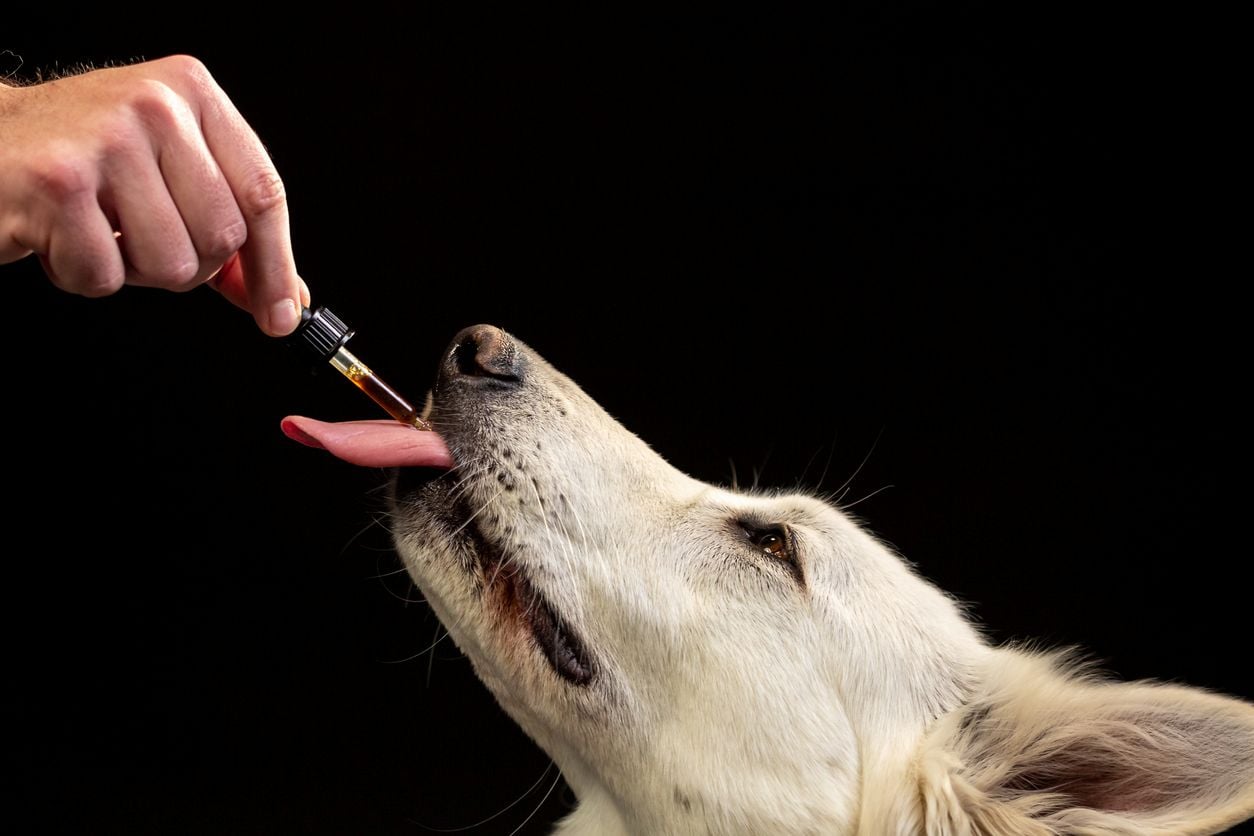
CBD has a very wide dosing range in dogs to treat different conditions, and studies on cannabidiol dosing in dogs suggest a stepwise approach. That is, starting with low doses and gradually adjusting the dose based on the effect (23), increasing if necessary after 14 days of treatment to get a clearer picture of the response.
On CBD dosing for dogs, it is best to start with low initial doses and observe for 14 days before increasing gradually, if necessary.
Why start with low doses? The biphasic effect
It is recommended to treat our pets with low doses of CBD, because some research groups suggest that the clinical studies carried out so far have tested cannabinoid effects in dogs using doses 5 to 40 times higher than the doses used effectively in clinical veterinary practice (23). In addition, opposite effects depending on the dose used (antagonistic responses) of phytocannabinoids have been reported (24): in other words, low doses can have one effect and high doses the opposite (biphasic effect), a phenomenon described in recent years.
Effective CBD dose in dogs by condition
CBD doses in CBD oil (also known as hemp oil or hemp oil) that have achieved the desired therapeutic effect in dogs vary depending on the condition.
For pain management in dogs with osteoarthritis, 2 mg/kg has been shown to provide analgesia and improvements in mobility (25); another study reported 0.3 – 4.12 mg/kg (effect-adjusted dose) as an effective dose to relieve pain and even reduce or discontinue the use of gabapentin (15). In commercial preparations this would equate to 0.01 mL/kg – 0.137 mL/kg of 3% cannabidiol oil.
Condition | Studied dose (pure CBD) | Study (ref) |
|---|---|---|
Osteoarthritis: analgesia and mobility | 2 mg/kg twice a day | Gamble et al. (25) |
Osteoarthritis: adjusted range | 0.3 – 4.12 mg/kg | Kogan et al. (15) |
Epileptic seizures | 2.5 mg/kg | McGrath et al. (26) |
Seizures: lower range | 0.51 – 1.25 mg/kg | Mogi & Fukuyama (27) |
General effective range | 0.5 – 4.12 mg/kg | MacCallum & Russo (28) |
Toxicity reported (DO NOT give) | 12 – 62 mg/kg (~ 0.4 – 2 mL/kg of 3% oil) | refs 17, 18 |
Informational, NON-PRESCRIPTIVE content. The optimal dose for each dog must be titrated individually and monitored by a veterinarian.
On the other hand, 2.5 mg/kg has reduced the frequency of epileptic seizures in one study (26), while in another, 0.51 mg/kg – 1.25 mg/kg reduced the frequency and intensity of epileptic seizures (27) in dogs. Different hemp oil products were used across the studies reporting these doses.
How many drops of CBD oil to give a dog?
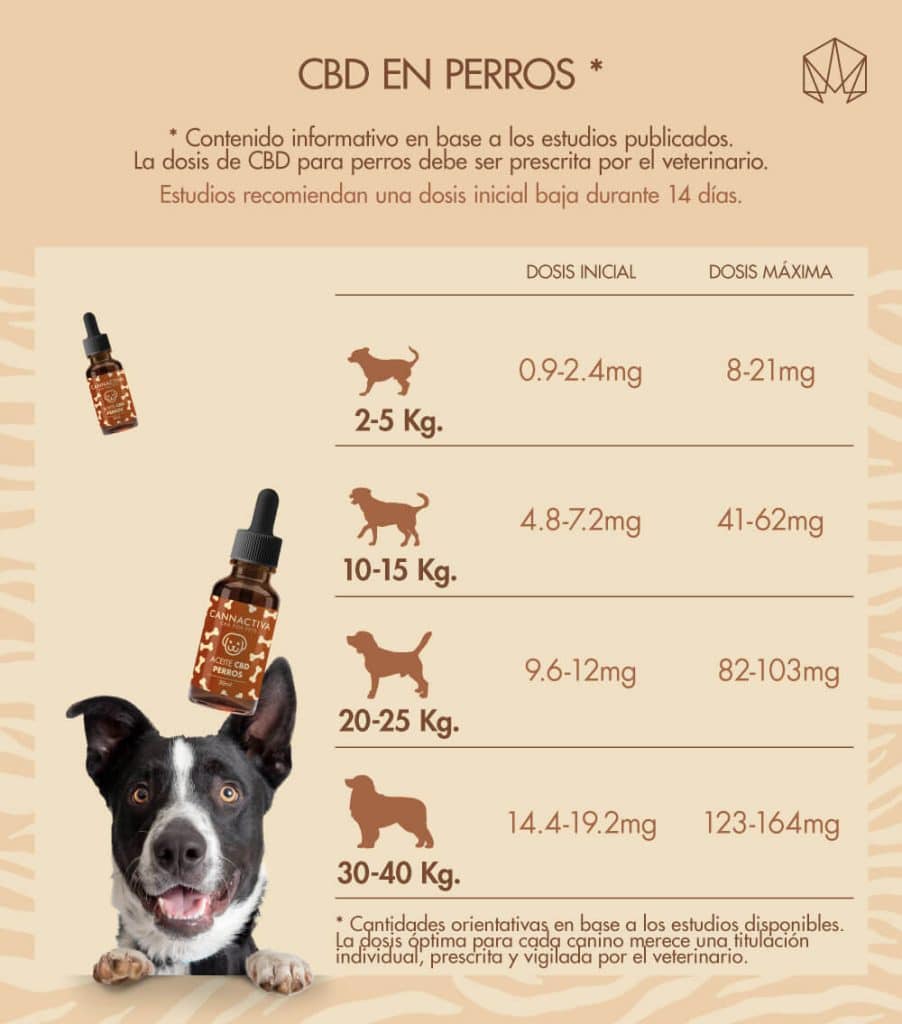
In general, the effective dose can range from 0.5 mg/kg to 4.12 mg/kg of pure CBD. This range is so wide that the dose must be determined individually, starting with a small dose to also avoid undesirable side effects (28). It is also worth remembering to start with minimum doses and wait around 14 days before any increase.
CBD treatment in dogs: always consult your vet
The optimal dose for each dog deserves a gradual adjustment up to the lowest effective dose, fully individualised (titration), carefully monitored by the veterinarian. Likewise, although there are no studies on long-term CBD use, the vet should constantly evaluate the safety and effectiveness of treatment in each dog.
The aim of this article is to inform and to offer scientific information in language that is easy for the general public to understand. Its content can complement, but never replace, the diagnosis or treatment of any disease or symptom. Before starting to give CBD to your pet, consult a veterinarian.
Frequently asked questions about CBD in dogs
How many drops of CBD oil should I give my dog?
There is no universal dose: it depends on the dog’s weight, the oil concentration and the condition being treated. To give a rough idea with a typical case — a 10 kg dog starting at the lowest dose of the studied range (0.5 mg/kg) — the indicative amount would be 1 drop with a 10% oil, 2 drops with a 5% oil or 4 drops with a 2.5% oil, once a day. It is best to keep the dose stable for 14 days before any adjustment (23), and to increase it only if your vet advises so, within the effective range described in clinical studies (0.5–4.12 mg/kg, ref. 28).
Does CBD for dogs have contraindications or side effects?
CBD is considered well tolerated in dogs, but it is advisable to watch for signs such as vomiting, diarrhoea, marked drowsiness, tremors or the dog appearing especially apathetic during the first days of treatment (17; 18). If any of these signs appear, stop the administration and consult your vet: in the available studies, the adverse effects described resolved once CBD was discontinued. As an extra precaution, in long-term treatments it is advisable to monitor the liver enzymes through routine veterinary blood tests (18).
How long does CBD take to work in a dog?
For a one-off dose (for example, before a car journey or a thunderstorm), CBD oil usually reaches its peak effect between 1.5 and 5 hours after being given (14; 20), so it is best to give it with time to spare and not at the last minute. In long-term treatments (osteoarthritis, anxiety, epilepsy), the clinical response cannot be judged in a single day: most studies and veterinary guidelines recommend keeping a stable dose for at least 14 days before deciding whether it is working or needs adjusting (23).
Can I give CBD to my dog if it is on other medication?
Before combining CBD with any medication, speak to your vet. The need for caution increases when the dog is on antiepileptics (phenobarbital, potassium bromide, levetiracetam), long-term NSAIDs (carprofen, meloxicam), corticosteroids or sedatives/anxiolytics, as many share the same hepatic metabolic pathway as CBD (22). In epileptic dogs treated with phenobarbital and potassium bromide, no changes have been described in their plasma levels when CBD is added (16), but careful observation is still essential and it is advisable to review liver blood tests periodically.
Is CBD safer than THC in dogs?
Yes, by a long way. THC is clearly toxic for dogs — mild signs (ataxia, mydriasis, sound hypersensitivity, prolapse of the third eyelid) can already appear from 0.3–0.5 mg/kg (12; 29) — while CBD has proved to be well tolerated in studies using doses much higher than therapeutic ones (14; 15; 16; 17). If you suspect that your dog has eaten cannabis buds, hash or marijuana brownies, call the emergency veterinary service immediately: THC poisoning is the most common toxicological consultation in small animals and almost always resolves well when treated in time.
Can CBD be used in dogs with epilepsy?
The evidence is promising but limited. Several clinical trials have described a reduction in the frequency and/or intensity of seizures in dogs with drug-resistant idiopathic epilepsy when CBD is added to their usual antiepileptic treatment; a 2024 double-blind crossover trial in 51 dogs confirms this trend (Doran et al., 2024). Important: CBD is used as a complementary therapy, never as a substitute for phenobarbital, potassium bromide or other prescribed antiepileptics. Any introduction of CBD should be done by the vet, with individual titration and follow-up liver blood tests.
Is the CBD dose the same for a small dog and a large one?
No: the dose is calculated per kilogram of body weight. The studied ranges go from 0.5 to 4.12 mg/kg of pure CBD (28). For example, a small 5 kg dog will need a very different amount than a large 30 kg dog to reach the same therapeutic dose. The adjustment must therefore be individual and supervised by the vet.
How much THC am I giving my dog if I use a Full Spectrum CBD oil?
European Full Spectrum oil contains traces of THC always below 0.3% of the final product, in line with EU regulation for industrial hemp. In 5 drops, this works out at no more than less than 0.75 mg of THC, regardless of the CBD concentration of the oil.
For context: the veterinary literature reports that mild signs of THC toxicity in dogs can appear from 0.3–0.5 mg/kg and moderate signs from 2–3 mg/kg (12; 29).
A 10 kg dog receiving 5 drops of a Full Spectrum oil (any CBD concentration) ingests at most ≤ 0.075 mg/kg of THC: about 4 times below the lower threshold reported for mild clinical signs. Even so, each dog can have a different sensitivity to CBD and to THC traces; for that reason, it is always advisable to start with the lowest possible dose and observe the animal's response before any adjustment, under veterinary supervision.
Indicative table — CBD and THC in 5 drops (data from Cannactiva product specifications, May 2026):
Oil concentration | CBD in 5 drops | Maximum THC in 5 drops |
|---|---|---|
2.5% (1.25 mg/drop) | 6.25 mg | <0.75 mg |
5% (2.5 mg/drop) | 12.5 mg | <0.75 mg |
10% (5 mg/drop) | 25 mg | <0.75 mg |
20% (10 mg/drop) | 50 mg | <0.75 mg |
The CBD dose appropriate for your dog should be titrated by your vet, always starting with the lowest amounts. The table provides product equivalences only and is not a dosing recommendation.
Can I give my cat the CBD oil dose of a small dog?
It is not a good idea. Even if the body weight is similar, cats metabolise CBD very differently from dogs: they have a limited hepatic glucuronidation capacity and, in the available studies, practically every protocol describes alteration of liver enzymes even at low doses. On top of this, medium-chain triglyceride oils (MCT, coconut, palm), often used as a carrier in oils for dogs, can cause digestive problems in cats; in felines, carriers such as fish oil and cat-specific doses are recommended, always starting at the lowest possible amount and under veterinary supervision. If you are considering using CBD with your cat, we have gathered the available scientific evidence, the studied doses and the specific precautions in this article: CBD for Cats: Uses and Benefits.
References
Freundt-Revilla, J., Kegler, K., Baumgartner, W., & Tipold, A. (2017). Spatial distribution of cannabinoid receptor type 1 (CB1) in normal canine central and peripheral nervous system. PloS one, 12(7), e0181064. https://doi.org/10.1371/journal.pone.0181064
Campora, L., Miragliotta, V., Ricci, E., Cristino, L., Di Marzo, V., Albanese, F., Federica Della Valle, M., & Abramo, F. (2012). Cannabinoid receptor type 1 and 2 expression in the skin of healthy dogs and dogs with atopic dermatitis. American journal of veterinary research, 73(7), 988–995. https://doi.org/10.2460/ajvr.73.7.988
Dall'Aglio, C., Mercati, F., Pascucci, L., Boiti, C., Pedini, V., & Ceccarelli, P. (2010). Immunohistochemical localization of CB1 receptor in canine salivary glands. Veterinary research communications, 34 Suppl 1, S9–S12. https://doi.org/10.1007/s11259-010-9379-0
Galiazzo, G., Giancola, F., Stanzani, A., Fracassi, F., Bernardini, C., Forni, M., Pietra, M., & Chiocchetti, R. (2018). Localization of cannabinoid receptors CB1, CB2, GPR55, and PPARalpha in the canine gastrointestinal tract. Histochemistry and cell biology, 150(2), 187–205. https://doi.org/10.1007/s00418-018-1684-7
Mercati, F., Dall'Aglio, C., Pascucci, L., Boiti, C., & Ceccarelli, P. (2012). Identification of cannabinoid type 1 receptor in dog hair follicles. Acta histochemica, 114(1), 68–71. https://doi.org/10.1016/j.acthis.2011.01.003
Pertwee R. G. (2005). The therapeutic potential of drugs that target cannabinoid receptors or modulate the tissue levels or actions of endocannabinoids. The AAPS journal, 7(3), E625–E654. https://doi.org/10.1208/aapsj070364
Gesell, F. K., Zoerner, A. A., Brauer, C., Engeli, S., Tsikas, D., & Tipold, A. (2013). Alterations of endocannabinoids in cerebrospinal fluid of dogs with epileptic seizure disorder. BMC veterinary research, 9, 262. https://doi.org/10.1186/1746-6148-9-262
Abramo, F., Campora, L., Albanese, F., della Valle, M. F., Cristino, L., Petrosino, S., Di Marzo, V., & Miragliotta, V. (2014). Increased levels of palmitoylethanolamide and other bioactive lipid mediators and enhanced local mast cell proliferation in canine atopic dermatitis. BMC veterinary research, 10, 21. https://doi.org/10.1186/1746-6148-10-21
Fernandez-Trapero, M., Espejo-Porras, F., Rodriguez-Cueto, C., Coates, J. R., Perez-Diaz, C., de Lago, E., & Fernandez-Ruiz, J. (2017). Upregulation of CB2 receptors in reactive astrocytes in canine degenerative myelopathy, a disease model of amyotrophic lateral sclerosis. Disease models & mechanisms, 10(5), 551–558. https://doi.org/10.1242/dmm.028373
Valastro, C., Campanile, D., Marinaro, M., Franchini, D., Piscitelli, F., Verde, R., Di Marzo, V., & Di Bello, A. (2017). Characterization of endocannabinoids and related acylethanolamides in the synovial fluid of dogs with osteoarthritis: a pilot study. BMC veterinary research, 13(1), 309. https://doi.org/10.1186/s12917-017-1245-7
Herkenham, M., Lynn, A. B., Little, M. D., Johnson, M. R., Melvin, L. S., de Costa, B. R., & Rice, K. C. (1990). Cannabinoid receptor localization in brain. Proceedings of the National Academy of Sciences of the United States of America, 87(5), 1932–1936. https://doi.org/10.1073/pnas.87.5.1932
Fitzgerald, K. T., Bronstein, A. C., & Newquist, K. L. (2013). Marijuana poisoning. Topics in companion animal medicine, 28(1), 8–12. https://doi.org/10.1053/j.tcam.2013.03.004
Peres, F. F., Lima, A. C., Hallak, J., Crippa, J. A., Silva, R. H., & Abilio, V. C. (2018). Cannabidiol as a Promising Strategy to Treat and Prevent Movement Disorders?. Frontiers in pharmacology, 9, 482. https://doi.org/10.3389/fphar.2018.00482
Deabold, K. A., Schwark, W. S., Wolf, L., & Wakshlag, J. J. (2019). Single-Dose Pharmacokinetics and Preliminary Safety Assessment with Use of CBD-Rich Hemp Nutraceutical in Healthy Dogs and Cats. Animals, 9(10), 832. https://doi.org/10.3390/ani9100832
Kogan, L., Hellyer, P., & Downing, R. (2020). The use of cannabidiol-rich hemp oil extract to treat canine osteoarthritis-related pain: A pilot study. AHVMA Journal, 58, 35–42. https://www.researchgate.net/publication/339698157
Mcgrath, S., Bartner, L. R., Rao, S., Kogan, L. R., & Hellyer, P. (2018). Report of adverse effects associated with the administration of cannabidiol in healthy dogs. Journal of the American Holistic Veterinary Medical Association, 52, 34–39. https://www.ahvma.org/wp-content/uploads/AHVMA-2018-V52-CannabisAdverseEffects.pdf
Vaughn, D., Kulpa, J., & Paulionis, L. (2020). Preliminary Investigation of the Safety of Escalating Cannabinoid Doses in Healthy Dogs. Frontiers in veterinary science, 7, 51. https://doi.org/10.3389/fvets.2020.00051
Mejia, S., Duerr, F. M., Griffenhagen, G., & McGrath, S. (2021). Evaluation of the Effect of Cannabidiol on Naturally Occurring Osteoarthritis-Associated Pain: A Pilot Study in Dogs. Journal of the American Animal Hospital Association, 57(2), 81–90. https://doi.org/10.5326/JAAHA-MS-7119
Samara, E., Bialer, M., & Harvey, D. J. (1990). Identification of urinary metabolites of cannabidiol in the dog. Drug metabolism and disposition, 18(5), 571–579. https://dmd.aspetjournals.org/content/18/5/571.long
Vaughn, D. M., Paulionis, L. J., & Kulpa, J. E. (2021). Randomized, placebo-controlled, 28-day safety and pharmacokinetics evaluation of repeated oral cannabidiol administration in healthy dogs. American journal of veterinary research, 82(5), 405–416. https://doi.org/10.2460/ajvr.82.5.405
Brutlag, A., & Hommerding, H. (2018). Toxicology of Marijuana, Synthetic Cannabinoids, and Cannabidiol in Dogs and Cats. The Veterinary clinics of North America. Small animal practice, 48(6), 1087–1102. https://doi.org/10.1016/j.cvsm.2018.07.008
Anderson, L. L., Absalom, N. L., Abelev, S. V., Low, I. K., Doohan, P. T., Martin, L. J., Chebib, M., McGregor, I. S., & Arnold, J. C. (2019). Coadministered cannabidiol and clobazam: Preclinical evidence for both pharmacodynamic and pharmacokinetic interactions. Epilepsia, 60(11), 2224–2234. https://doi.org/10.1111/epi.16355
Hartsel, J. A., Boyar, K., Pham, A., Silver, R. J., & Makriyannis, A. (2019). Cannabis in veterinary medicine: Cannabinoid therapies for animals. In: R. C. Gupta, A. Srivastava, & R. Lall (Eds.), Nutraceuticals in veterinary medicine: Springer Nature Switzerland. https://www.researchgate.net/publication/333306722
Carvalho, R. K., Souza, M. R., Santos, M. L., Guimaraes, F. S., Pobbe, R., Andersen, M. L., & Mazaro-Costa, R. (2018). Chronic cannabidiol exposure promotes functional impairment in sexual behavior and fertility of male mice. Reproductive toxicology, 81, 34–40. https://doi.org/10.1016/j.reprotox.2018.06.013
Gamble, L. J., Boesch, J. M., Frye, C. W., Schwark, W. S., Mann, S., Wolfe, L., Brown, H., Berthelsen, E. S., & Wakshlag, J. J. (2018). Pharmacokinetics, Safety, and Clinical Efficacy of Cannabidiol Treatment in Osteoarthritic Dogs. Frontiers in veterinary science, 5, 165. https://doi.org/10.3389/fvets.2018.00165
McGrath, S., Bartner, L. R., Rao, S., Packer, R. A., & Gustafson, D. L. (2019). Randomized blinded controlled clinical trial to assess the effect of oral cannabidiol administration in addition to conventional antiepileptic treatment on seizure frequency in dogs with intractable idiopathic epilepsy. Journal of the American Veterinary Medical Association, 254(11), 1301–1308. https://doi.org/10.2460/javma.254.11.1301
Mogi, C., & Fukuyama, T. (2019). Cannabidiol as a potential anti-epileptic dietary supplement in dogs with suspected epilepsy: Three case reports. Pet Behavior Science, 7, 11–16. https://doi.org/10.21071/pbs.v0i7.11800
MacCallum, C. A., & Russo, E. B. (2018). Practical considerations in medical cannabis administration and dosing. European journal of internal medicine, 49, 12–19. https://doi.org/10.1016/j.ejim.2018.01.004
Merck Veterinary Manual. (Revised 2024). Toxicosis in Dogs and Cats From Tetrahydrocannabinol (THC). https://www.merckvetmanual.com/toxicology/toxicoses-from-human-recreational-drugs/toxicosis-in-dogs-and-cats-from-tetrahydrocannabinol-thc
Further reading on CBD in dogs
Doran CE, Frye CW, Schwark WS, Mann S, Lyubimov A, Wakshlag JJ. (2024). The efficacy and safety of cannabidiol as adjunct treatment for drug-resistant idiopathic epilepsy in 51 dogs: A double-blinded crossover study. Journal of Veterinary Internal Medicine, 38(2), 952–962. https://doi.org/10.1111/jvim.16949
Wakshlag JJ et al. (2024). Evaluation of the effect of cannabidiol administration with and without nonsteroidal anti-inflammatory drugs in dogs with mobility disorders. Frontiers in Veterinary Science, 11, 1449343. https://doi.org/10.3389/fvets.2024.1449343
Bradley S, Young S, Bakke AM et al. (2024). Tolerability of long-term cannabidiol supplementation to healthy adult dogs. Journal of Veterinary Internal Medicine, 38(2), 970–981. https://doi.org/10.1111/jvim.16949
Disclaimer
This article is for informational purposes only and does not constitute veterinary advice. The information provided here can complement, but never replace, the diagnosis or treatment of a veterinarian. If you live with a dog with epilepsy, chronic pain, anxiety or any other condition, consult your vet before adding CBD to its routine, especially if the animal is on medication. Cannactiva products are not veterinary medicines and have no AEMPS approval for animal use: they are sold in compliance with European regulation for external, aromatic or ornamental use in adults. Research on CBD in animals continues to evolve and new evidence may exist since the publication date.


