Purple marijuana: What is it, why does it occur and what effects does it have?

The color purple, violet, or lilac in marijuana plants, and in general in Cannabis sativa plants - including hemp - has not been studied much, but these colors have been studied in other plants, which may help us to understand the role of the color purple in marijuana. And if you are looking for top-quality flower, explore our guide to the best CBD buds selected by Cannactiva.
If you are interested in discovering purple marijuana strains or premium CBD products, we recommend exploring options such as Purple Haze CBD and other CBD flowers specially selected for their genetic profile and natural coloration.
Why is marijuana purple in color?
The purple color in marijuana flowers may be caused by the presence of pigments called anthocyanins, which are the same components that give color to other purple or dark red flowers, fruits and leaves, such as blueberries. Although all phenotypes -physical traits- have genetic and environmental components, for some varieties of marijuana growing conditions may have more effect on the appearance of the purple color, while for other strains, genetic predisposition may have more influence.
What produces violet color in plants?
The violet color in plants is produced by a group of water-soluble (carbon-containing) organic compounds called anthocyanins, produced by many plants including gymnosperms (pine trees) and angiosperms (flowering plants) [1].
The purple color of marijuana is due to the lilac color of anthocyanins, a flavonoid also found in blueberries.
Anthocyanins are part of a group of compounds called flavonoids [2], and their primary function is to produce violet, blue and red color in flowers, fruits and leaves. Fruits such as grapes and blueberries have high anthocyanin contents [1].
Find out more about Cannabis Flavonoids
Types of anthocyanins in plants
The best known anthocyanins in plants are: cyanidin, delphinidin, pelargonidin, peonidin, malvidin and petunidin. The most common is cyanidin, and together with delphinidin they produce the red and violet pigment. Now, other colors such as red and orange are produced by pelargonidin [3]. Although yellow and orange colors are also produced by other compounds called carotenoids [4].
Why the color change?
The green color in plants is produced by chlorophyll, a pigment found in chloroplasts, these marvelous organs responsible for photosynthesis. Someday I will tell you about these chloroplasts and their genome.
These color changes in plants have been associated with senescence, the aging process, and that is why we see plants change color with the arrival of autumn [4].
Carotenoids (responsible for the yellow color) are present throughout the life of the plant, but are not noticeable due to chlorophyll, the green pigment. As chlorophyll begins to break down in the fall, carotenoids start to become more noticeable. In contrast, anthocyanins are usually generated in the fall, before the leaves begin to fall [4].
Color changes in plants, in part, are due to senescence, the aging process. This is why in the fall we see red, purple, yellow and orange colors on the trees.
How is purple marijuana produced?
But this is not the case for many of our beloved marijuana strains. Because as we well know, there is purple marijuana, and for this reason we have marijuana strains such as Purple Haze, Purple Urkle or Purple Kush. In addition, there are varieties of hemp that are named for their red and purple colors, such as "Red Petiole" [5].
So, I wonder, and maybe you do too, why is there lilac marijuana? and well, there are other plants that are always red/purple, such as mango trees, or ornamental plants like zebrina, or begonia. But the reason why these other colors exist, besides senescence, is not very clear [4].
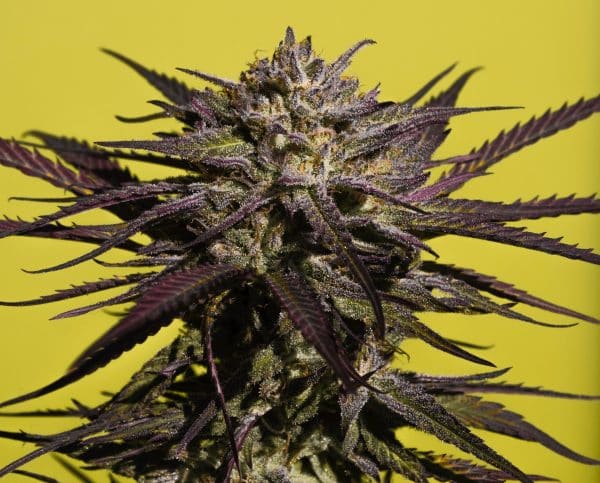
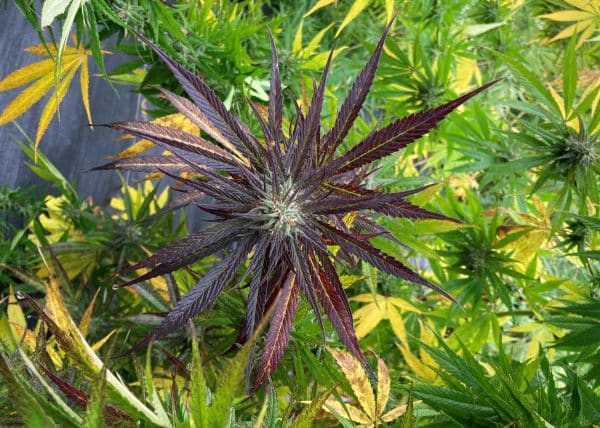
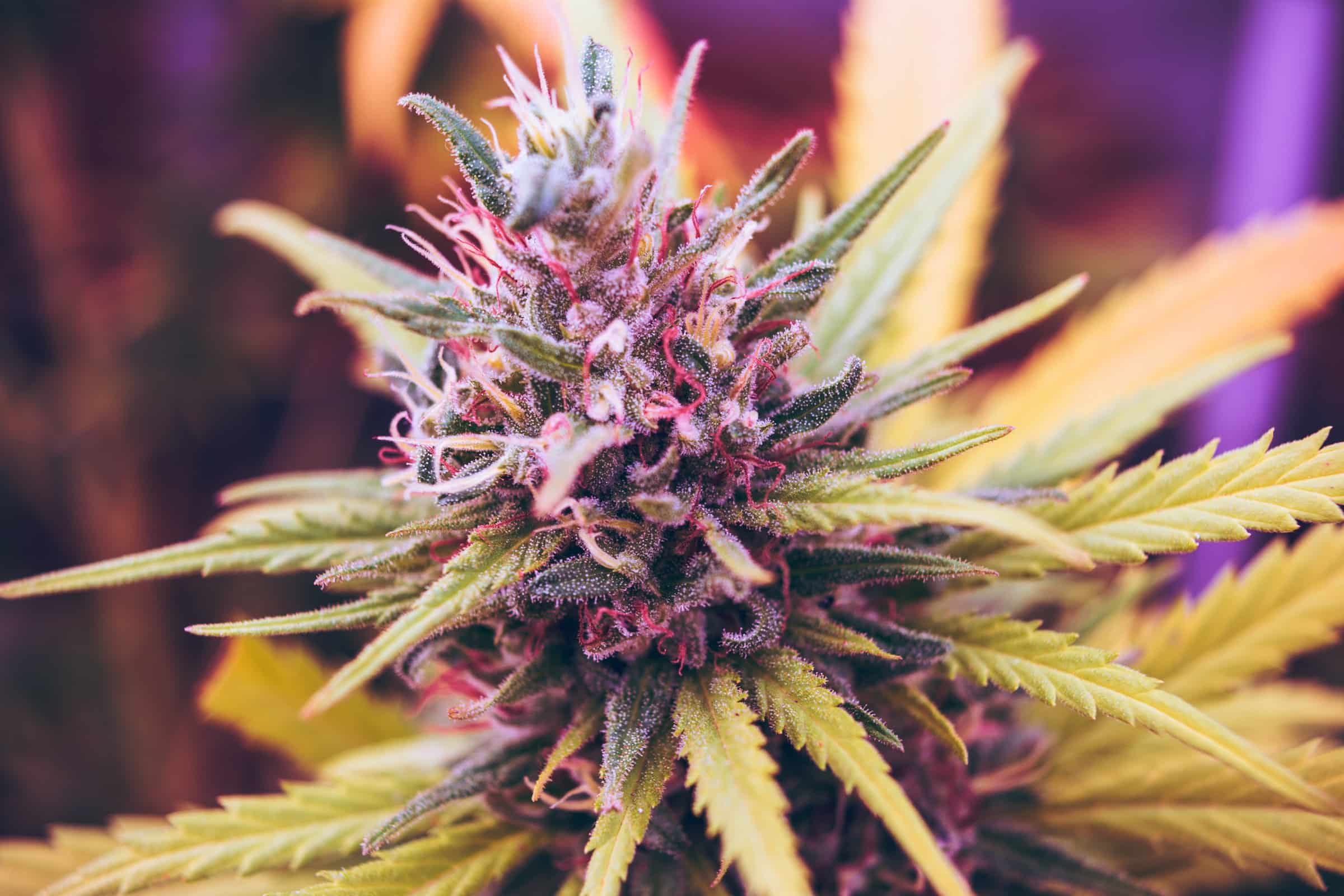
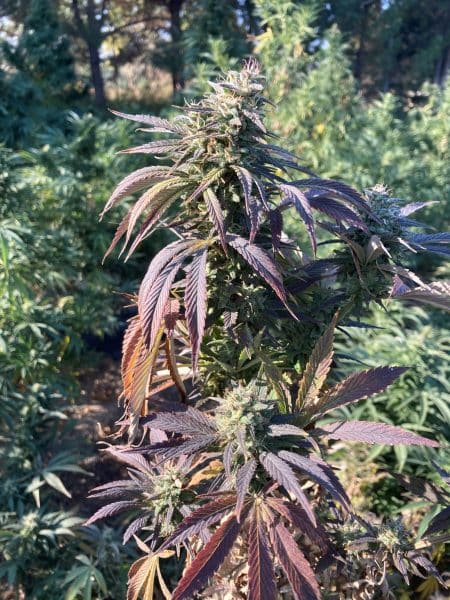
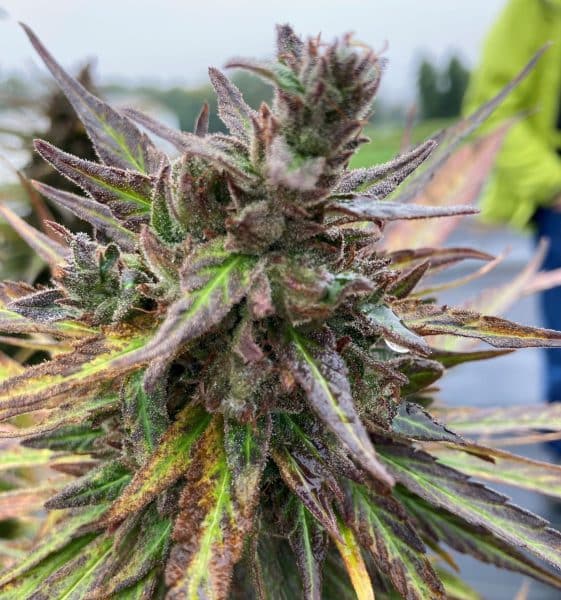
Want to try real purple weed?
If these photos got you curious, Purple Haze CBD is the only purple strain we currently keep in stock. Violet-tinged buds with a fruity aroma profile and less than 0.2% THC.
Browse our full CBD Flowers selection.
What does the color change of marijuana depend on?
The violet color of marijuana is due to anthocyanins. The presence of these compounds in plants can vary according to the pH of the soil, i.e., the acidity or basicity of the soil where they are grown. In acidic conditions, many of these anthocyanins are red, while in neutral conditions they are purple and blue in basic conditions [3].
The production of some of these anthocyanins depends on changes in temperature, and there is a hypothesis that red pigments protect the plant from the harmful effects of light at low temperatures [4].
Whether this hypothesis is true or not, I do not know, but I do know that there are several strains of Cannabis sativa that change color to reds and purples over time, perhaps due to decreasing temperature, senescence, or both.
Why is purple marijuana produced?
The production and accumulation of anthocyanins is due to the expression of some genes and also to epigenetic changes - changes in the phenotype without changing the DNA sequence - in the plant [6].
Lilac marijuana comes from seeds that genetically produce the expression of genes that enable the production of anthocyanins, causing the color change in the plant.
Therefore, one thing is clear: There are varieties of marijuana that, due to their genes, are always purple. There are others that, depending on changes in the environment (factors such as light, temperature or soil pH), change color..
And again come my questions: Could it be that the marijuana that is always purple differs in genes from the one that turns purple? Or, are they the same genes that differ in their expression depending on the environment? As you can see, there are many questions that can be asked with purple marijuana.
What is a fact in biology, as I mentioned above, is that all phenotypes are a product of genes and environment(nature vs. nurture). What we don't know is how much of the purple color in Cannabis sativa is given to genes(nature) versus environment(nurture).
Indoor lilac marijuana: Light-induced anthocyanins in indoor growing?
Is it possible that light in indoor cultivation affects the production of anthocyanins in marijuana? This could be a possibility. In addition, it has been found that indeed these light changes do affect coloration in other plants, such as strawberry [7].
Origin of purple cannabis
Added by Dani · Cannactiva
Purple genetics are believed to come from cold-climate areas of Central Asia, especially the Hindu Kush mountains (Afghanistan and Pakistan). In those environments, low temperatures favoured the build-up of anthocyanins as an adaptive response to cold and UV radiation. Later, breeding programmes in Europe (the Netherlands and Spain) stabilised the trait in modern hybrids.
Best-known purple cannabis strains
Added by Dani · Cannactiva
These are some of the most recognised purple strains:
- Purple Haze — sativa popularised by the Jimi Hendrix song; violet-tinged buds with a sweet, spicy aroma.
- Purple Kush — indica from the Hindu Kush region; deep purple tones and an earthy aroma.
- Granddaddy Purple (GDP) — highly coloured American indica with a fruity, grape-like profile.
- Purple Urkle — deep purple with a sweet, earthy aroma.
- Blueberry — a classic with blue-purple tones and a blueberry aroma.
Most of these classic strains are THC-rich. There are CBD-selected versions (THC below 0.2%) that keep the colour without the psychoactive effect.
What effects does purple cannabis have?
Added by Dani · Cannactiva
Purple colour does not determine the plant's effects or potency. The violet tone comes from anthocyanins —pigments with no psychoactive activity—, not from THC or CBD. So a strain is not stronger just for being purple.
What drives the effect is the cannabinoid profile (THC and CBD ratio) and the terpenes. Many purple genetics share terpenes such as myrcene and linalool, linked to relaxing sensations and sweet or floral aromas. In CBD-rich hemp varieties with THC below 0.2% —those legal in Spain and the EU— the effect is non-psychoactive.
Anthocyanins provide antioxidant capacity in the diet, but their contribution when smoking or vaping is marginal.
Note: CBD products are not medicines. This information is for general guidance and does not replace professional medical advice.
Medical uses of anthocyanins
Anthocyanins are widely used in the medical and health and wellness industries, given their low toxicity, but also for their multiple therapeutic possibilities: these compounds are anticarcinogenic, have uses for neurodegenerative diseases, diabetes and body weight. It is possible that these uses are due to the antioxidant properties of anthocyanins [2].
Anthocyanins have therapeutic uses in cardiovascular diseases, diabetes and cancer.
Anthocyanins have gained fame as dietary supplements as studies suggest that compounds in red wine, particularly anthocyanins, may help against heart disease [8].
So there it is, when they smoke the joint or chunk of purple marijuana, maybe they are fighting cancer and losing weight as well. I doubt this is true, although it does provide some peace of mind.
Purple marijuana flowers... Not only on female plants!
Well, here I want to share with you some of my beautiful photos of purple marijuana flowers. But, as I have always been in contact with female plants, I didn't know that males can also produce purple flowers! This was a pleasant surprise for me! And they have a wide variation in color.
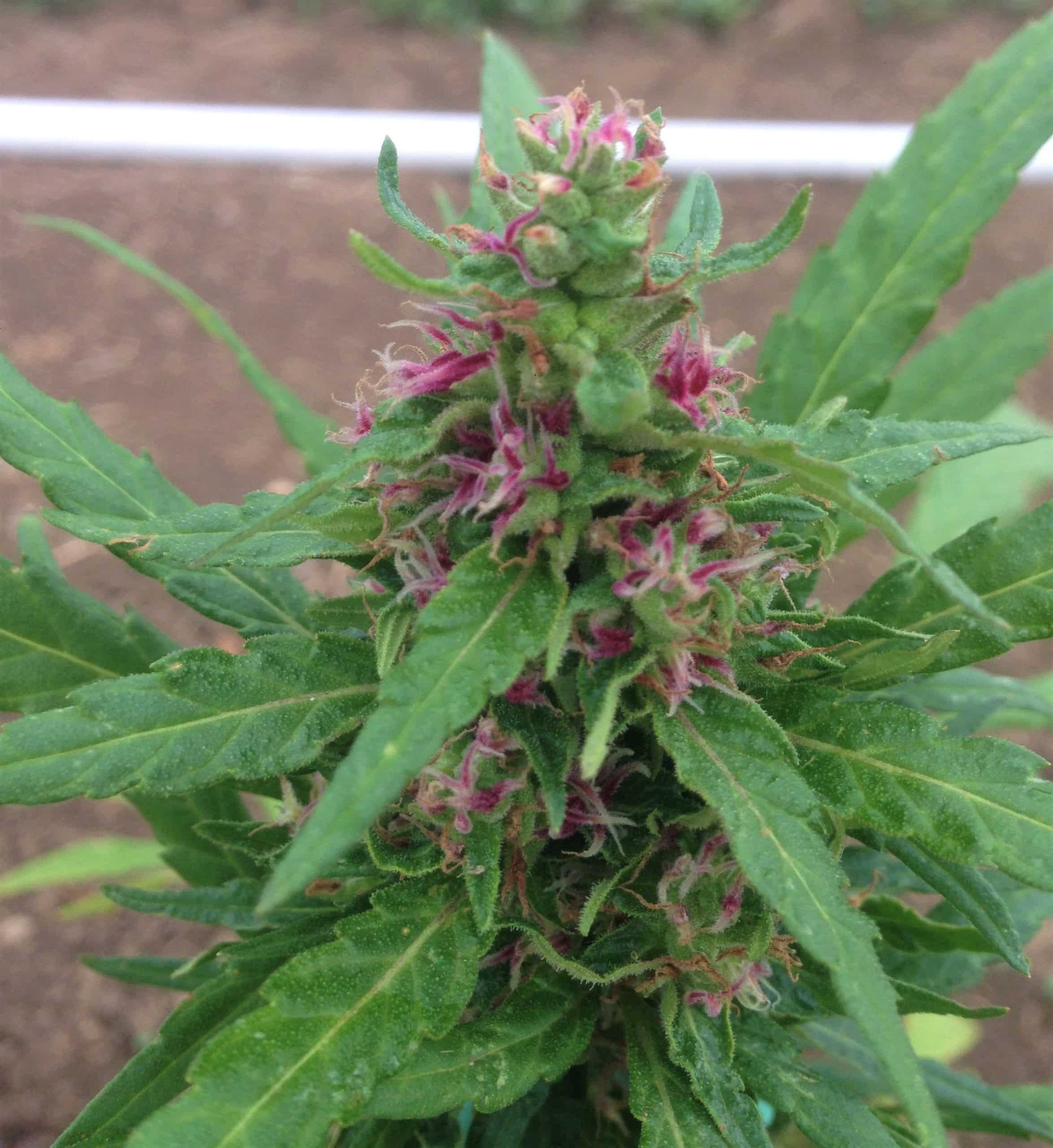
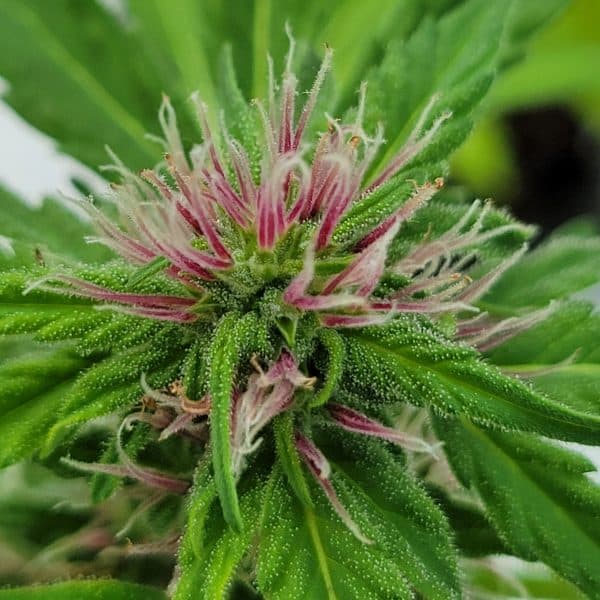
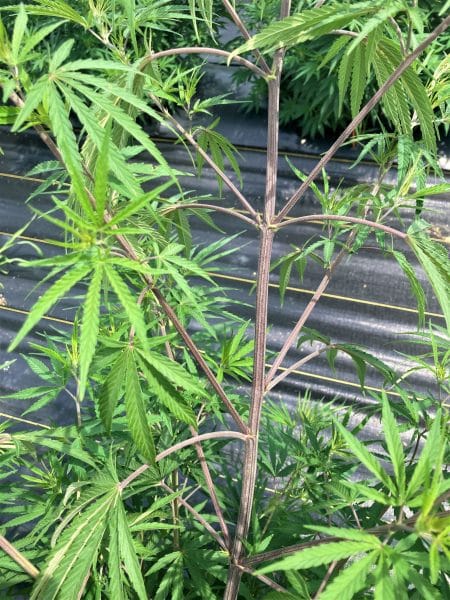
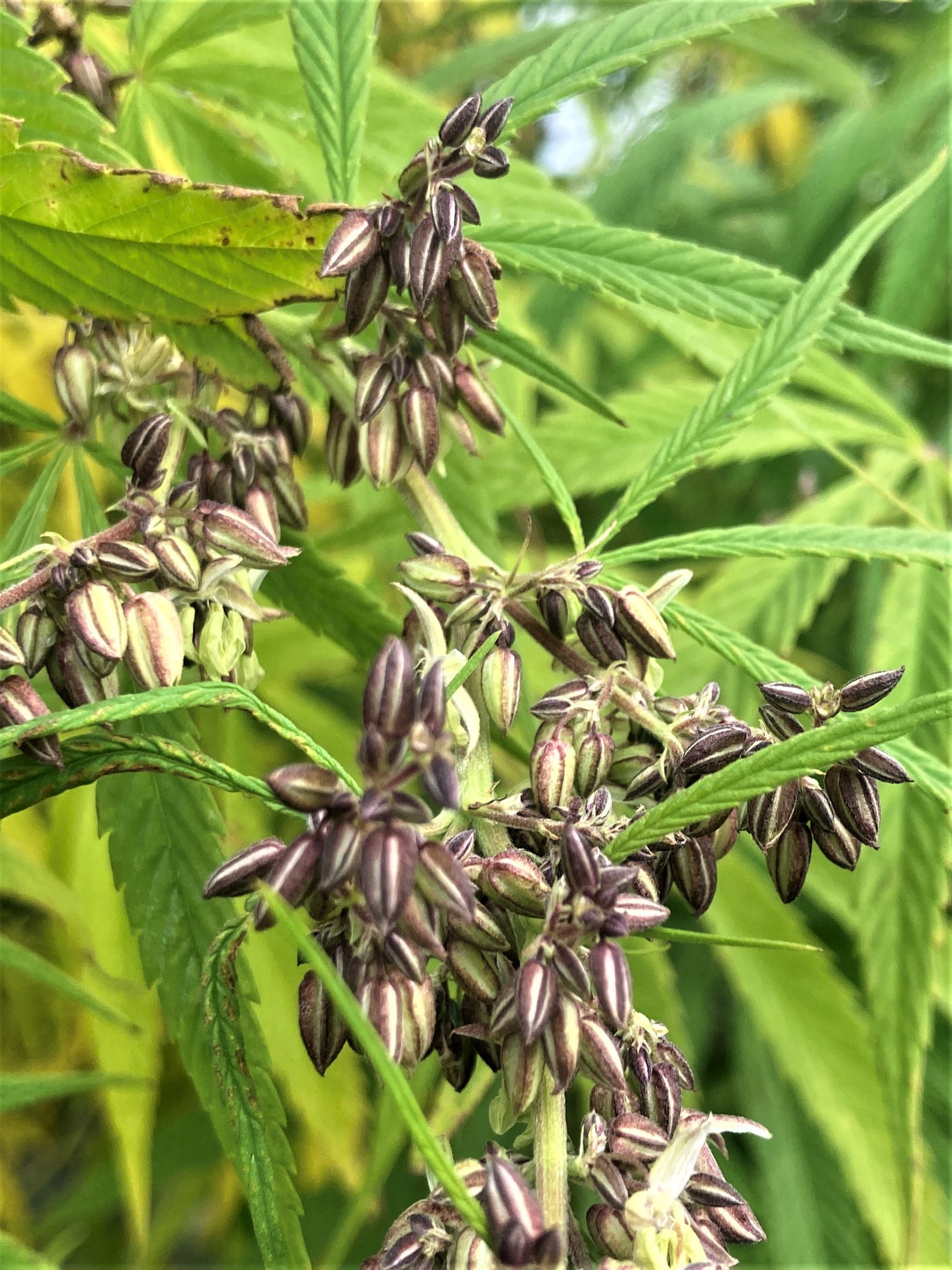
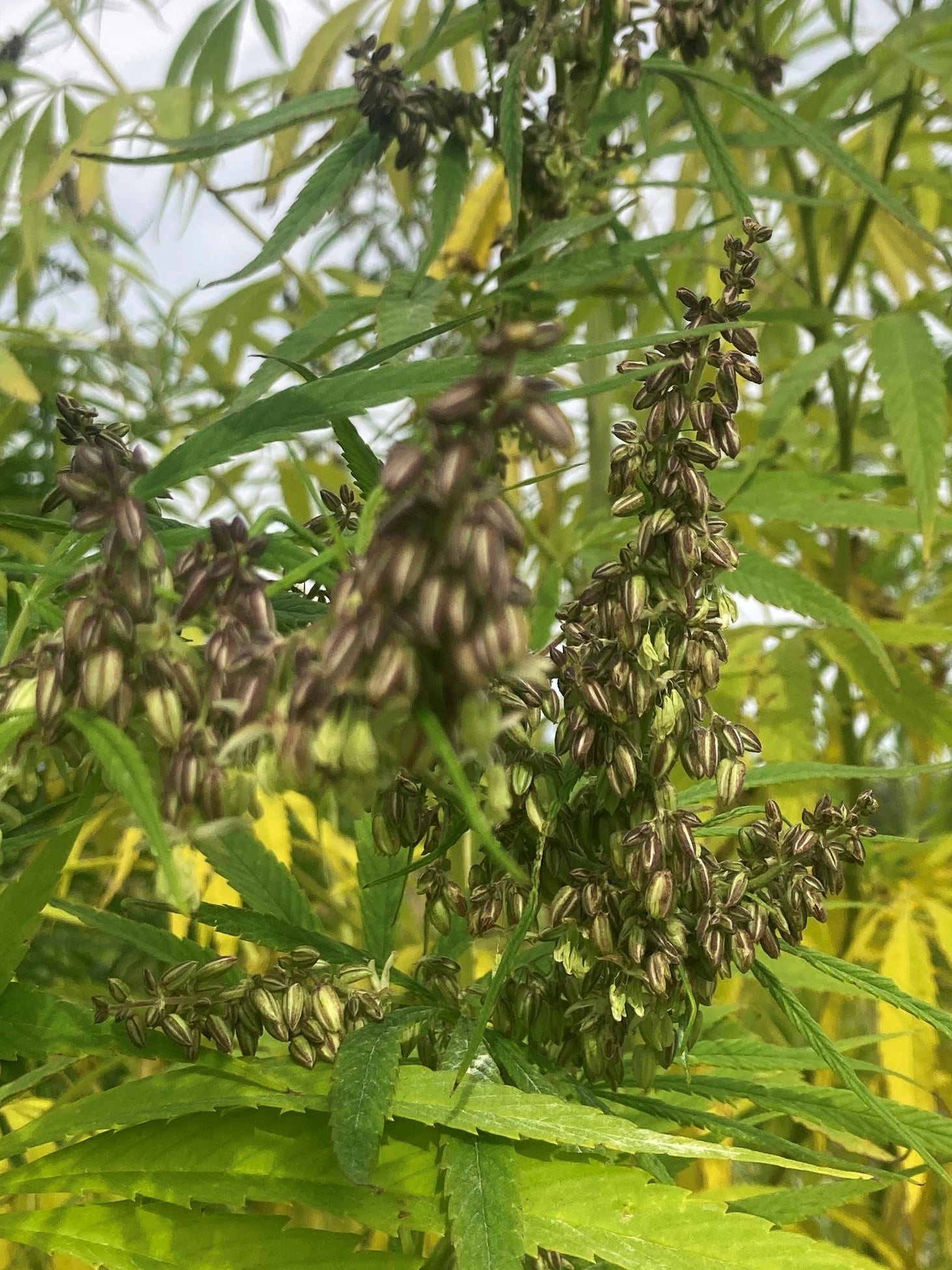
Marijuana plants with purple stems
And I've also seen plants whose stems are purple! As I have told you before, the Cannabis sativa plant has a lot of variation both in its genome and in its physical appearance (phenotype). As an example of this, see the post on differences and similarities between hemp and marijuana. .
Purple CBD strains at Cannactiva
Most purple cannabis you see online is THC-rich. At Cannactiva we grow purple CBD genetics below 0.2% THC, fully legal in the EU. Here's our current selection of violet-tinged strains and aromatic varieties.
Frequently asked questions
Added by Dani · Cannactiva
Advanced FAQ: questions that don't repeat the body of the article and aren't obvious.
Why do sometimes only the leaves or tips turn purple and not the whole bud?
Because anthocyanin build-up is localised: areas more exposed to light and cold pigment first, and the concentration varies between tissues. That's why it's common to see purple leaves or calyxes with still-green buds.
Does the purple colour survive drying and curing?
Yes. Once fixed, anthocyanins are fairly stable; slow drying in the dark with controlled humidity helps preserve the tone, while heat and direct light can fade it.
Does purple colour affect the amount of resin or trichomes?
There's no direct link. Trichomes (cannabinoids and terpenes) and anthocyanins (colour) are separate metabolic pathways: a plant can be very purple and low in resin, and vice versa.
Why does the same genetics turn more purple outdoors than indoors?
Because of the larger day/night temperature swing and the natural UV outdoors. Indoors you have to recreate those conditions (lower night temperatures in flowering and a suitable spectrum) to get close.
Can pH shift the colour towards blue or red instead of purple?
Yes. Anthocyanins are pH-sensitive: more acidic conditions lean red and more alkaline ones blue, with purple in between. That's why one plant can show different shades.
Can CBD-rich strains be as purple as THC ones?
Yes. Colour depends on anthocyanin genetics, independent of the cannabinoid pathway, so there are CBD chemotypes just as pigmented as any THC-rich strain.
Referencias
1. Seitz, H. and W. Hinderer, Anthocyanins. Phytochemicals in Plant Cell Cultures, 1988: p. 49-76.
Mukherjee, P.K., Quality control and evaluation of herbal drugs: Evaluating natural products and traditional medicine. 2019: Elsevier.
Khoo, H.E., et al., Anthocyanidins and anthocyanins: Colored pigments as food, pharmaceutical ingredients, and the potential health benefits. Food & nutrition research, 2017. 61(1): p. 1361779.
4. Archetti, M., et al., Unravelling the evolution of autumn colours: an interdisciplinary approach. Trends in ecology & evolution, 2009. 24(3): p. 166-173.
5. Di Candilo, M., et al., Two new fibre hemp genotypes. Morphology and yield traits [Cannabis sativa L.]. Sementi Elette (Italy), 2000.
6. Enaru, B., et al., Anthocyanins: Factors affecting their stability and degradation. Antioxidants, 2021. 10(12): p. 1967.
7. Magagnini, G., G. Grassi, and S. Kotiranta, The effect of light spectrum on the morphology and cannabinoid content of Cannabis sativa L. Medical Cannabis and Cannabinoids, 2018. 1(1): p. 19-27.8. Pietta, P., M. Minoggio, and L. Bramati, Plant polyphenols: Structure, occurrence and bioactivity. Studies in natural products chemistry, 2003. 28: p. 257-312.


