
The marijuana leaf is, without a doubt, one of the most iconic symbols of cannabis culture. This green, pointed leaf has become recognised the world over, even by those who are not familiar with cannabis.
For those more in the know, the cannabis leaf has unique features, such as its diversity of shapes and colours, its sizes, and the presence of structures like trichomes and the compounds in its resin. In this post we will explain the characteristics of the marijuana leaf, its uses and benefits, and discuss some of the cultural and symbolic aspects associated with it.
Learn with the Cannactiva blog about the cannabis plant and the different types of marijuana that exist.
The 3 key ideas
- The marijuana leaf is palmately compound, with 5-7 lanceolate leaflets, an odd number, and serrated margins.
- The shape of the leaf does not indicate the type or amount of cannabinoids, nor whether the plant is “indica” or “sativa”: there is no correlation.
- Only the bracts or “sugar leaves” (with trichomes) are used for trim and pre-rolls; the large fan leaves are discarded.
Characteristics of marijuana leaves
What shape is the marijuana leaf?
The marijuana plant has palmately compound leaves with an almost always odd number of leaflets (5-7 leaflets), lanceolate, acuminate and with serrated margins, and they show bilateral symmetry.
Did you know that two marijuana plants can have very different leaves?
The Cannabis sativa plant has countless uses; hemp varieties can be used to extract fibre for textiles and paper, and the oil produced from the seeds is edible, as are the seeds themselves. The plant can also be used to obtain biofuel, biodegradable plastic, building and insulation material, personal care products and, of course, one of its best-known and most controversial uses: its therapeutic potential [1].
In other words: marijuana leaves are no exception to the variation shown by the Cannabis sativa plant. As I mentioned in the article on the Cannabis sativa plant, “we could build our homes and cars, run them, wash ourselves, dress, eat and smoke from the same plant”.
This helps to explain that the cannabis plant has great variety in its genome [2, 3] and in its phenotype [4, 5], including secondary metabolites (for example, different cannabinoid types and terpenes) and also the shape of the leaf [6].
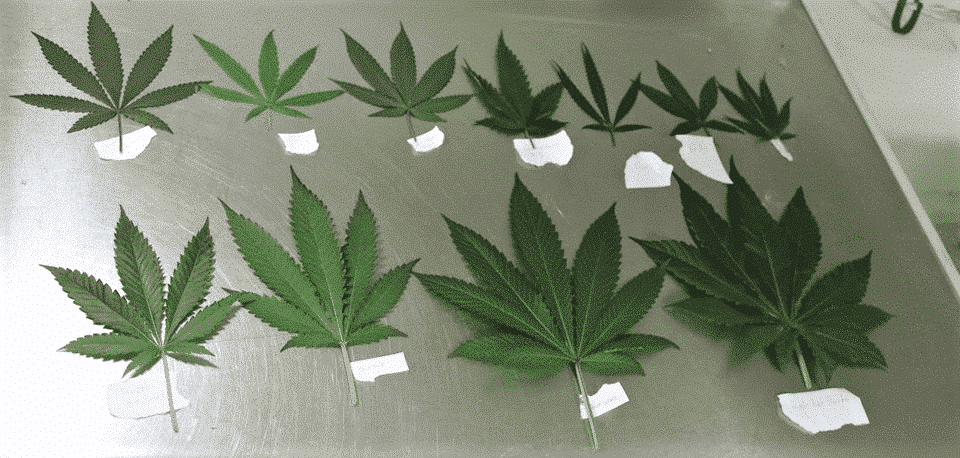
Perhaps this great genomic and phenotypic variation is why the plant can be put to so many uses. And, for the same reason, marijuana leaves can vary greatly in their characteristics.
What does the shape of the marijuana leaf tell us?
The shape of the leaf in the plant has been very important to the industry, as it is used to describe the “broad-leaf plant” or “narrow-leaf plant” phenotype, and these characteristics have been associated with the possible effects of consuming certain varieties.
And although we know these associations are incorrect, and that there is no correlation whatsoever between leaf shape and other phenotypic traits, such as the amount or type of cannabinoids, the height, or the sex [6], the diversity of the marijuana plant is, without a doubt, utterly fascinating.
The shape of the marijuana leaf is independent of the amount or type of cannabinoids the plant contains.
This is why the shape of the leaf, or even of the plant, cannot give us information about the cannabinoid and terpene compounds the plant produces. In other words, plants with broad leaves can produce low or high cannabinoid contents, since these phenotypes are not associated with one another. It is like dogs: they can be large or small and have white fur, because there is no association between coat colour and size.
Does the leaf shape indicate whether it is sativa or indica?
Although many associate the “sativa” groups with narrow, light-green leaves, and “indica”-type plants with broad, dark leaves, as I mentioned above, these associations have no correlation with the groupings. What is more, the “indica” or “sativa” groupings are not informative either and do not mean much [4, 6]. If the topic interests you, you can read more about it in our post on the differences between indica and sativa marijuana.
Types of marijuana leaves
How many types of marijuana leaf are there?
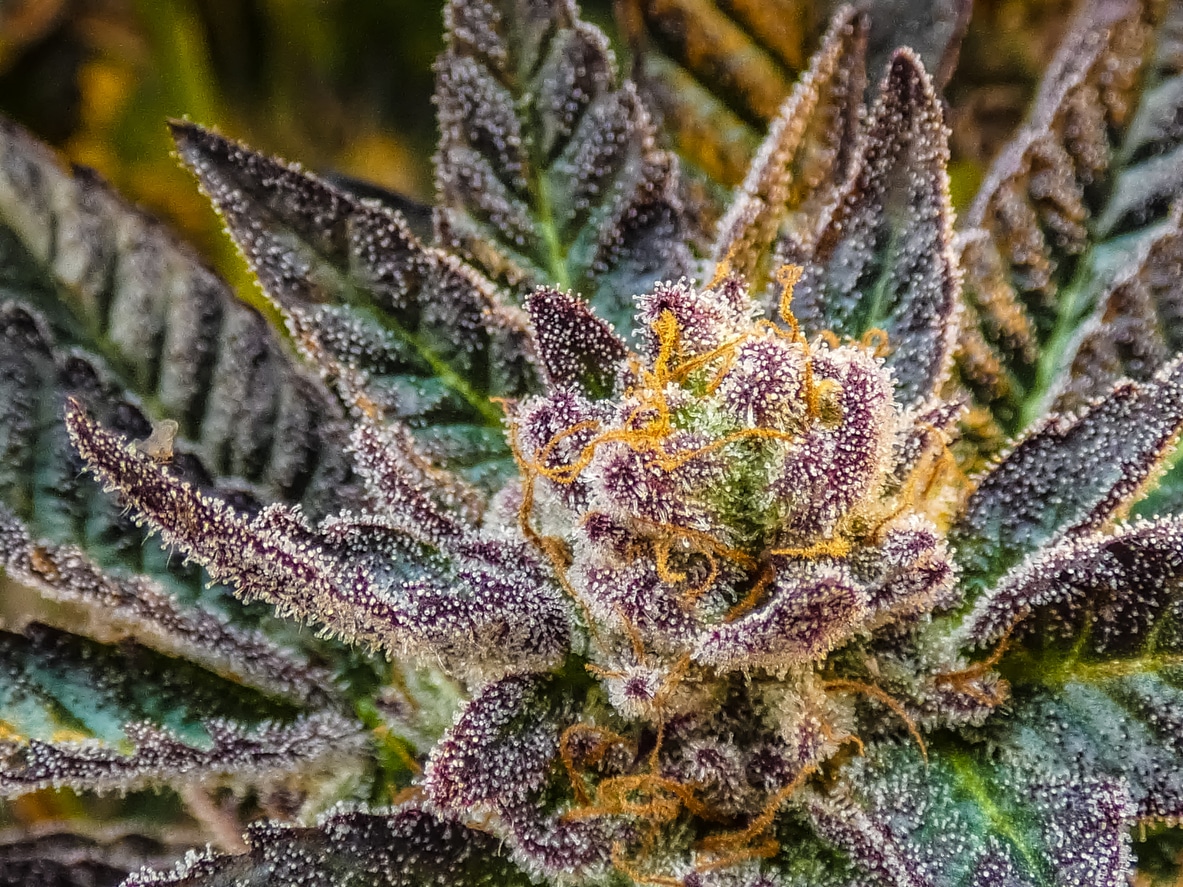
Each marijuana plant has two types of leaves: the bracts, which are found within the inflorescence and can also have many trichomes, and the main leaves, whose primary function is photosynthesis.
Sugar leaves or bracts
There are several types of leaf on the marijuana plant. There are the bracts or sugar leaves, which are found between the inflorescence.
These bracts can have many trichomes, which are the plant organs where the cannabinoid and terpene compounds are produced. In fact, they are called sugar leaves because they bear a layer of tiny whitish trichomes that mimic the appearance of sugar.
Main leaves
There are also the main leaves (fan leaves) that are important for photosynthesis.
Bracts are the leaves found inside the bud, while the main leaves are large and responsible for photosynthesis.
Marijuana leaf colours
The leaves of the Cannabis sativa plant can also vary in colour, just as the rest of the plant does.
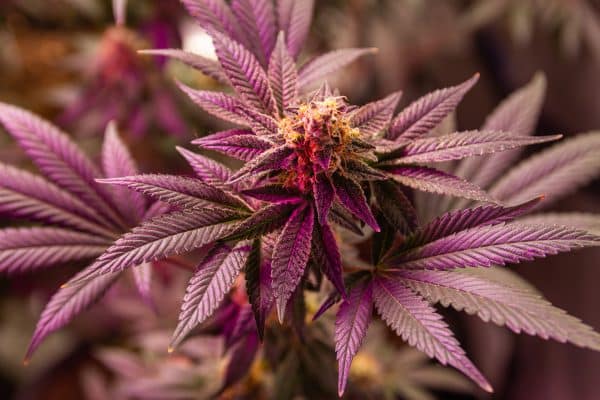
The different colours of the marijuana leaf can be due to various causes. In purple marijuana, the lilac or red colour is due to the production of anthocyanins; the yellow colour is usually due to the presence of carotenoids, and the green to chlorophyll.
Furthermore, these colour changes can be related to the plant's senescence, diseases and growing conditions, such as the lack or presence of certain nutrients, or the soil pH.
Leaves can have many colours due to the anthocyanins the plant produces.
Uses of marijuana leaves
Trim or cannabis shake
The leaves of marijuana that are put to use are the bracts, known as sugar leaves. Selecting plants with many trichomes on their bracts means these can be processed and used to make products such as CBD trim and CBD bud pre-rolls.
The bracts of the Cannabis sativa plant can have many trichomes, the organs where cannabinoids and terpenes are produced.
In fact, trim is a by-product of trimming CBD buds, which contains both sugar leaves and small pieces of flower.
By contrast, the plant's main leaves are hardly ever used, because of their scarce trichomes and, therefore, their lack of aroma and effect. They are usually discarded or used as hemp biomass.
So tell me, fellow consumers, whether you have enjoyed this monograph on the most celebrated leaf in cannabis culture, the star of T-shirt designs, marijuana-leaf wallets, stickers and all sorts of objects.
Frequently asked questions about the marijuana leaf
How many points does a marijuana leaf have?
Each leaf has an odd number of leaflets, usually between 5 and 7 (sometimes 9 or 11 in mature leaves). They are lanceolate, acuminate and have serrated margins.
What are the leaves of the marijuana plant used for?
The bracts or sugar leaves, covered in trichomes, are used to make trim and pre-rolls. The main leaves (fan leaves) have hardly any trichomes and are usually discarded or used as biomass.
Why do marijuana leaves change colour?
Lilac or red is due to anthocyanins; yellow, to carotenoids; green, to chlorophyll. Senescence, nutrients and soil pH also play a part.
References
- Ahmed, A.F., et al., Hemp as a potential raw material toward a sustainable world: A review. Heliyon, 2022: p. e08753.
- Pisupati, R., D. Vergara, and N.C. Kane, Diversity and evolution of the repetitive genomic content in Cannabis sativa. BMC genomics, 2018. 19(1): p. 156.
- Vergara, D., et al., Genomic evidence that governmentally produced Cannabis sativa poorly represents genetic variation available in state markets. Frontiers in plant science, 2021: p. 1502.
- Smith, C.J., et al., The phytochemical diversity of commercial cannabis in the United States. PLoS one, 2022. 17(5): p. e0267498.
- Stack, G.M., et al., Season‐long characterization of high‐cannabinoid hemp (Cannabis sativa L.) reveals variation in cannabinoid accumulation, flowering time, and disease resistance. GCB Bioenergy, 2021. 13(4): p. 546-561.
- Vergara, D., et al., Widely assumed phenotypic associations in Cannabis sativa lack a shared genetic basis. PeerJ, 2021. 9.


