How to distinguish male and female marijuana: Differences and Similarities

Learn how to identify male and female marijuana
In short:
- Marijuana is a dioecious plant: there are male specimens (which produce pollen), female ones (which produce the buds we consume) and monoecious ones (with flowers of both sexes on the same plant).
- The difference shows up during flowering: the female displays pistils with fine, white stigmas; the male, small ball-shaped pollen sacs. Before flowering they can only be told apart with a genetic test.
- In cultivation, males and monoecious plants are removed to avoid pollination (seeded buds); feminised seeds yield ~99.9% female plants.
Marijuana is a captivating plant for many reasons, but today we will focus on its reproductive strategy. Cannabis sativa is one of a small group of flowering plants that has both male and female individuals, that is, it is a dioecious plant. This dioecious characteristic of marijuana allows the generation of seedless buds with the potential to produce high concentrations of terpenes and cannabinoids such as CBD and THC.
Differentiating female plants from males and varieties that can produce one, the other or both sexes has been essential for growers and breeders to increase the yield of their grass crops and improve their varieties. In this post I explain the differences and how to distinguish male, female and monoecious (commonly known as hermaphrodite) marijuana plants.
Marijuana sexual reproduction: Why are there males and females?
Isn't it curious that there are male and female cannabis plants?
Well, I'm going to start by telling you that the fact that the plant Cannabis sativa presents males, females and monoecious individuals was what most caught my attention to study it during the time of marijuana legalization in Colorado, in 2013. My background as an evolutionary biologist and my PhD thesis is based on understanding why sexual reproduction exists in natural populations.
Marijuana: a dioecious and monoecious plant
Marijuana is a dioecious plant, which means that it has specimens with male flowers and other specimens with female flowers. Only 6% of flowering plants, called angiosperms, show this type of sexual expression, including cannabis(Cannabis sativa L.) [1,2]. The fact that marijuana is part of this minority of dioecious plants makes it even more intriguing.
Marijuana has male and female individuals, which in biology is called a dioecious plant. Only a minority (6%) of flowering plants (angiosperms) are dioecious.
Now, marijuana plants (and hemp plants) also have monoecious individuals, which are those that produce both male and female flowers on the same plant. Although colloquially they are called hermaphrodites, this denomination is not correct, because hermaphrodite plants are those that have male and female reproductive organs in the same flower, while monoecious plants have male and female flowers in the same plant, but not necessarily in the same flower.
Differences between male and female marijuana: How to distinguish them?
What is male marijuana?
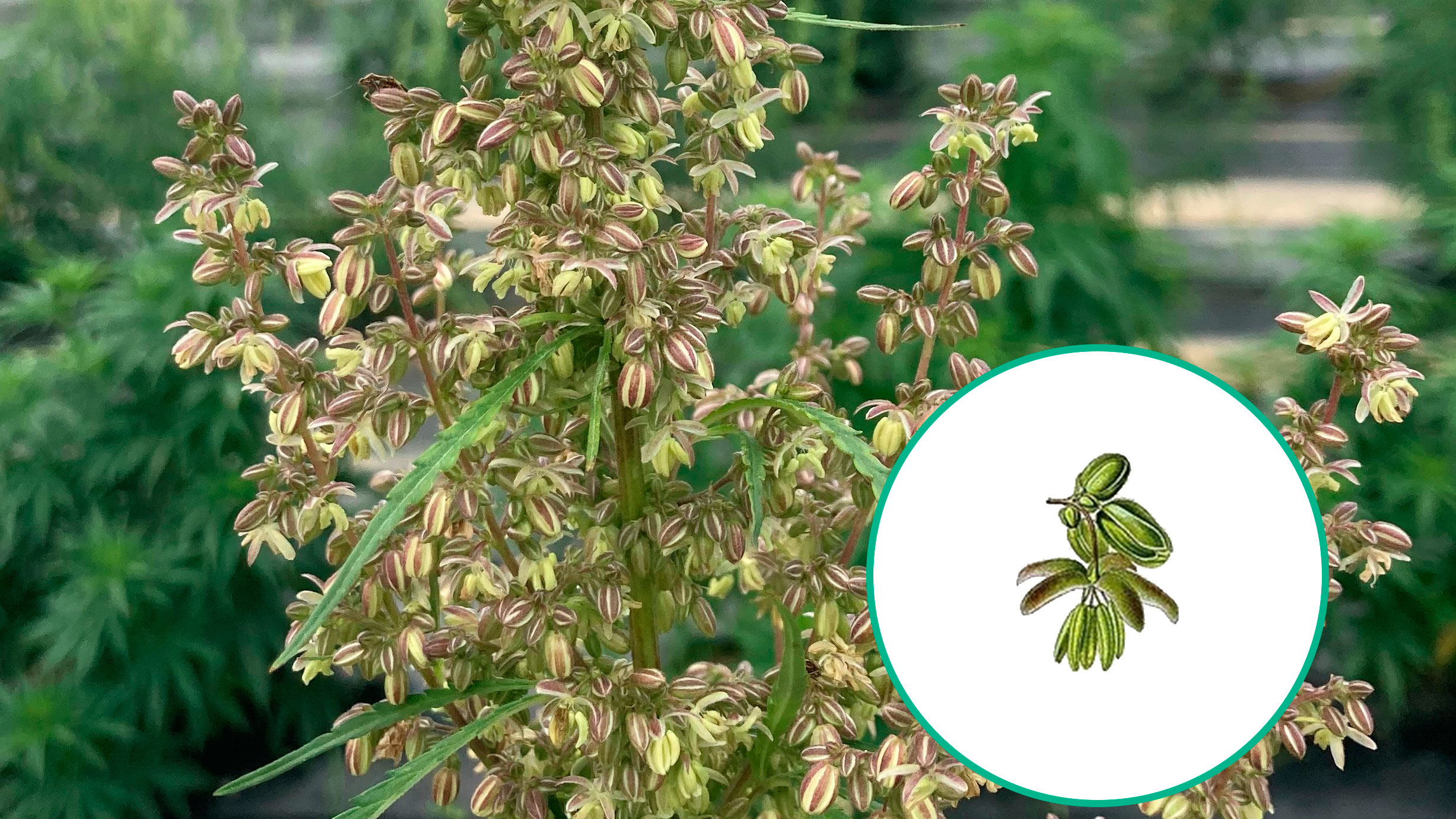
Male marijuana plants are those whose flower produces pollen, and these are characterized by the presence of stamens and anthers (called male or staminate flowers). Cannabis pollen is dispersed by the wind to pollinate female plants (anemophilous pollination).
How is female marijuana different?
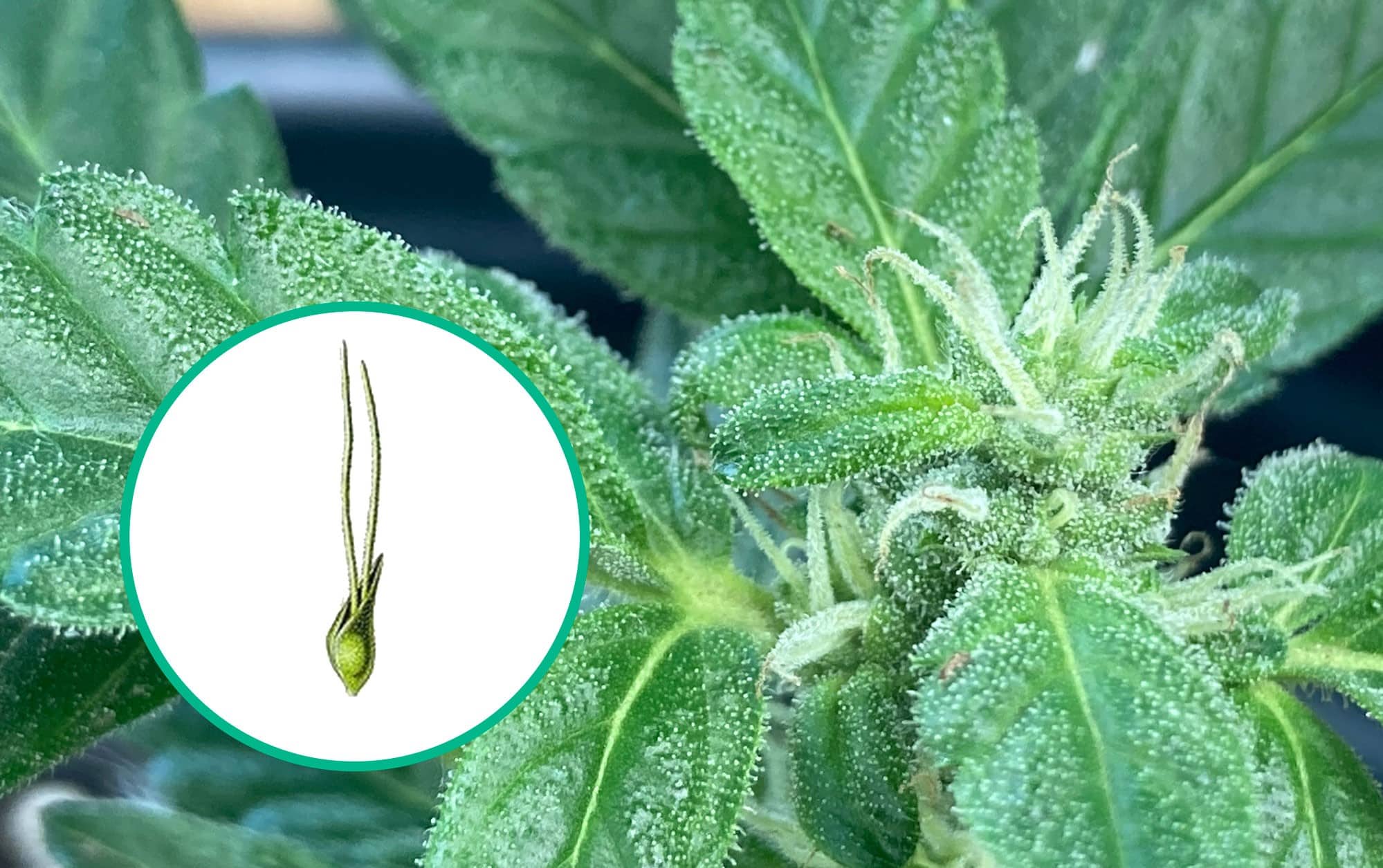
On the other hand, female marijuana plants are those that produce flowers with female organs, such as the pistil, where the stigmas are, which in marijuana can vary in color (female or pistillate flowers).
What is monoic marijuana?
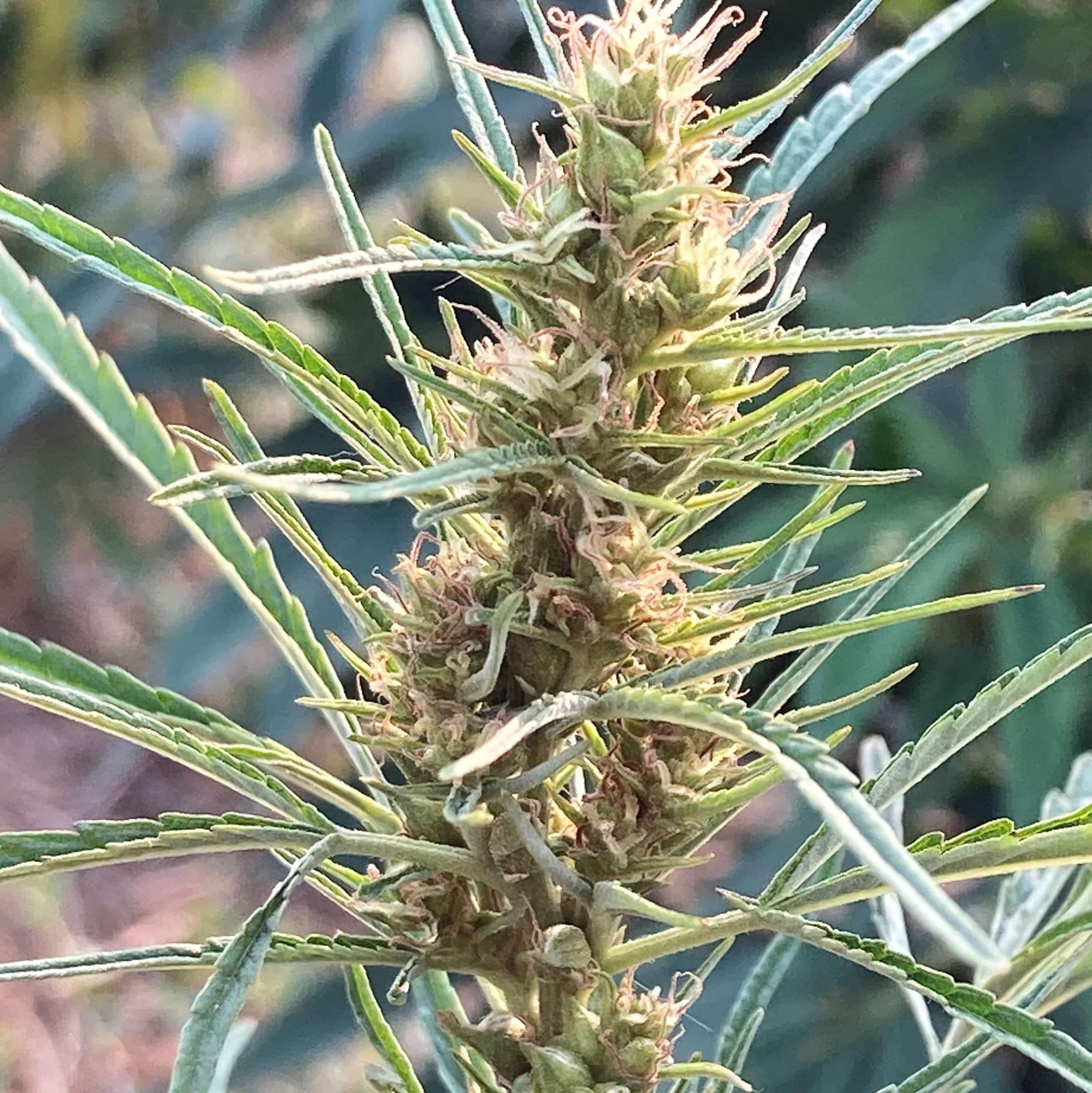
Monoecious cannabis plants produce both male and female flowers on the same plant, i.e. they produce both pollen and pistils with stigmas. These plants can self-fertilize and produce buds with seeds, as well as pollinate other female plants around them. In a marijuana crop, monoecious plants are eliminated as if they were male plants.
Apparently, according to anecdotes, these plants can also produce hermaphrodite flowers, called "platanitos", "bananas" or "nanners". Instead of producing male flowers, they only develop a stamen without sepals inside the female flower. This exposed stamen deposits pollen directly on the buds, allowing self-fertilization and ensuring successful pollination.
The monoecious phenotype, like all phenotypes, has a genetic basis and some hemp plants are always monoecious, but this phenotype can also be caused by environmental influences, such as photoperiods and hormones among other environmental conditions.
Marijuana pollination: buds with seeds!
The flower of the female marijuana plant contains the largest amount of trichomes. trichomes (Greek for "hair"), small structures where cannabinoids such as CBD and THC are produced and concentrated. This is why, when we consume cannabis, the flower of the female plant is used, also known as the flower of the female plant. marijuana buds .
When a female plant is pollinated, it produces a type of dry fruit called achene, which contains a single seed inside: this is what we know as a hemp seed .
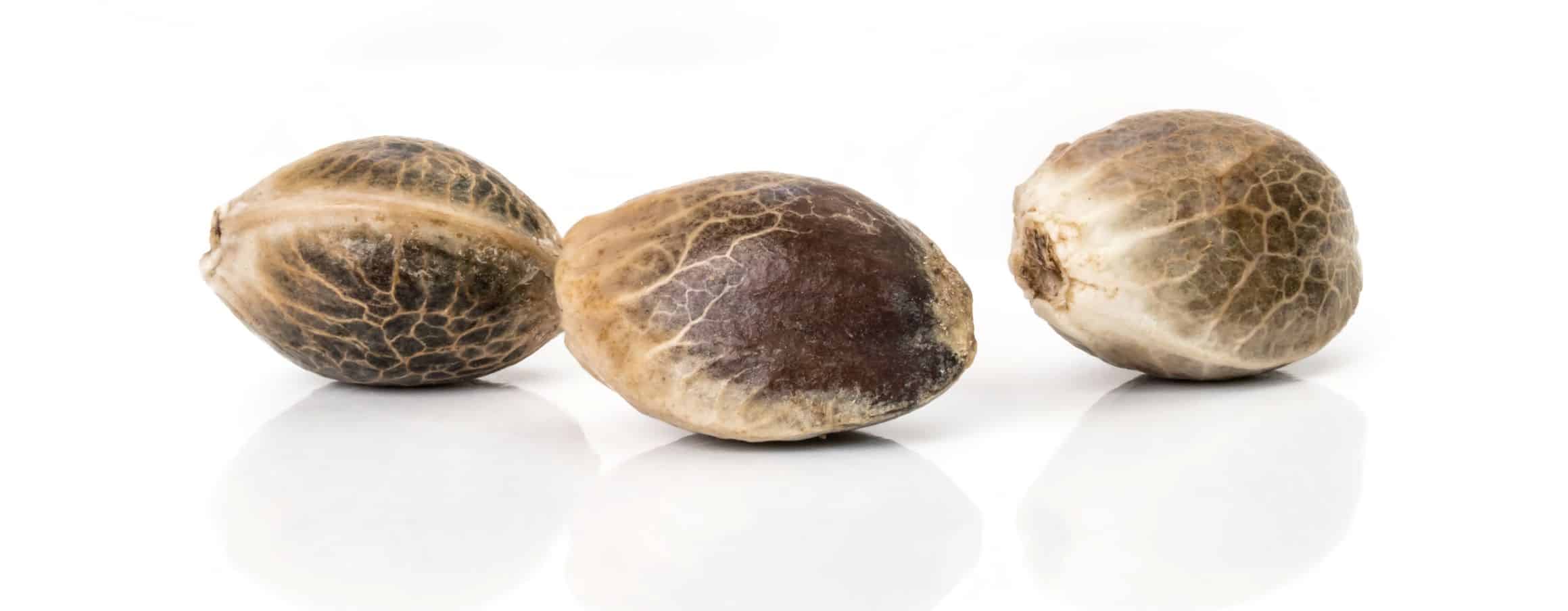
In marijuana crops, pollination of flowers is not desirable because buds with seeds would come out. Therefore, work is being done to detect and eliminate male and monoecious plants.
Although hemp seeds have many nutritional properties, no one likes to find them in their joint. Therefore, in smoking herb crops it is a common task to detect male and monoecious specimens in order to eliminate them and thus prevent pollination.
In reality, although marijuana can produce seeds, it is not grown for seeds or hemp oil, because its yield is low. For such uses, cannabis varieties with high seed production (grain hemp) are used. For more information, see the post on the differences between hemp and marijuana .
Utility of male and monoecious marijuana plants
In a marijuana crop, it is always tried to avoid male and monoecious plants, since it is sought that the flowers of the female plant are not fertilized and thus produce more compounds, such as cannabinoids and terpenes (these apparently decrease when there is pollination). But also, because nobody wants seeds in their joints, a commercial reason why the pollination of female marijuana is avoided by removing the male plants from the crops.
Something very different happens in industrial hemp plantations (of the same species Cannabis sativa), where pollination is sought in order to obtain seeds that are then used for the production of food and oil.
Male marijuana plants are required to generate new crosses with different characteristics.
But be careful, when you are looking to improve or produce new varieties, males are necessary, and suddenly also monoecious marijuana plants, in order to obtain pollen for new crosses. It is necessary to be very cautious when working with pollen, to only pollinate the required plants and not others.
How to distinguish male from female marijuana
Male and female cannabis plants appear identical during the seedling and early vegetative growth phases, but begin to distinguish themselves as they progress through the flowering phase.
The differences between male and female marijuana are in their flowers. Both the female and the male develop at the nodes of the plant (where the branches join the main stem), and to distinguish them, they must be carefully observed. Thus, we can differentiate between male and female flower structures:
- Female marijuana plants show their sexual characteristics in the form of thin, elongated, white or purple stigmas.
- Male marijuana plants have no stigmas and instead grow small, often clustered pollen sacs. When these sacs open, they spill their contents and pollinate the female plants, which could apparently decrease cannabinoid production due to pollination. If you have a marijuana crop, you should not let these plants get to that point. Fortunately, it is possible to differentiate male from female plants when the flowers are still immature and by genetic testing before they flower.
When is it possible to differentiate between male and female marijuana?
Some people can tell the difference between female and male plants in early flowering. Pre-flowers are the initial stage of flower development. Their differentiation does not occur until after a few weeks, when they show their male or female features and can be clearly differentiated.
The male preflowers can be distinguished by their shape, similar to small eggs, more spherical than the female flowers, and which, observed with a magnifying glass, are completely smooth, without hairs or trichomes.
There are also some who say that the distance between the stem nodes of the males is wider than in the females, and that for this reason they can be differentiated even before flowering, but these are anecdotes without scientific support.
Why are there male, female and monoecious marijuana plants?
The reason why some plants such as marijuana have male, female and monoecious specimens is still unknown, but there are many scientific hypotheses that try to explain it. But what we do know is that, like humans, male marijuana plants have a Y chromosome, i.e., they are XY. Also, like humans, female cannabis plants have two X chromosomes, i.e. XX.
Monoecious plants appear to have very similar chromosomes to females, XX, and the regions of the genome (of plant DNA) that allow monoecious plants to produce both male and female flowers are not yet known.
Does marijuana change sex?
Now, to make matters more complex, you may have heard of, or practiced it yourself,sex reversal. This is when chemical compounds such as silver nitrate or colloidal silver are used on females to produce male flowers and pollen, or ethephon is used on males to produce female flowers. These compounds modulate ethylene, an important hormone in plant growth and development [3], by inhibiting it [4] or stimulating it [5].
Cannabis plants can produce flowers of the other sex, and this can be induced by using feminizing or masculinizing agents.
The sex-reversal technique has been used by cannabis breeders and breeders to self-fertilize plants with desirable characteristics. This is why Cannabis sativa could be considered as a plant exhibiting plastic or inconsistent sexual expression. (plastic sex expression "leaky" or "inconsistent".The reason for this is the possibility of reversing the sex with feminizing or masculinizing agents [6, 7] and also because males and females sometimes produce flowers of the opposite sex [8].
Feminized seeds: trying to ensure female cannabis plants
As I told you above, the sex of Cannabis sativa plants can be reversed, using chemical agents or even some varieties express flowers of the opposite sex when under stress, or due to light or water changes. When a female plant is fertilized with its own pollen, or with pollen from a female that was subjected to sexual reversion and produced pollen, the seeds do not have a Y chromosome (the chromosome of male plants). These seeds are commercially known as feminized seeds.
Feminized seeds lack the Y chromosome, so the plants have a minimal chance of producing pollen.
Feminized seeds have a high probability of growing as female marijuana plants. Most feminized marijuana seed banks offer a 99.9% guarantee of producing buds.
Two things: First, these feminized seeds usually produce only females, but occasionally males and monoecious are found. Second, these feminized plants can also be sex-reversed with chemical agents or when under stress, and produce male flowers and pollen.
Unknowns to be investigated on the sexual expression of cannabis
Many questions arise from the possibility of sexual reversion: For example, where are these genes that are "turned on" or "turned off" when there is sexual reversion? Will these genes be on the sex chromosomes, or in other parts of the genome? Why are some marijuana strains more prone to sexual reversion than others? Do they differ in the type of genes, or do they have the same genes and differ in their expression? How much do genes control sexual expression, and how much does the environment play a role? Why is there this possibility of sexual reversal or this plastic or inconsistent expression? Will it have any adaptive advantage? ... And well, I could fill this paper with more and more questions!
I hope you found the sexual determination and expression of Cannabis sativa as interesting as I did. Understanding how the various factors interact may allow growers to take advantage of the flexibility of this species to modify its sexual expression. And by using these techniques, provide more efficient methods for farmers to obtain a good harvest.
Keep learning about cannabis cultivation
References
1. Charlesworth D. What maintains male-sterility factors in plant populations? Heredity. 2002;89(6):408-409.
2. Renner SS, Ricklefs RE. Dioecy and its correlates in the flowering plants. Am J Bot. 1995;82(5):596-606.
3. Ecker JR. The ethylene signal transduction pathway in plants. Science. 1995;268(5211):667-675.
4. Kumar V, Parvatam G, Ravishankar GA. AgNO3: a potential regulator of ethylene activity and plant growth modulator. Electron J Biotechnol. 2009;12(2).
5. Yamasaki S, Fujii N, Takahashi H. Characterization of ethylene effects on sex determination in cucumber plants. Sex Plant Reprod. 2003;16(3):103-111.
6. Moliterni VMC, Cattivelli L, Ranalli P, Mandolino G. The sexual differentiation of Cannabis sativa L.: a morphological and molecular study. Euphytica. 2004;140(1-2):95-106.
7. Truta E, Gille E, Toth E, Maniu M. Some aspects of sex determinism in hemp. Anale St Univ Al. I. Cuza Iasi, Genet Biol Mol. 2007;8(2).
8. Pannell JR. Plant sex determination. Curr Biol. 2017;27(5):R191-R197.
9. Mandolino G, Carboni A, Forapani S, Faeti V, Ranalli P. Identification of DNA markers linked to the male sex in dioecious hemp (Cannabis sativa L.). Theor Appl Genet. 1999;98(1):86-92.
10. Törjék O, et al. Novel male-specific molecular markers (MADC5, MADC6) in hemp. Euphytica. 2002;127(2):209-218.
Frequently asked questions about male and female marijuana
What is male marijuana for?
Why males exist is a question Charles Darwin himself asked in "On the Origin of Species", and it is one of the most beautiful questions in evolutionary biology. The short explanation is that males serve to provide genetic variation within populations. Male marijuana serves to fertilise females so that they produce diverse offspring.
What is female marijuana for?
Female marijuana is where the cannabis flower comes from, the part of the plant that contains the trichomes, the organs where cannabinoids such as THC or CBD are produced. It is what we popularly call marijuana buds. What we smoke, or what is processed to make CBD sweets, cookies, brownies, etc., is the flower of the female plant.
When can the sex of marijuana be detected?
With the naked eye, during flowering. Early detection, when they are still seedlings, is possible through genetic tests that determine the presence of the Y chromosome. Several companies offer this service using genetic markers. These markers do not report on monoecious plants, nor on the possibility that the plant may produce male flowers under stress or sexual reversal.
Can you buy female marijuana seeds?
Yes. In fact, many breeding and improvement companies have made these feminised seeds their flagship product.
Can you tell whether a marijuana plant is male from the seeds?
Technically yes, but it is quite complex: you would find out with a DNA extraction, which is difficult to do on Cannabis sativa seeds. The most common approach is to detect male plants when they begin to develop their flowers.
What happens if a marijuana plant is male?
If you discover a male plant in your grow and you are not going to do any breeding or improvement, it is best to remove it to prevent it from pollinating the females. The same goes for monoecious plants.
What part of male marijuana is smoked?
Male plants are not usually smoked because they barely contain any cannabinoids. If the plant has a good structure or interesting traits, it can be used for crosses with the best females to obtain strains with the desired characteristics.
What happens if you smoke a male plant?
You will probably not feel any effect because of its low cannabinoid content. In addition, compared with the female's buds, the male has very low levels of terpenes, so its smell and aroma are weaker. As it matures it produces quite a lot of pollen, and many people are allergic to it.
What is the difference between male and female marijuana?
Male plants are identified by small balls in the axils of leaves or branches (the male flowers, which produce pollen as they mature). Females have pistils with stigmas that vary in colour, resembling tiny hairs.
How can you prevent male and female marijuana plants from crossing?
By detecting male plants in time and removing them from the grow so that they do not pollinate the females.
What is hermaphrodite marijuana?
In reality there are no hermaphrodite marijuana plants (with male and female organs in the same flower). There are monoecious Cannabis sativa plants, where the plant has both male flowers and female flowers.
How does monoecious marijuana come about?
In some strains the monoecious traits can appear at any time, even in feminised seeds, due to stressful environmental factors such as a lack of water, nutrients or changes in light.
How can you tell whether marijuana has been pollinated?
Look at the flower and check whether the bracts have enlarged: these small leaf-shaped structures protect the female's reproductive organs. If you are suspicious, open the bracts with tweezers; if there is a seed inside, pollination occurred.
How do seeds form in marijuana buds?
If you find seeds in your bud, it means there was a male plant nearby in the grow, or a female that, under stress, started to produce pollen. The pollen travels on the wind and pollinates the female flowers, which then produce seeded buds. That is where the achene forms, a dry single-seeded fruit (the hemp seed).
Are there self-fertile cannabis plants?
Yes; Cannabis sativa can self-fertilise when it is monoecious or when there is sexual reversal. Apparently, these self-fertilised plants degrade over a few generations, which in biology is called inbreeding depression.
The flowers we consume are those of the female cannabis plant. Here are some of our CBD flowers:


