Endocannabinoid system: What it is and how it influences your well-being

The endocannabinoid system (ECS) is one of the most fascinating discoveries in modern biology. It regulates functions as important as pain, stress, sleep, appetite and mood. Although it went unnoticed for years, we now know that it plays an essential role in everyday health and wellbeing.
Its main job is to help the body adapt to changes in its environment and maintain internal stability, that is, the balance the body needs to function well, a process scientists call homeostasis.
In this article we explain, in a clear and accessible way, what the endocannabinoid system is, how it works and how you can activate it naturally through everyday habits and compounds from the hemp plant such as CBD.
If you want to learn more about using CBD products, we recommend our guide on how to consume CBD.
The endocannabinoid system regulates your wellbeing every day
The endocannabinoid system is constantly active, even if you are not aware of it. It takes part in processes as everyday as:
- The perception of pain and physical discomfort
- The response to stress and your mood
- The quality of your sleep and rest
- The sensation of hunger and digestion
- The balance of the immune system
When this system works well, the body stays in balance. On the other hand, if the endocannabinoid system is disrupted, imbalances can appear that affect general wellbeing.
What is the endocannabinoid system?
The endocannabinoid system (ECS) is a communication network between cells spread throughout the body. It was discovered in the 1990s (1), while some scientists were studying how cannabis compounds affect the brain.
Since then, research has shown that this system does not depend on cannabis use: it is a natural part of our body and performs key functions in regulating multiple bodily processes.
Functions of the endocannabinoid system: pain, stress, sleep and appetite
The endocannabinoid system acts as a universal regulator of the body and takes part in numerous key processes:
- It regulates pain: it adjusts how the nervous system perceives pain (2).
- It influences stress and mood and the sense of wellbeing (7).
- It organises sleep and rest: it takes part in sleep cycles and the body's internal clock (circadian rhythm) (8).
- It manages appetite and metabolism: it regulates hunger and influences how the body uses energy (6).
- It supports memory and learning: it helps the brain adapt and form new connections (plasticity) (9).
- It modulates the immune response: it helps control inflammation (10).
In other words, it is a major regulator that is always working to maintain internal balance and, with it, health.
How does the endocannabinoid system work?
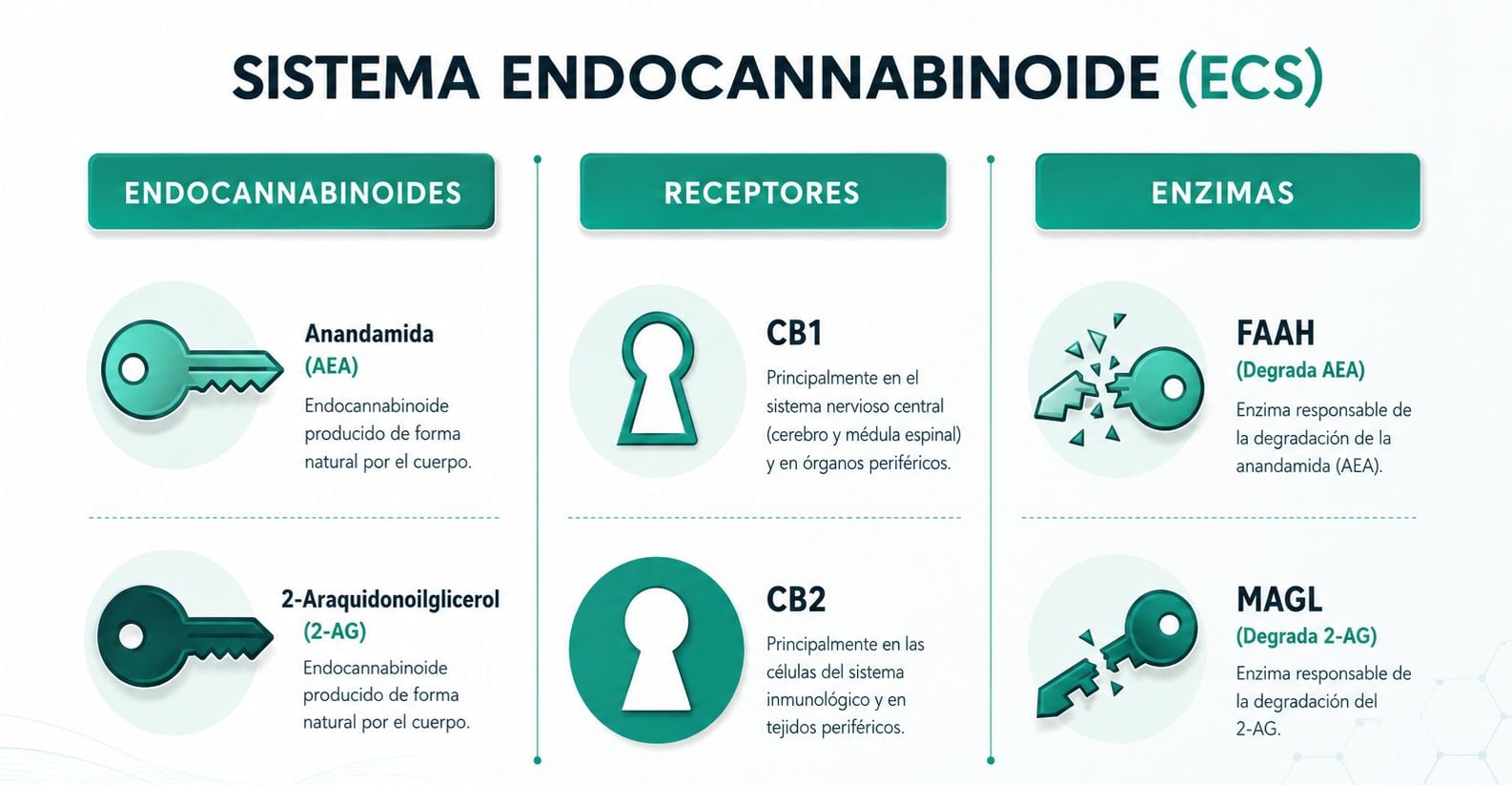
To understand it, you only need to know its three parts: some messengers, some receptors that receive them and some enzymes that remove them once they have done their job.
The three components of the endocannabinoid system
- The messengers the body produces itself (endocannabinoids): molecules very similar to the cannabinoids in the cannabis plant (2). The main ones are anandamide and 2-AG.
- The receptors that pick up the signal (cannabinoid receptors): proteins on the surface of cells, mainly the ones known as CB1 and CB2 (3).
- The enzymes that switch off the signal (FAAH and MAGL): they are in charge of producing and, above all, removing endocannabinoids once they have done their job (4).
These three elements work together to return the body to its balance (homeostasis) (5).
CB1 and CB2 cannabinoid receptors: how they act in the body
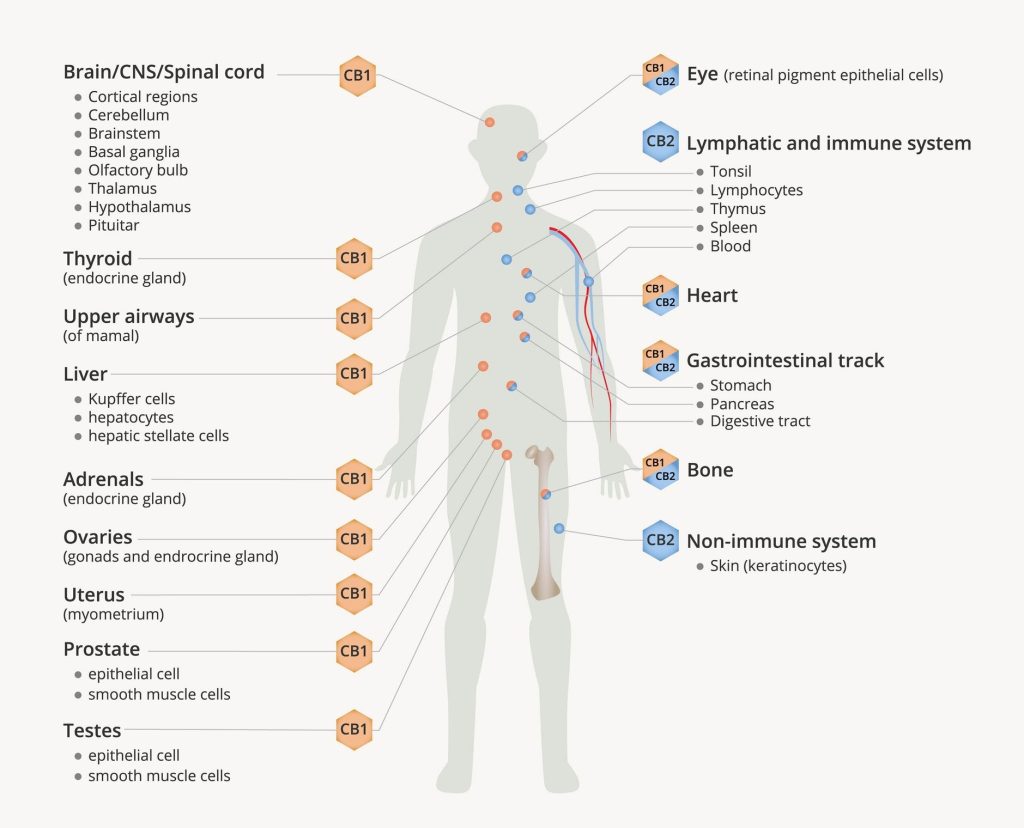
Cannabinoid receptors explain how cannabinoids act in the body: they are the point where the messengers dock onto cells. There are two main ones, and each one takes care of different things:
- CB1, mainly in the brain and nervous system: it regulates movement, memory, appetite and mood (11).
- CB2, mainly in the immune system: it helps control inflammation and the body's defences (10).
When the body releases anandamide or 2-AG, these molecules dock onto CB1 or CB2 and trigger just the right response to restore balance.
Anandamide and 2-AG: the endocannabinoids, the natural messengers of the ECS
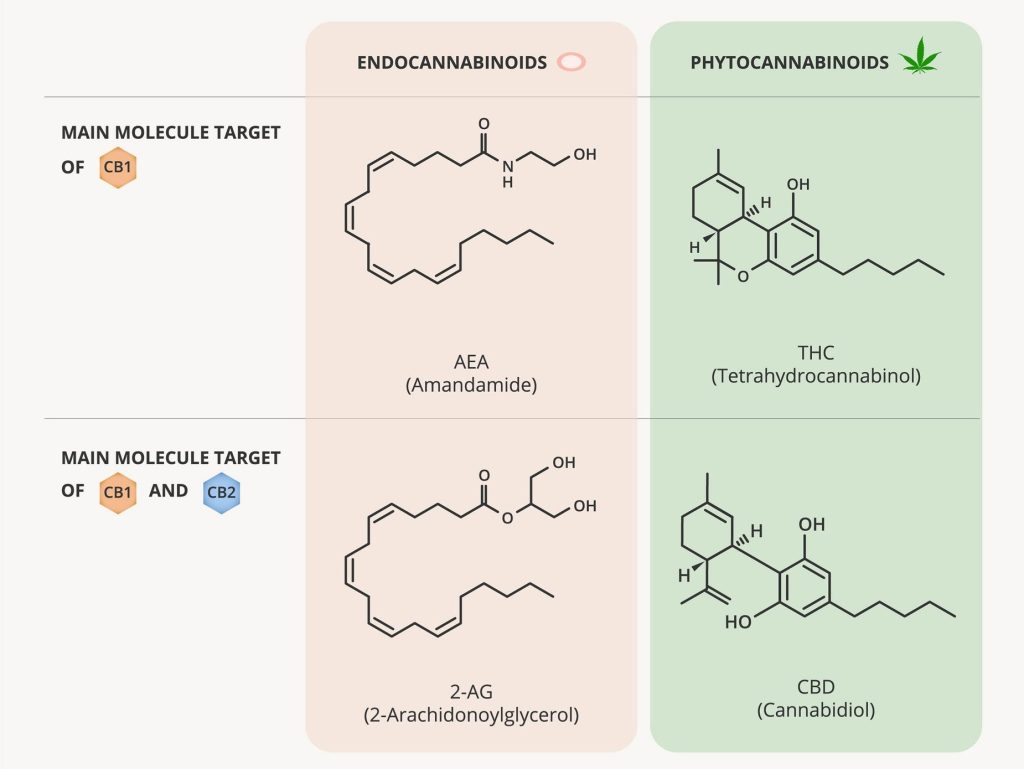
Anandamide and 2-AG are the system's own messengers, sometimes called the molecules of happiness:
- Anandamide is associated with pleasure and relaxation: its name comes from the Sanskrit ananda, which means ‘bliss’ (2).
- 2-AG acts on the body's defences and inflammation, and helps protect neurons (12).
The body does not store them: it makes them only when it needs them, which allows it to respond quickly to stress, pain or any imbalance (2).
The enzymes that regulate how long the effects last
Endocannabinoid enzymes decide how long the messengers' effects last. The two most important are FAAH (which breaks down anandamide) and MAGL (which breaks down 2-AG) (4).
Thanks to them, the system responds with precision, switching the signal on and off at just the right moment. This fine-tuned regulation explains why the ECS is involved in such different processes as memory, appetite and pain.
What happens when the endocannabinoid system is out of balance?
If this system works well, the body stays in balance. But when it is disrupted, problems can appear linked to:
- Mood disorders such as anxiety or depression (7).
- Chronic pain, both from inflammation and of nervous origin (13).
- Metabolic problems such as obesity and weight management (14).
- Sleep disorders (8).
- Chronic inflammation that persists over time (13).
Some studies suggest that an underactive endocannabinoid system could be behind several conditions; this is what is known as clinical endocannabinoid deficiency (15). That is why research is looking at how certain habits and natural compounds may help rebalance it safely.
The endocannabinoid system and homeostasis: the balance your body needs
Homeostasis is the body's ability to stay stable even when the environment changes (5), and the endocannabinoid system is one of its central parts.
It works like a sensor: it detects imbalances and sends corrective signals to each organ (16). If there is too much inflammation, it releases messengers to reduce it (17); if neurons become overexcited, it lowers their activity (18). That ability to self-regulate makes it a pillar of health (19).
Appetite and metabolism: the role of the endocannabinoid system
One of the most studied areas is its relationship with hunger and metabolism (5). The CB1 receptors in the brain (specifically in the hypothalamus) influence the sensation of appetite and how fat is stored (6). This also explains why cannabis increases appetite, the well-known ‘munchies’ effect.
In fact, drugs that block these receptors have been tested as a treatment for obesity (14). In addition, these messengers help balance energy expenditure and nutrient absorption (19).
The endocannabinoid system and digestive health
The digestive tract is full of CB1 and CB2 receptors, a sign of how important the endocannabinoid system is for digestion. It regulates gut movement, gastric juices and the intestine's own defences (20).
That is why its study has gained relevance for digestive problems such as irritable bowel syndrome or Crohn's disease (21). We explore this further in CBD for the gut.
Why does the endocannabinoid system activate?
For years this system was thought to work in a simple way: a cannabinoid bound to a receptor and produced an effect. We now know that the reality is more complex and that several mechanisms are involved (22)(23):
- Substances that activate or block cannabinoid receptors (22).
- Compounds that change the receptor's sensitivity to other molecules (what is known as allosteric modulation) (25).
- Substances that slow down the enzymes (FAAH and MAGL) so the messengers last longer (24).
- The activation of other related receptors in the system (known as TRPV and GPR55) (26).
- Differences in response between people depending on factors such as sex, which are still being studied (27).
So, when we talk about ‘activating’ the endocannabinoid system, we really mean stimulating or fine-tuning it to restore internal balance. And the good news is that some natural strategies help the body produce more messengers and make them last longer, so the system works better (24).
How to activate the endocannabinoid system naturally
The most sustainable way to boost this system is to look after your day-to-day habits: move, rest, eat well and reduce stress. These are the actions with the most scientific backing.
Manage stress: calm to regulate your emotions
Managing stress is one of the most direct ways to support the endocannabinoid system (28). Calm is not just a feeling: it is also brain chemistry. Simple practices such as slow breathing, meditation, yoga or going for a screen-free walk improve how the body adapts and translate into a better mood, better sleep and less muscle tension. If you are looking for extra support, we explain how to use CBD to reduce stress.
Exercise and the endocannabinoid system: anandamide and the ‘runner's high’
Exercise is one of the most studied natural activators of the endocannabinoid system. After moderate or intense aerobic activity, the body produces more anandamide, which is associated with the sense of wellbeing known as the ‘runner's high’ (29). You don't need to train flat out: brisk walking, running, cycling, strength training or dynamic yoga work if you practise them regularly (30). Find out more about the benefits of CBD for athletes.
Look after your diet: the foundation of balance
A large part of how to boost the endocannabinoid system comes down to avoiding what hinders communication between cells: too many ultra-processed foods, sugars and refined fats (31). The most useful approach is to prioritise fresh foods, vegetables, quality protein and healthy fats. Eating dinner early also supports rest and the body's overnight recovery.
Omega-3 and healthy fats for the endocannabinoid system
The system's messengers are made from fats, so the quality of the fats in your diet influences how it works (32). Go for foods rich in omega-3:
- Oily fish (sardines, mackerel, salmon)
- Walnuts
- Chia or flax seeds
- Extra virgin olive oil
- Avocado
Keeping a good balance between omega-3 and omega-6 improves the metabolic environment and helps control inflammation.
Add herbs and spices: beta-caryophyllene
Some aromatic plants contain beta-caryophyllene, one of the terpenes that act on the endocannabinoid system, especially on the CB2 receptor (33). Bringing them into your cooking is an easy way to enrich your diet:
- Black pepper
- Rosemary
- Oregano
- Sage
- Parsley
- Cloves
- Perilla (Perilla frutescens)
You don't need supplements: regular use in the kitchen is already a good starting point.
Sleep and the endocannabinoid system: why rest rebalances it
Sleep is a key regulator. Because the endocannabinoid system helps balance the nervous system, sleeping too little disrupts how it works. Consistent rest stabilises anandamide and 2-AG levels throughout the day (34) and improves stress management and recovery. If you find it hard to rest, we explain how to use CBD for sleep.

CBD and the endocannabinoid system: how it acts as a modulator
CBD (cannabidiol) is studied for its ability to influence this system, although its action is not the same as that of THC. CBD does not bind strongly to the CB1 and CB2 receptors; instead, it acts as a tuner for the system, influencing:
- The enzymes that remove the messengers (such as FAAH).
- The receptors linked to pain and emotional balance.
- The mechanisms that regulate the nervous system.
That is why CBD is associated with the search for balance in areas such as rest, tension, recovery and emotional wellbeing. You can see how they are alike and how they differ in CBD vs THC and learn more about the effects of CBD.
Hemp and full-spectrum extracts: the entourage effect
Hemp extract is one of the most common sources of CBD. Full-spectrum CBD oils keep, alongside CBD, other compounds from the plant such as terpenes and flavonoids. Together they all act in synergy, something known as the entourage effect, which is more complete than CBD on its own. If you are unsure which to choose, we can help with the differences between full spectrum, broad spectrum and isolate.
If you want to explore CBD as support for the balance of your endocannabinoid system, our full-spectrum oils preserve the terpenes and natural compounds of hemp.
What happens when you take cannabinoids
The endocannabinoid system is connected with other brain pathways that regulate messengers such as GABA, dopamine and serotonin, involved in calm, motivation and mood (the so-called molecules of happiness). That is why cannabinoids can influence that balance, always within responsible use. If you want to know how each format is used, see the ways to use CBD.
Looking after your endocannabinoid system means looking after your wellbeing
Boosting the endocannabinoid system ultimately means supporting the body's natural ability to maintain its balance. It is not about quick fixes, but about strengthening it with sustained habits: staying active, sleeping well, eating quality food and learning to manage stress.
For those who want to go a step further, CBD and hemp extracts can be explored as natural support, always with verified information and responsible use. Any use for therapeutic purposes should be done under professional guidance, as European regulations vary and the scientific evidence is still developing. Cannactiva CBD products are intended for external use.
Frequently asked questions about the endocannabinoid system
How does the endocannabinoid system work in the body?
It is a biological network present in all vertebrates that maintains the body's internal balance (homeostasis). It does this by combining three parts: the messengers the body produces (endocannabinoids), the receptors that receive them (CB1 and CB2) and the enzymes that remove them when they are no longer needed.
What is the endocannabinoid system for?
It is key to regulating mood and the stress response, pain and inflammation, appetite and satiety, the sleep-wake cycle, the body's defences and memory. Because it is involved in so many processes, it is considered essential for health and wellbeing.
What is the difference between endocannabinoids and phytocannabinoids?
Endocannabinoids are produced by the body itself (such as anandamide and 2-AG). Phytocannabinoids, such as CBD or THC, come from the plant and also interact with the system, but in a different way: CBD, for example, does not bind directly to CB1 and CB2, but adjusts their activity to favour balance.
How is the endocannabinoid system activated naturally?
Through everyday habits: regular exercise, good rest, stress management and a balanced diet rich in omega-3. These habits help the body produce and make better use of its own messengers.
Does exercise activate the endocannabinoid system?
Yes. It is one of its most studied natural activators: physical activity increases the production of anandamide, linked to the sense of wellbeing known as the ‘runner's high’. You don't need to train intensely; brisk walking, gentle running, cycling or regular dynamic yoga already stimulate the system.
What foods help the endocannabinoid system?
Above all those rich in omega-3 (oily fish, walnuts, chia or flax seeds, extra virgin olive oil and avocado), because its messengers are made from fats. Herbs and spices such as black pepper, rosemary or oregano provide beta-caryophyllene, which interacts with the CB2 receptor.
Does stress affect the endocannabinoid system?
Yes. Chronic stress can disrupt how it works and make internal balance harder. Reducing it helps normalise the system and improves sleep, recovery and mood.
What is the relationship between the endocannabinoid system and CBD?
CBD can influence the endocannabinoid system by helping to modulate processes such as inflammation, stress or the perception of pain. Unlike THC, it does not produce psychoactive effects. In fact, the World Health Organization concludes that CBD is well tolerated and has no potential for abuse or dependence (Cannabidiol (CBD): Critical Review Report — WHO, 2018).
Can the endocannabinoid system be activated quickly?
Some actions have an almost immediate effect, such as exercise or slow breathing. However, the most stable benefits appear when habits are maintained over time.
The aim of this article is informational and seeks to offer scientific information in language that is understandable to the general public. Its content may complement, but should never replace, the diagnosis or treatment of any illness or symptom. Cannactiva CBD products are intended for external use.
References
- Pertwee RG. Cannabinoid pharmacology: the first 66 years. Br J Pharmacol. 2006;147 Suppl 1(Suppl 1):S163–S171.
- Pete DD, Narouze SN. Endocannabinoids: Anandamide and 2-Arachidonoylglycerol (2-AG). In: Narouze SN, ed. Cannabinoids and Pain. Cham: Springer; 2021.
- Howlett AC, Abood ME. CB1 and CB2 Receptor Pharmacology. Adv Pharmacol. 2017;80:169–206.
- Di Marzo V, De Petrocellis L, Bisogno T, Melck D. Metabolism of anandamide and 2-arachidonoylglycerol: an historical overview and some recent developments. Lipids. 1999;34 Suppl:S319–S325.
- Filho R, Marchiori C, Malheiros K. Relationship of the Endocannabinoid System with Hormonal Functions. Middle East Res J Med Sci. 2024;4:245–260.
- Jager G, Witkamp RF. The endocannabinoid system and appetite: relevance for food reward. Nutr Res Rev. 2014;27(1):172–185.
- Ashton CH, Moore PB. Endocannabinoid system dysfunction in mood and related disorders. Acta Psychiatr Scand. 2011;124(4):250–261.
- Camberos-Barraza J, et al. Sleep, Glial Function, and the Endocannabinoid System: Implications for Neuroinflammation and Sleep Disorders. Int J Mol Sci. 2024;25(6):3160.
- Zhang J, et al. The Endocannabinoid System Contributes to Memory Deficits Induced by Rapid-eye-movement Sleep Deprivation in Adolescent Mice. Neuroscience. 2020;433:174–183.
- Svízenská I, Dubový P, Sulcová A. Cannabinoid receptors 1 and 2 (CB1 and CB2), their distribution, ligands and functional involvement in nervous system structures—a short review. Pharmacol Biochem Behav. 2008;90(4):501–511.
- Callén L, et al. Cannabinoid receptors CB1 and CB2 form functional heteromers in brain. J Biol Chem. 2012;287(25):20851–20865.
- Sugiura T, et al. Biochemistry, pharmacology and physiology of 2-arachidonoylglycerol, an endogenous cannabinoid receptor ligand. Prog Lipid Res. 2006;45(5):405–446.
- Donvito G, et al. The Endogenous Cannabinoid System: A Budding Source of Targets for Treating Inflammatory and Neuropathic Pain. Neuropsychopharmacology. 2018;43(1):52–79.
- Rakotoarivelo V, Sihag J, Flamand N. Role of the Endocannabinoid System in the Adipose Tissue with Focus on Energy Metabolism. Cells. 2021;10(6):1279.
- Russo EB. Clinical Endocannabinoid Deficiency Reconsidered: Current Research Supports the Theory in Migraine, Fibromyalgia, Irritable Bowel, and Other Treatment-Resistant Syndromes. Cannabis Cannabinoid Res. 2016;1(1):154–165.
- Roche R, et al. Presence of the cannabinoid receptors, CB1 and CB2, in human omental and subcutaneous adipocytes. Histochem Cell Biol. 2006;126(2):177–187.
- Clayton N, et al. CB1 and CB2 cannabinoid receptors are implicated in inflammatory pain. Pain. 2002;96(3):253–260.
- Rathod SS, et al. Neuroinflammation in the Central Nervous System: Exploring the Evolving Influence of Endocannabinoid System. Biomedicines. 2023;11(10):2642.
- Freitas HR, et al. Polyunsaturated fatty acids and endocannabinoids in health and disease. Nutr Neurosci. 2018;21(10):695–714.
- Smid SD. Gastrointestinal endocannabinoid system: multifaceted roles in the healthy and inflamed intestine. Clin Exp Pharmacol Physiol. 2008;35(11):1383–1387.
- Bochenek MS, et al. Endogenous Cannabinoids in Crohn's Disease. Appl Sci. 2024;14(15):6646.
- Lambert DM, Fowler CJ. The endocannabinoid system: drug targets, lead compounds, and potential therapeutic applications. J Med Chem. 2005;48(16):5059–5087.
- Battista N, Di Tommaso M, Bari M, Maccarrone M. The endocannabinoid system: an overview. Front Behav Neurosci. 2012;6:9.
- van Egmond N, Straub VM, van der Stelt M. Targeting Endocannabinoid Signaling: FAAH and MAG Lipase Inhibitors. Annu Rev Pharmacol Toxicol. 2021;61:441–463.
- Yuan J, Yang B, Hou G, Xie XQ, Feng Z. Targeting the endocannabinoid system: Structural determinants and molecular mechanism of allosteric modulation. Drug Discov Today. 2023;28(7):103615.
- Gómez-Cañas M, et al. Endocannabinoid-Binding Receptors as Drug Targets. In: Maccarrone M, ed. Endocannabinoid Signaling. Methods in Molecular Biology, vol 2576. New York: Humana; 2023.
- Rajasekera TA, et al. Sex differences in endocannabinoid and inflammatory markers associated with posttraumatic stress disorder. Prog Neuropsychopharmacol Biol Psychiatry. 2025;142:111501.
- de Melo Reis RA, et al. Quality of Life and a Surveillant Endocannabinoid System. Front Neurosci. 2021;15:747229.
- Siebers M, Biedermann SV, Fuss J. Do Endocannabinoids Cause the Runner's High? Evidence and Open Questions. Neuroscientist. 2023;29(3):352–369.
- Matei D, et al. The Endocannabinoid System and Physical Exercise. Int J Mol Sci. 2023;24(3):1989.
- Watkins BA. Diet, endocannabinoids, and health. Nutr Res. 2019;70:32–39.
- Watson JE, Kim JS, Das A. Emerging class of omega-3 fatty acid endocannabinoids & their derivatives. Prostaglandins Other Lipid Mediat. 2019;143:106337.
- Russo EB. Beyond Cannabis: Plants and the Endocannabinoid System. Trends Pharmacol Sci. 2016;37(7):594–605.
- Hanlon EC. Impact of circadian rhythmicity and sleep restriction on circulating endocannabinoid (eCB) N-arachidonoylethanolamine (anandamide). Psychoneuroendocrinology. 2020;111:104471.


