
Muscle recovery is the other half of training: the moment when the body repairs damaged fibres and gets ready for the next effort. More and more people —athletes and non-athletes alike— are turning to cannabidiol (CBD), a natural hemp compound that is not psychoactive, to support that process. Research suggests that CBD may help to relieve muscle pain, reduce inflammation and improve rest after exercise, supporting a more comfortable recovery —always as a complement, not a substitute for rest, hydration and a sound training plan.
Find out about all the benefits and the effect on performance in our complete guide to CBD for athletes; here we focus on muscle recovery, especially through CBD creams and CBD oils.
What is CBD (cannabidiol)?
CBD, or cannabidiol, is one of the active compounds found naturally in the hemp plant (Cannabis sativa) and it does not produce psychoactive effects, which makes it suitable for those seeking benefits without mental alterations.
In fact, the World Health Organization (WHO) concluded in 2018 that CBD has no potential for abuse or dependence and, in general, it is well tolerated, with a good safety profile (7).
Benefits of CBD for muscle recovery
CBD supports muscle recovery in a comprehensive way, addressing multiple aspects of the body's repair and regeneration process. It acts on the endocannabinoid system, which regulates functions such as pain and inflammation. Thanks to this, CBD can relieve muscle pain after an intense workout and help reduce inflammation, allowing the muscles to recover faster. In addition, it has a relaxing effect that improves sleep quality and reduces stress, key factors because poor rest hinders recovery.
CBD and muscle pain relief
After an intense workout it is common to feel muscle pain. CBD has analgesic properties that help reduce this pain by interacting with the pain receptors of the nervous system, improving overall comfort. We go deeper into the use of CBD for muscle pain in its dedicated guide.
CBD and reducing inflammation
Inflammation is a natural response to physical effort, but if it persists it can delay recovery. CBD acts as a natural anti-inflammatory through the endocannabinoid system, helping to control muscle inflammation and support regeneration (5). We look at this in depth in our guide on CBD as an anti-inflammatory.
CBD, sleep and relaxation for recovery
A good night's rest is essential for muscle recovery. CBD may promote quality sleep by reducing anxiety and improving relaxation: it enhances adenosine signalling, a neurotransmitter that promotes sleep (1). Restful sleep supports muscle repair and growth (6). If you struggle to sleep, we have a guide dedicated to CBD for sleep.
CBD and recovery of muscle strength
CBD helps with muscle repair by promoting the differentiation of satellite cells —the cells responsible for regenerating muscle tissue damaged during exercise (1)—. In a study that measured strength with the one-repetition maximum (1RM) test, participants who took CBD regained their muscle strength faster than those who did not (5).
Does CBD work as a muscle relaxant?
“Muscle relaxant” is one of the most common searches around CBD. Let's be honest: CBD is not a classic muscle relaxant that blocks a specific pathway. What the studies do show is that, thanks to its analgesic, anti-inflammatory and relaxing effects —and its support for rest—, it can indirectly help to relieve muscle tension, overload and discomfort, especially when applied topically. It is a complement, not a substitute for rest, hydration and a sound training plan.
Ways to take CBD for muscle recovery
There is no single way to use CBD to recover: it depends on whether you are looking for localised relief in the overloaded area or a more general effect on rest and stress. If you want the full picture of formats, methods and dosages, we cover it in our guide on how to take CBD. For muscle recovery, the two most common formats are topicals and oils.
Topical CBD creams and balms
Applying topical CBD products directly to the affected muscles can provide localised relief. CBD physiotherapy creams are ideal for post-workout use: our CBD cream for physiotherapy and CBD massage oil are designed to massage the worked area and make the most of the massage itself.
CBD oils
CBD oils are the most versatile format. Unlike topicals, which act on the area where they are applied, oil aims for a more general effect: many people add it to their routine —usually at night— to support rest and relaxation and reduce stress and anxiety (including pre-event or pre-competition nerves), factors that directly influence how well the body recovers between sessions. In most European countries they are sold for external use; check the regulations in force in your country.
CBD sports drinks
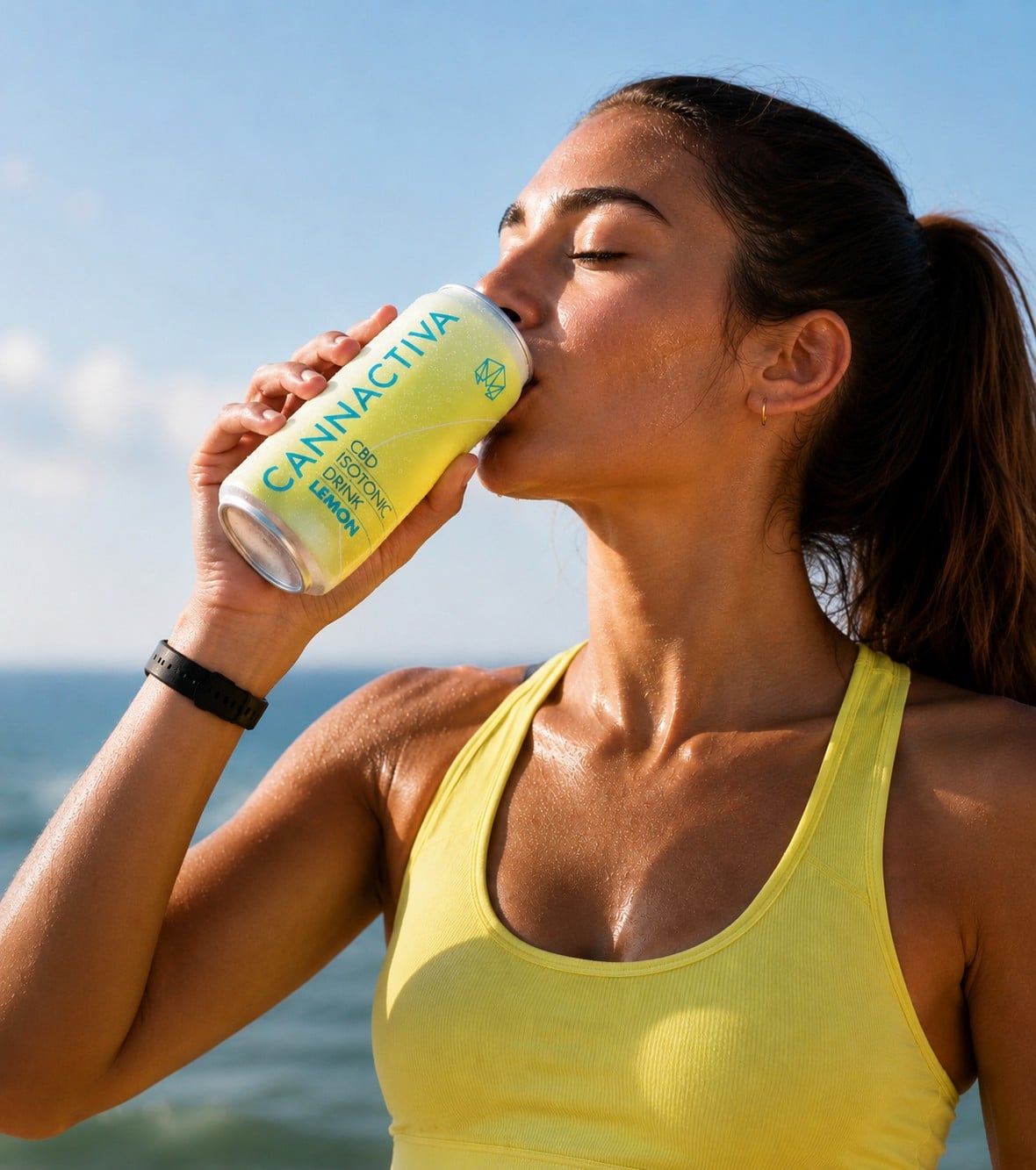
In the United Kingdom and other countries where CBD is regulated for food use, it is common to find CBD sports drinks, isotonic drinks, gels and bars, usually with doses of 10-12 mg per serving. They are designed to be taken during or after exercise, combining hydration and replenishment with the potential benefits of CBD for recovery in a single product: helping to manage inflammation, stress and rest after the effort.
How to add CBD to your recovery routine
CBD can support recovery by promoting rest and all-round relief. Its effectiveness may vary depending on when it is taken; some studies point to taking it immediately after exercise (4).
The right dose
Doses of 60 mg of CBD taken orally have generally been used, but finding the right dose for each person is essential. Check with a professional, especially if you take anticoagulants or other medication. We go deeper into how to adjust it in our guide on the optimal CBD dose.
Combining with other recovery strategies
CBD complements other effective practices: massage, a sound training plan, a suitable diet, stretching and rest. Recovery is not only about reducing pain, but also restoring strength; good rest is essential and CBD can be an ally.
How CBD works in muscle recovery
During intense workouts the muscles undergo micro-tears, a normal part of the strengthening process, which generate inflammation and release muscle-damage biomarkers. Speeding up recovery is key to not delaying the next workout.
How does CBD affect muscle-damage biomarkers?
After exercise, the muscles release creatine kinase (CK) and myoglobin (Myo), a reflection of fibre damage. In one study, athletes who took 60 mg of CBD after exercise showed, at 72 hours, lower levels of these biomarkers than the placebo group, regained strength faster and reported less persistent pain (3, 4, 5).
Frequently asked questions
Is CBD useful as a natural muscle relaxant?
CBD does not act as a classic muscle relaxant, but thanks to its analgesic, anti-inflammatory and rest-related effects it can indirectly help relieve tension and overload, especially in topical form.
How long does CBD take to help recovery?
It varies depending on the person, the dose and the format. With topicals the relief is localised and fairly immediate; taken orally the effect is more general. It is worth observing your response over the first few weeks.
Is CBD better as a cream or an oil for the muscles?
For a specific area (overload, massage) the most common choice is a topical (cream or massage oil). For a more general effect, CBD oil. Many people combine both.
What CBD dose is used for recovery?
There is no standard dose. The recommendation is to start low and adjust gradually; studies have used around 60 mg. Check our dosage guide and a professional if you take medication.
Conclusion
Although more research is still needed, the existing studies point to promising benefits of CBD for muscle recovery: reducing inflammation, modulating muscle-damage biomarkers and speeding up recovery time after intense workouts. For those looking for natural, minimally invasive alternatives, CBD can be a valuable tool, always as a complement and under the guidance of a professional.
This article is for informational purposes only and does not constitute medical advice. Cannactiva products are not medicines or food supplements; in most European countries CBD is not regulated for oral use, so they are intended for external use. They are not intended to diagnose, treat, cure or prevent any disease. If you take medication or have a health condition, consult a healthcare professional before using CBD.
References
- Rojas-Valverde, D., & Fallas-Campos, A. (2023). Cannabidiol in sports: insights on how CBD could improve performance and recovery. Frontiers in Pharmacology, 14, 1210202.
- Aymard, A. L., Aranda, C., & Carlo, M. B. D. (2013). Estudio de parámetros bioquímicos en jugadores de fútbol de élite. Acta Bioquímica Clínica Latinoamericana, 47(1), 101–111.
- Isenmann, E., Veit, S., Starke, L., Flenker, U., & Diel, P. (2021). Effects of Cannabidiol Supplementation on Skeletal Muscle Regeneration after Intensive Resistance Training. Nutrients, 13(9), 3028.
- Isenmann, E., Veit, S., Flenker, U., Lesch, A., Lachenmeier, D. W., & Diel, P. (2024). Influence of short-term chronic oral cannabidiol application on muscle recovery and performance after an intensive training protocol. Journal of the International Society of Sports Nutrition, 21(1), 2337252.
- Isenmann, E., et al. (2021). Effects of Cannabidiol Supplementation on Skeletal Muscle Regeneration after Intensive Resistance Training. Nutrients, 13(9), 3028.
- Bird, S. (2013). Sleep, Recovery, and Athletic Performance: A Brief Review and Recommendations. Strength and Conditioning Journal, 35, 43–47.
- World Health Organization (WHO Expert Committee on Drug Dependence). (2018). Cannabidiol (CBD): Critical Review Report. Geneva, 4–7 June 2018.


