
HHC or hexahydrocannabinol is a new synthetic cannabinoid that has emerged strongly in some CBD product stores. HHC products are unregulated in many countries, and have a mild psychoactive effect, so they have quickly positioned themselves as an easily available “legal” alternative to THC for users looking for a “high” producing substance.
While CBD or cannabidiol is a non-psychoactive cannabis derivative that has gained worldwide acceptance thanks to its therapeutic benefits, HHC is introduced as a compound with ambiguous legality and effects that generate debate.
Today in Cannactiva 's post we address the crucial differences between CBD and HHC, a comparison from their origin to their impact on the user.
What is HHC and how is it related to Cannabis?
HHC is a synthetic derivative of cannabis obtained through chemical modification of THC or tetrahydrocannabinol (the intoxicating compound in marijuana). It can also be obtained from CBD, in a more complex form.
Products with HHC, HHC buds, HHC resins, HHC vapes and more are on the market added to hemp products, such as CBD flowers or CBD resins, products sprayed with HHC or with this synthetic compound added during processing. It is also found in HHC vapers and other derivatives.
Main difference between HHC and CBD
There are many differences between CBD and HHC. The main difference is that HHC produces psychoactive effects, while CBD offers its benefits without causing significant alterations in perception or consciousness. These differences between CBD and HHC are due to their molecular structure, where chemically they present great differences, which cause them to interact differently with the receptors of the endocannabinoid system.
CBD vs HHC: comparison table
At a glance, these are the key differences between CBD and HHC in origin, effects, legality and safety:
Aspect | CBD | HHC |
|---|---|---|
🌱 Origin | Natural (cannabis) | Semi-synthetic (laboratory) |
⚡ Psychoactive | Doesn't get you high | Yes, gets you high (THC-like) |
💊 Use | Wellness, studied therapeutic use | Recreational (high) |
⚖️ Legal in Spain | Legal (<0.2% THC) | Banned (April 2025) |
🔬 Research | Extensive | Very limited |
🔁 Addiction | No | Addictive potential |
🧪 Drug test | Doesn't test positive | May test positive |
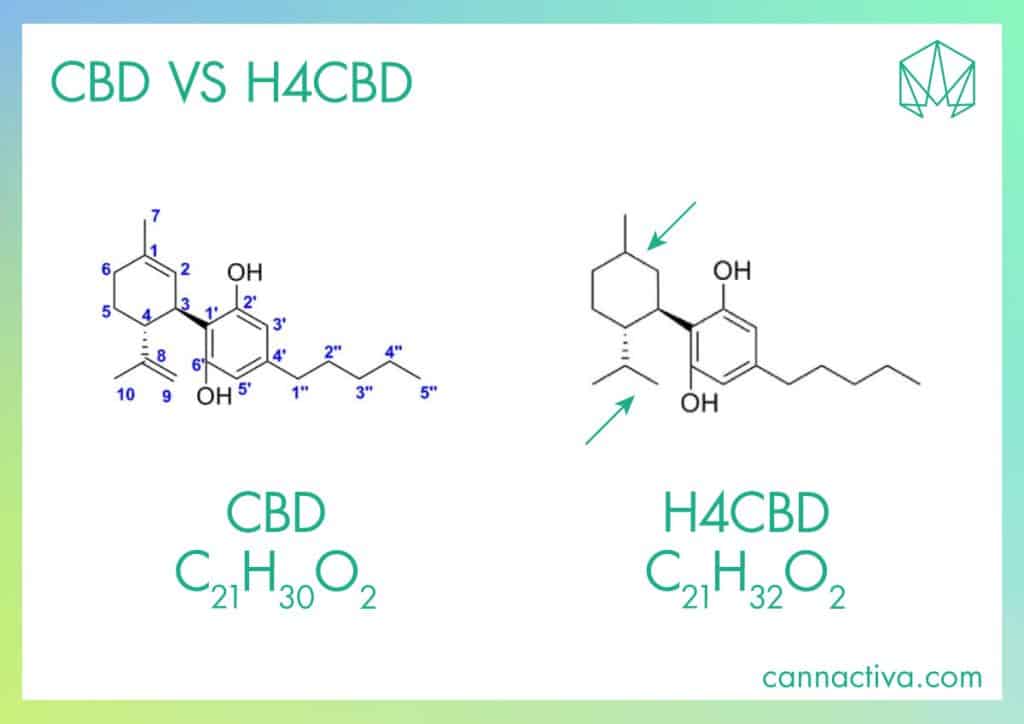
In addition, the effects of CBD and its safety margin are widely known. In contrast, HHC is an under-researched synthetic compound, and it is only recently introduced on the market (the first HHC products were first detected in Europe in 2022).
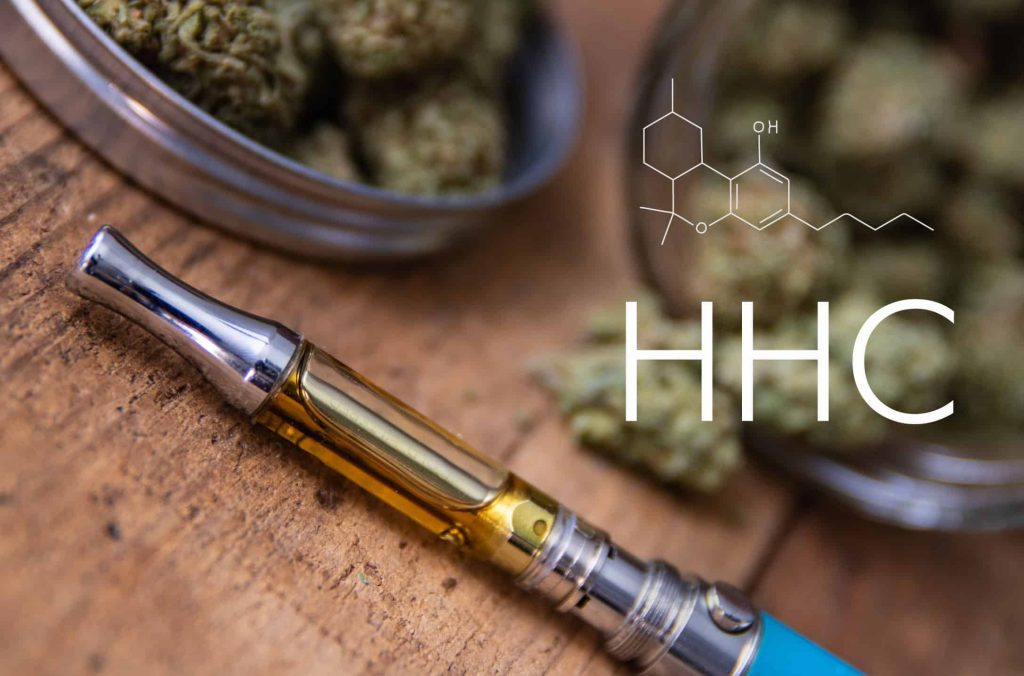
The cannabinoid molecule is structurally very different: CBD has a chemical formula C21H30O2 and HHC is C21H32O2.
CBD or HHC: Differences in Effects
CBD and HHC have in common that they act on the endocannabinoid system of the body, although they do so in very different ways, and therefore their effects are considerably different.
Mainly, HHC produces high and psychoactive effects, while CBD does not.
CBD has anti-inflammatory, analgesic and anxiolytic properties, and has been studied to influence the levels of neurotransmitters such as serotonin, dopamine or GABA, increasing the feeling of well-being. In addition, cannabidiol is being investigated for the treatment of conditions such as anxiety, chronic pain, and certain sleep disorders.
While CBD is found naturally in cannabis, offering relaxing effects without intoxicating, HHC is the result of chemical modifications of cannabis oil, and is sold for a psychoactive experience, within an often ambiguous legal framework.
In contrast, HHC does not have the therapeutic properties that CBD has. It is not known to have health benefits, and is mainly used commercially, to provide a psychoactive substance that is not yet illegal or regulated in many countries.
Another important difference is that CBD is not addictive. In fact, it is quite the opposite: it has been studied as a treatment for giving up addictions such as tobacco or alcohol.
In contrast, HHC does have addictive potential, which is why many countries have begun to ban it.
Finally, CBD is generally a safe and well-tolerated compound, with few and mild side effects, including drowsiness and changes in appetite.
In contrast, HHC is a compound of unknown toxicity, and can produce serious side effects, such as tremors, vomiting, anxiety, "bad trips", mental confusion, malaise, tachycardia, chest pain and blood pressure spikes. The intensity of the adverse effects depends on the dose consumed.
Legal differences between cannabidiol and hexahydrocannabinol
The legal differences between CBD and HHC vary from country to country.
Generally, CBD is legal in many countries around the world and is regulated for oral, topical and/or medicinal use, depending on the country.
These CBD products must contain less than 1% THC (with limits of 0.5% THC or 0.3% THC, depending on the country). It is a natural and widely studied cannabinoid, whose safety and adverse effects are known, and which has demonstrated therapeutic benefits without psychoactive effects.
HHC has already begun to be banned in some countries because of its addictive potential. It is unregulated and its legal status is often ambiguous in countries where it is not prohibited.
2026 legal update. In Spain, the regulatory landscape for cannabis has advanced with Royal Decree 903/2025, of 7 October, which regulates the conditions for the preparation and dispensing of standardised cannabis-based compounded medicines under hospital control. Although it does not directly affect CBD for recreational use, it marks a milestone in the institutional recognition of cannabinoids as pharmacologically active substances. You can consult the full text on the official BOE.
Regarding HHC, the situation has tightened drastically: according to the EUDA's European Drug Report 2025 (European Union Drugs Agency), HHC is now listed as a controlled drug in at least 22 EU Member States as of February 2025. Moreover, in March 2025 the UN Commission on Narcotic Drugs voted to place HHC under the same regulations as delta-9-THC. That is why at Cannactiva we work exclusively with natural CBD without synthetic cannabinoids.
Does CBD get high?
Frequently asked questions about CBD and HHC
Is CBD a drug?
No. CBD is non-psychoactive: it doesn't get you high or alter your perception. The WHO considers it safe, with no potential for abuse or dependence. It is legal in Spain as long as it complies with the regulations (low THC content).
Is HHC legal in Spain?
No. HHC has been banned in Spain since April 2025 (Order SND/380/2025), which added it together with its derivatives to the list of controlled psychotropic substances.
Which is better, CBD or HHC?
If you're looking for wellness without a high, without risks and within the law, CBD. HHC is semi-synthetic, barely studied, with addictive potential and already illegal. CBD is natural, studied and safe.
Does HHC test positive on a drug test while CBD doesn't?
Correct. HHC may test positive due to cross-reactivity with THC, whereas CBD doesn't test positive in usual amounts. We explain it in does HHC test positive on a drug test?.
What is the legal alternative to HHC?
CBD (flowers, hash and oils), legal and studied. If you're coming from HHC looking for something milder, also check out the differences between HHC and THC.
CBD vs HHC: Conclusion
CBD and HHC have nothing to do with each other and present great differences in their origin, effects and legality. The only thing they are related is that they are sold in the same type of stores, and that both compounds are found in cannabis or smoking products, such as cannabis buds, vapes or resins.
From the information shown, it is up to each individual to choose what he or she wants to put in his or her body. The HHC market is very new and unregulated. It is safer to use CBD products without HHC. At Cannactiva it is clear to us, natural is always better! This is why we offer you the best quality CBD.


