
We have often heard hashish and pollen referred to interchangeably, as if they were the same product, but this is not entirely true. Both are obtained from cannabis, specifically, from the resin trichomes that cover the CBD flowers or marijuana flowers. Discover how they are obtained, their characteristics and the different methods of consumption for each one. And if you want to get straight to buying, we have gathered the options in our comparison of the best CBD hash.
Hashish and pollen: are they the same? Differences and similarities
The main difference between hash vs kief (pollen) is that “pollen” is the colloquial name given to this resin when it detaches from the plant, without being treated or pressed in any way. Hashish, on the other hand, is the result of compacting that pollen into a hashish tablet or ball.
Characteristic | Kief (pollen) | Hash |
|---|---|---|
Processing | Minimal (dry sifting) | Pressed with heat and pressure |
Texture | Loose, grainy powder | Compact and malleable |
Colour | Golden / light yellow | From brown to golden or black |
Concentration | Medium | Higher (compacted resin) |
Storage | Shorter | Longer (the plate keeps better) |
How are hashish and pollen obtained?
The resin of female marijuana flowers
The marijuana plant, when it has already flowered —that is, developed its flowers or buds— is covered with resin glands, also known as trichomes. The cannabis plant has different types of trichomes, which cover almost the entire plant, but the ones we are interested in are the glandular trichomes, which secrete the plant’s magical substances. These trichomes are especially concentrated in the female flowers of cannabis plants, and are packed with cannabinoids and terpenes in high concentration. This resin is highly valued by consumers, both medicinally and recreationally, given its properties and effects. It is from this resin that both pollen and hashish are extracted.
Pollen in male marijuana plants
In contrast, male marijuana plants produce pollen, but in this case the word corresponds to the proper botanical term: microscopic grains carrying the male genetic material (sperm cells) for the reproduction of flowering plants. When it comes to marijuana, however, male plants are of no interest because they do not produce flowers with a large amount of trichomes or resin, and because if they fertilise the female plants, the buds will end up with seeds.
You may be interested in: Buy CBD Resin 100% Legal and Online
What is marijuana pollen?
So, marijuana pollen is nothing more than the product obtained when the trichomes (rich in resin) detach from the female marijuana flowers, naturally or forcibly, with an appearance reminiscent of “pollen”.
The most traditional way to obtain pollen is by forcibly detaching the trichomes. For this, a sieve or mesh is used, on which the dried flowers, once harvested, are placed and shaken, usually with the help of a stick or pole. In this way the trichomes are filtered out as dust or pollen, hence the name. This resin powder is known internationally as kief (or kif); in Morocco, by contrast, kif traditionally referred to the blend of chopped cannabis and tobacco that was smoked.
Is pollen the same as kief?
Yes, in practice they are the same product: dry-sifted trichome powder. Internationally it is known as kief (also kif or keef), and in Spain we colloquially call it polen.
In general, pollen is considered to be of better quality when it has been filtered little and is the product of the first shakes in the mesh —the first dust to fall— because it usually carries less plant debris. The quality of the hashish also depends on the genetics of the plant, the harvesting method and the quality of the trichomes. At Cannactiva, we only use the pollen from our Premium CBD Flowers to make our hash.
Another traditional way of extracting pollen is the Charas method, popular in India and Nepal, which simply consists of rubbing the marijuana flowers with your hands (whether from the live plant or from dried flowers) so that the resin sticks to them.
THE BEST HASH AT THE BEST PRICE
Use the code HASH20 to get 20% off your next hash purchase.
How to make kief with a grinder?
An easy home method to extract pollen from the buds is to use a grinder. The grinder is a tool widely used by regular cannabis consumers, because it helps to grind and finely shred the buds.
When the marijuana buds are very resinous, as it shreds the flowers the grinder also causes part of that resin to detach, so that once we have removed the flower remains from the grinder, in the cavity below we are left with resin dust —that is, pollen.
How is cannabis pollen consumed?
Since pollen consists of small grains of trichomes full of resin, with the appearance of a coarse powder, it has traditionally been used as a seasoning or complement when rolling a marijuana joint or a hash joint. Pollen is consumed in different ways: inside the cigarette mixed with tobacco, or even mixed with cannabis flowers to obtain greater aroma and potency. Another way is to coat the outside of the cigarette or joint with the pollen, or to mix it inside a pipe.
What is hashish?
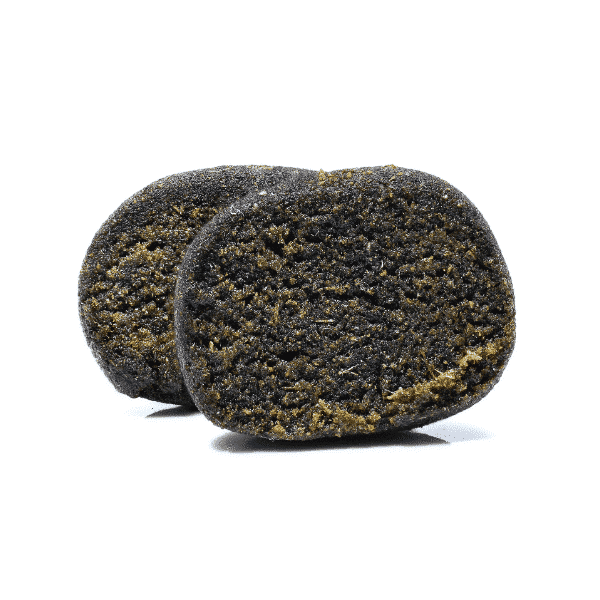
Once the pollen has been extracted from the marijuana flowers, we can compact it so that it has greater consistency and keeps better, since in a plate the resin is preserved better and for longer. In doing so we are making hashish, since, as we have been saying, hashish is the result of pressing the pollen, or kief.
How is hashish obtained?
There are several ways of pressing pollen to obtain hashish. Heat is usually applied —for example, with the help of a lighter— as it helps the pollen to compact and be moulded to your liking. The process is normally laborious and requires time and patience. In areas such as Afghanistan, in addition to heat, a liquid such as water or tea is used to help manipulate the resin and thicken it. That is why, after the pressing process, comes a drying process (which can take weeks or months, and for which animal skins are often used) that helps the liquid used to evaporate.
Depending on the origin of the cannabis, the extraction method, the type of pressing (and drying) or the final presentation, we can find several types of hashish. The best known by their origin are Moroccan, Afghan, Nepalese, Lebanese and Indian hashish.
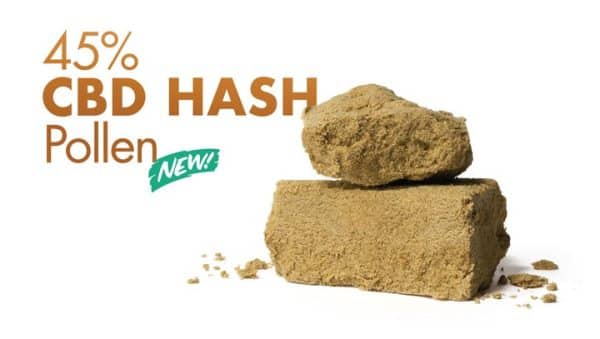
Depending on its processing method, we can find Dry Hash, Dry Sift, Charas, Apaleado, Rosin, Ice-O-Lator, Fresh Frozen, Bubble Hash or BHO and its variants. And depending on the type of pressing and its final presentation, we can come across tablets (or plates), balls, acorns or what is known as hashish pollen. You can expand on this in the post about the methods of cannabis extraction.
What is hashish pollen?
The hashish pollen is a type of hashish that is only lightly compacted. Although, as we have seen, strictly speaking pollen is the resin detached from the flower, a certain type of hash is also called pollen. This is because it is usually a lightly pressed hashish in whose texture the resin grains can still be seen. Also, when it is broken up, those grains come off easily and it is easier to crumble and chop than other, more pressed hash.
Other differences between hashish and pollen
Form of consumption
Just as we have explained that the consumption method for pollen is as a “seasoning” for joints, with plate or acorn hashish the method is slightly different. The main problem with hashish, when it comes to consuming it, is its density, which makes combustion difficult and is why it has traditionally been mixed with tobacco or marijuana to make it easier to light. There are other methods of consuming hashish, such as pipes or hookahs.
To consume the hash on its own, without having to mix it with anything, you can use vaporisers for concentrates such as the PAX Plus. If you prefer, it can be consumed orally by cooking the hash (in order to decarboxylate the cannabinoids) with some food to make it easier to ingest.
Cannabinoid content
The cannabinoid content of hashish and pollen can vary depending on several factors, including the strain of cannabis used and the production methods. In general, hashish has a more concentrated cannabinoid profile, with higher levels of THC compared with pollen. This is because hashish is produced by extracting and compressing the cannabinoid-rich resin, which increases the concentration of these compounds, such as tetrahydrocannabinol (THC) and cannabidiol (CBD). However, the cannabinoid profile can vary depending on the strain and the extraction process used to produce the hashish.
In fact, in the production of CBD hashish, even though it is made from CBD flowers (with a THC content below 0.2%), it sometimes results in a product with high THC levels due to the concentration of the active principles. For this reason, at a commercial level it is sometimes necessary to wash that hash so it loses its THC content and can be sold legally.
Pollen, on the other hand, generally contains a lower concentration of THC and other cannabinoids compared with hashish, although there can be variations depending on the extraction method and the genetics of the plant used.
Terpene content
Hashish, due to its higher concentration, contains more terpenes, and therefore manages to intensify the aromas of marijuana more, which will be more powerful than those of CBD flowers. In addition, hashish contains the terpene hashishene, formed from myrcene. This aromatic compound is what gives hashish its characteristic smell.
Is pollen purer than hashish?
At source they have the same purity: hashish is pollen to which heat and pressure have been applied. What changes is the texture and the concentration, not where the resin comes from.
How can you tell whether pollen or hashish is good quality?
Look at the aroma (intense and fresh), an even colour and the absence of plant debris; good hashish softens with the warmth of your fingers. The most reliable sign is that the product comes with lab analysis.
Hashish and pollen legality and safety: a tandem
In most countries, the legality of hashish and pollen is linked to their THC content, the compound considered illegal in marijuana. What many people do not know is that legality is also linked to product contamination: a study on contaminants in Moroccan hashish sold on the black market in Spain revealed alarming levels of E. coli contamination (especially in acorn hashish), probably due to the transport methods used. The hashish plates analysed, meanwhile, turned out to be mostly adulterated. This does not happen with legal (THC-free) hashish products, which undergo strict quality controls.
Therefore, if you do not know the origin of the hashish but want to enjoy the aromas of cannabis, it is probably safer to use legal hashish.
If you still have doubts and want to learn more about hashish, we recommend taking a look at our most complete guide to hashish. Everything you want to know is there!
Hash or kief: which is better?
There is no universal winner: it depends on what you are looking for. Kief (pollen) is the least processed option, with a loose texture and easy to dose by sprinkling it, ideal if you prefer something more natural and manageable. Hash concentrates the resin more and keeps better, so it is the choice if you are after intense aromas and a product that lasts. In any case, with legal products the priority is the origin and quality of the resin: in our comparison of the best CBD hash you will find a lab-tested selection with THC below 0.2%.
Whatever your choice, it is worth storing your hash properly so it keeps its properties. And remember that within hash there are many formats —from bubble hash to iceolator—, and that so-called blond pollen or blond hashish is another of the most sought-after formats.


