
Cannabis has been the subject of intense scientific research in the search for therapeutic compounds. One of these compounds is cannabigerol (CBG), a non-psychoactive cannabinoid with potential therapeutic benefits. CBG is one of the more than one hundred cannabinoids produced by cannabis and, despite being a minor cannabinoid, it is attracting growing interest. In this article we take a closer look at its origins, properties, effects, benefits and legal status.
The 3 key takeaways
- CBG (cannabigerol) is a non-psychoactive cannabinoid and the precursor of CBD and THC, which is why it is known as the “mother molecule” of cannabis.
- It doesn't get you high: it acts on the CB1 and CB2 receptors like THC, but produces no psychoactive effect.
- It is being researched for its potential anti-inflammatory, antibacterial, neuroprotective and appetite-stimulating properties; there is still no standard human dose.
What is CBG?
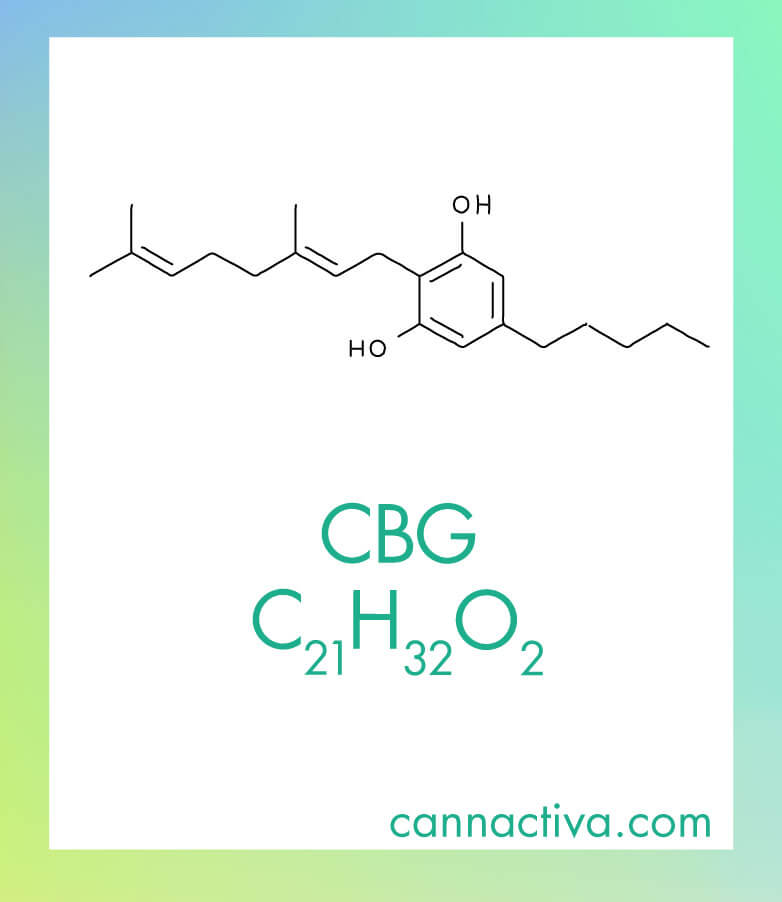
Cannabigerol (CBG) is a non-psychoactive cannabinoid present in the cannabis plant (Cannabis sativa), found in smaller amounts than the two best-known cannabinoids: cannabidiol (CBD) and tetrahydrocannabinol (THC).
In recent years, interest in CBG has grown thanks to the discovery of its potential benefits, which has driven the development of cannabis strains with higher concentrations of this cannabinoid and the appearance of CBG-rich products.
When was CBG discovered?
The discovery of CBG dates back to 1964, with its formal identification by Mechoulam and Gaoni, marking the start of scientific interest in this cannabinoid and its possible applications.
Where is CBG found?
CBG is found in the trichomes of the cannabis plant, especially in young flowers. As the plant matures, CBGA (the precursor of CBG) is converted into other cannabinoids such as THC, CBD and CBC, which results in typically low concentrations of CBG in mature plants (4).
Growers have developed cannabis strains with higher concentrations of CBG. At Cannactiva, you will find the Suave G (Lemon Sorbet) strain, which, in addition to a high CBD content, also has a higher CBG content.
Differences between CBG, CBD and THC
Cannabigerol (CBG), cannabidiol (CBD) and tetrahydrocannabinol (THC) are cannabis compounds that share structural similarities and therapeutic potential (5), although they also have important differences: you can see them in detail in our guide to the differences between CBD and THC.
Does CBG get you high?
No. CBG can act on the CB1 and CB2 receptors, just like THC, but unlike THC it does not induce a psychoactive effect: it doesn't get you high. It also activates receptors linked to inflammation (TRPV1 and PPAR), providing an anti-inflammatory effect similar to that of CBD.
What is CBG used for? Medicinal properties
CBG and the endocannabinoid system
Like other cannabinoids, CBG interacts with the endocannabinoid system (ECS), which can modify, modulate or change various physiological processes. CBG acts on different targets within this endocannabinoid system, such as the CB1 and CB2 receptors. But it also acts on the TRPV1 and PPAR receptors (5), which are linked to inflammation.

Properties and effects of CBG
It has been suggested that CBG has a wide range of potential therapeutic properties. Its effects could include anti-inflammatory, antibacterial, antifungal, appetite-regulating and neuroprotective activity (2), making CBG a promising candidate for various medical conditions.
Like other minor cannabinoids —the CBN, the CBC or CBGV, the propyl variant of CBG— CBG is still being researched, but the preliminary results are promising.
Potential benefits and therapeutic applications of CBG
Research in cells (in vitro) and in animal models has shown that the effects of CBG on different cellular targets may be promising for treating various conditions. These include inflammatory bowel disease (IBD) (6), neurodegenerative disorders such as multiple sclerosis (7), and certain types of cancer such as breast cancer (8, 9, 10).
In addition, CBG could help relieve symptoms associated with mood disorders (11), stimulate appetite (12) and treat skin conditions such as psoriasis (18).
Uses of CBG in cosmetics
CBG is being incorporated into cosmetic products thanks to its anti-inflammatory, antibacterial and antioxidant properties, which makes it of interest for CBD cosmetics aimed at acne, skin inflammation and protection against premature ageing.
How to use CBG?
CBG oil
CBG is found in full-spectrum CBD oil, usually in small amounts. It is also available in various forms, including oils, capsules, tinctures, hemp flowers, vaporisers and topical products, depending on individual preferences. You can see it in our range of CBD oils.
CBG dosage
The effects can vary depending on the consumption method used. The fastest way to get a response is by smoking or vaporising flowers with a high CBG content. With this method, CBG concentrations have been found in the blood just 7 minutes after smoking CBG-rich hemp (2).
To date, there is no standard dose of CBG for human use. The first clinical trial with CBG began in 2023 and no results have yet been reported on the effectiveness of the concentrations used.
The recommendation is to start with low doses and increase gradually, always under medical supervision to monitor possible side effects or adverse reactions.
Does CBG show up on a drug test?
CBG does not show up as positive on a drug test. However, the presence of CBG is linked to THC according to some studies (2). For this reason, if you consume CBG-rich cannabis oils, they may contain traces of THC, which could potentially cause a positive result on a drug test.
To minimise the risk, it is recommended to choose CBG products that have been third-party tested to guarantee they contain negligible levels of THC.
CBG-rich strains
At Cannactiva, the CBG-rich strain is Suave G (Lemon Sorbet), a CBD flower with a higher CBG content. CBG also occurs naturally, in small amounts, in full-spectrum CBD oils.
Side effects of CBG
Just as there is no standard therapeutic dose of CBG, its side effects have not been described in detail either. It is believed to be well tolerated but, like many other non-psychoactive cannabinoids such as CBD, it could cause drowsiness, dry mouth and gastrointestinal discomfort.
It is important to be cautious if you take CBG while under any medical treatment, as its possible drug interactions are not yet known.
Legal status and regulation of CBG
The legal status of CBG varies by country and jurisdiction. In many parts of the world, CBG extracted from hemp is legal, provided these products fall within the legal THC limit. These regulations can change, so it is essential to stay informed about the local laws relating to cannabinoids such as CBG.
Conclusion
Cannabigerol (CBG) has a promising profile and has inspired ongoing research through various clinical studies. Although potential cellular targets of CBG have been identified, its effectiveness and safety for therapeutic use in humans still need to be confirmed. There is no doubt that in the coming years we will have more information about the use of CBG and its therapeutic benefits.
Note: This is an informational article and is not intended to prevent, diagnose or treat any disease. Its content may complement, but should never replace, the diagnosis or treatment of any disease or symptom. Cannactiva products are not medicines and are intended for external use. New relevant scientific evidence may exist since the date of publication. Consult your doctor before using CBD. The therapeutic approach should always be personalised and will depend on professional assessment.
References
- Taura, F., Tanaka, S., Taguchi, C., Fukamizu, T., Tanaka, H., Shoyama, Y., & Morimoto, S. (2009). Characterization of olivetol synthase, a polyketide synthase putatively involved in cannabinoid biosynthetic pathway. FEBS letters, 583(12), 2061–2066. https://doi.org/10.1016/j.febslet.2009.05.024
- Jastrząb, A., Jarocka-Karpowicz, I., & Skrzydlewska, E. (2022). The Origin and Biomedical Relevance of Cannabigerol. International journal of molecular sciences, 23(14), 7929. https://doi.org/10.3390/ijms23147929
- Berstein N., Gorelick J., Koch S. Interplay between chemistry and morphology in medical cannabis (Cannabis sativa L.) Ind. Crops Prod. 2019;129:185–194. https://10.1016/j.indcrop.2018.11.039
- Deiana S. Chapter 99—Potential Medical Uses of Cannabigerol: A Brief Overview. In: Preedy V.R., editor. Handbook of Cannabis and Related Pathologies. Academic Press; San Diego, CA, USA: 2017. pp. 958–967
- Nachnani, R., Raup-Konsavage, W. M., & Vrana, K. E. (2021). The Pharmacological Case for Cannabigerol. The Journal of pharmacology and experimental therapeutics, 376(2), 204–212. https://doi.org/10.1124/jpet.120.000340
- De Petrocellis, L., Orlando, P., Moriello, A. S., Aviello, G., Stott, C., Izzo, A. A., & Di Marzo, V. (2012). Cannabinoid actions at TRPV channels: effects on TRPV3 and TRPV4 and their potential relevance to gastrointestinal inflammation. Acta physiologica (Oxford, England), 204(2), 255–266. https://doi.org/10.1111/j.1748-1716.2011.02338.x
- Granja, A. G., Carrillo-Salinas, F., Pagani, A., Gómez-Cañas, M., Negri, R., Navarrete, C., Mecha, M., Mestre, L., Fiebich, B. L., Cantarero, I., Calzado, M. A., Bellido, M. L., Fernandez-Ruiz, J., Appendino, G., Guaza, C., & Muñoz, E. (2012). A cannabigerol quinone alleviates neuroinflammation in a chronic model of multiple sclerosis. Journal of neuroimmune pharmacology : the official journal of the Society on NeuroImmune Pharmacology, 7(4), 1002–1016. https://doi.org/10.1007/s11481-012-9399-3
- Guzmán M. (2003). Cannabinoids: potential anticancer agents. Nature reviews. Cancer, 3(10), 745–755. https://doi.org/10.1038/nrc1188
- Ligresti, A., Moriello, A. S., Starowicz, K., Matias, I., Pisanti, S., De Petrocellis, L., Laezza, C., Portella, G., Bifulco, M., & Di Marzo, V. (2006). Antitumor activity of plant cannabinoids with emphasis on the effect of cannabidiol on human breast carcinoma. The Journal of pharmacology and experimental therapeutics, 318(3), 1375–1387. https://doi.org/10.1124/jpet.106.105247
- De Petrocellis, L., Ligresti, A., Moriello, A. S., Allarà, M., Bisogno, T., Petrosino, S., Stott, C. G., & Di Marzo, V. (2011). Effects of cannabinoids and cannabinoid-enriched Cannabis extracts on TRP channels and endocannabinoid metabolic enzymes. British journal of pharmacology, 163(7), 1479–1494. https://doi.org/10.1111/j.1476-5381.2010.01166.x
- O'Brien, L. D., Wills, K. L., Segsworth, B., Dashney, B., Rock, E. M., Limebeer, C. L., & Parker, L. A. (2013). Effect of chronic exposure to rimonabant and phytocannabinoids on anxiety-like behavior and saccharin palatability. Pharmacology, biochemistry, and behavior, 103(3), 597–602. https://doi.org/10.1016/j.pbb.2012.10.008
- Brierley, D. I., Samuels, J., Duncan, M., Whalley, B. J., & Williams, C. M. (2016). Cannabigerol is a novel, well-tolerated appetite stimulant in pre-satiated rats. Psychopharmacology, 233(19-20), 3603–3613. https://doi.org/10.1007/s00213-016-4397-4
- Wilkinson, J. D., & Williamson, E. M. (2007). Cannabinoids inhibit human keratinocyte proliferation through a non-CB1/CB2 mechanism and have a potential therapeutic value in the treatment of psoriasis. Journal of dermatological science, 45(2), 87–92. https://doi.org/10.1016/j.jdermsci.2006.10.009
- Gaoni Y, Mechoulam R. Isolation, Structure, and Partial Synthesis of an Active Constituent of Hashish. J Am Chem Soc. 1964;86(8):1646-1647. doi:10.1021/ja01062a046. PMID: 14149668


