
CBD has gained popularity for its stress-relieving properties. One of the keys to CBD's effectiveness in reducing stress naturally lies in its effects on serotonin, a neurotransmitter in our brain that is essential for regulating mood. Serotonin not only influences the way we feel, but also plays a crucial role in our ability to cope with stress.
In this Cannactiva article, you'll discover how CBD can help improve emotional well-being and reduce stress naturally. Find out why CBD oils are so popular for those seeking relaxation and peace of mind!
What is CBD and what is it for?
CBD or cannabidiol is one of more than 100 types of cannabinoids produced by the cannabis plant, known for its potential wellness benefits. Unlike THC (the psychoactive compound in marijuana), CBD has no psychoactive effects and is not addictive.
CBD has multiple properties; it stands out for its anti-inflammatory, neuroprotective, pain-relieving and anxiety-relieving potential.
How does CBD help reduce stress?
CBD helps reduce stress through various systems in the body, especially the endocannabinoid system, which regulates key functions such as mood, sleep and stress response. By influencing this system, CBD helps calm the mind and body, promoting a sense of well-being.
It is also noteworthy that CBD can reduce stress by acting on the central nervous system, in the brain, by acting on serotonin receptors, known as 5-HT1A. Serotonin is a crucial neurotransmitter in the regulation of mood and emotions (1), which is why it has been a focal point of research in neuroscience and psychology.

Serotonin is involved in the regulation and induction of feelings of well-being, regulation of the sleep cycle, learning, memory and appetite (2, 3, 4). It is also indispensable for muscle contraction, thermal regulation, sexual behavior and many other physiological processes in the body (1).
CBD, by activating serotonin receptors, helps to improve mood, promoting a sense of calm and well-being.
When serotonin levels are out of balance, we may feel stressed, anxious or depressed. Cannabidiol can activate serotonin receptors, which induces a feeling of well-being, similar to that provided by serotonin itself (5).
Serotonin is largely associated with the feeling of happiness and well-being, playing an important role in the motivational aspect of human behavior (4). Some properties and effects of serotonin are:
- Mood regulation: Serotonin contributes to feelings of well-being and happiness.
- Sleep: Serotonin is a precursor of melatonin, a hormone that regulates sleep-wake cycles (6).
- Cognitive functions: It is involved in different brain processes related to memory, learning and general cognitive performance.
- Social behavior: It can affect social interactions and social bonds (4).
- Cardiovascular function: Serotonin plays an important role in the control of blood pressure and coagulation (7, 8).
In other words, serotonin is key for us to feel good and for our brain to function properly.
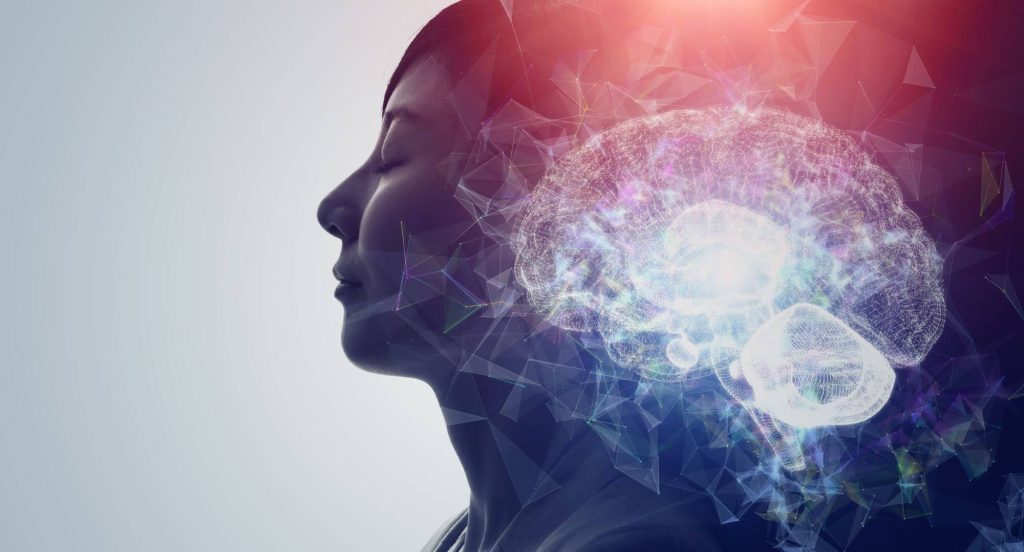
CBD and serotonin are linked due to CBD's ability to stimulate serotonergic 5-HT1A receptors (5). Stimulation of these receptors produces the feel-good effect, so both serotonin and CBD can produce an anxiolytic effect, promoting a sense of calm and relaxation.
Ways to Use CBD for Stress
One way to reduce stress is to increase serotonin levels in our body through tryptophan-rich foods and even physical exercise (16). In addition, CBD can also increase serotonin.
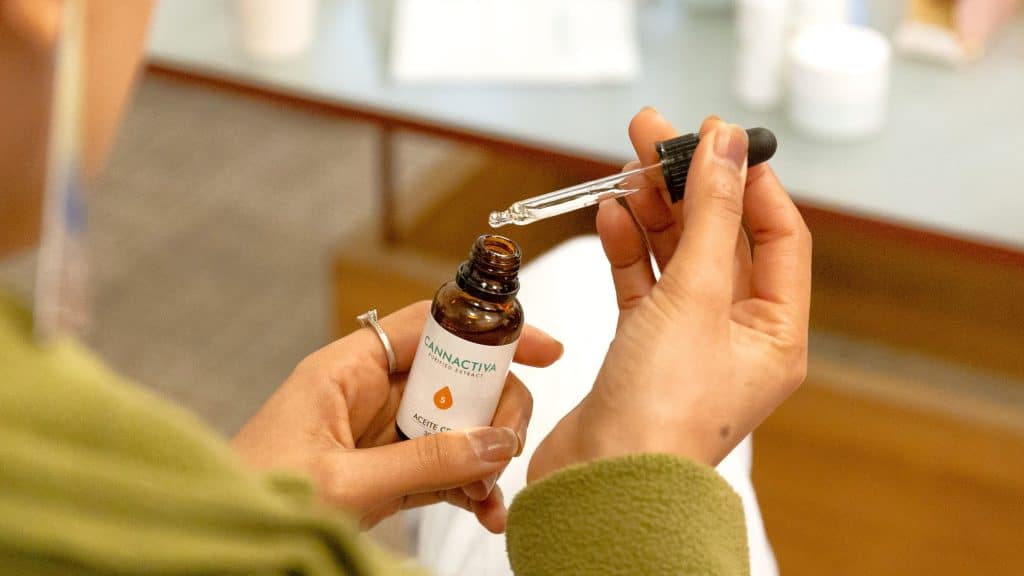
CBD can induce a sense of well-being in the body. It can be used in the form of CBD oil drops, CBD vapes, capsules, gummies and drinks with cannabidiol.
Note that regulations on the use of CBD vary from country to country, and in some, oral use is not allowed.
CBD dosage
Currently, there is no specific dose of CBD to produce a serotonin-like sensation, as each body is different. Therefore, it is recommended to start with low doses of CBD and gradually increase until the ideal amount is found for each person. It is advisable to consult a professional before using CBD for stress.
More information: How does THC affect serotonin?
THC is a potent agonist of CB1 receptors, which can lead to a higher concentration of serotonin in the brain. It also inhibits the reuptake of serotonin, increasing its availability in the brain. However, its prolonged use may decrease the activity of some serotonin receptors, which may lead to affective disorders and depression (13). In addition, it has been suggested that chronic exposure to THC since adolescence may affect the serotonergic system, causing anxiety in adulthood (14). It has also been described that very high doses of THC are linked to serotonin syndrome in users under treatment for depression (15), manifesting with tachycardia, muscle spasms, anxiety, agitation, and delirium. In summary, CBD is generally better at relieving stress safely, whereas THC presents more long-term risks.
Tryptophan- and serotonin-rich foods for stress
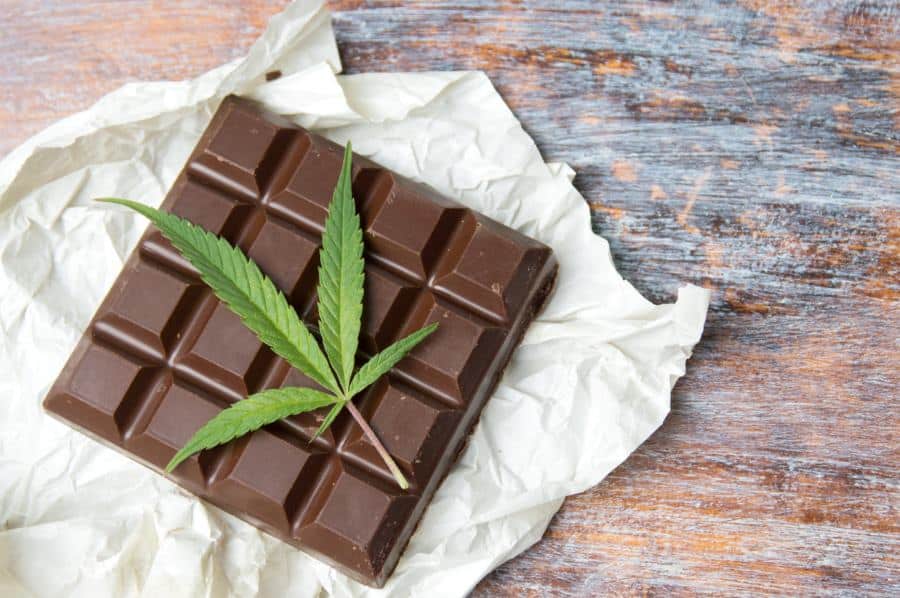
Another factor that can help combat stress is to increase serotonin levels in our body through foods rich in tryptophan (9). Serotonin is synthesized in our body from an essential amino acid called tryptophan, which is present in different foods. For example, chocolate (10) and dairy products, especially those containing α-lactalbumin (11), contain good amounts of tryptophan.
Additional mental health benefits of CBD
CBD has shown potential benefits for improving mental health, especially in reducing anxiety and feelings of well-being.
CBD has shown an anxiolytic effect, that is, it would help to reduce anxiety levels. Both CBD and serotonin have an anxiolytic (anxiety-reducing) effect, which contributes to feeling calmer and more balanced. Serotonin dysfunction has been suggested to be related to generalized anxiety disorder (GAD) and panic disorder (4).
Conclusion
In short, CBD shows a great potential to reduce stress through different systems, such as its anxiolytic effect and its favorable interaction with the endocannabinoid system and the serotonergic system. Unlike THC, CBD does not produce psychoactive effects nor does it generate addiction or dependence.
Note: This is an informational article and is not intended to prevent, diagnose or treat any disease or symptom. Its content can complement, but should never replace, the diagnosis or treatment of any disease or symptom. Cannactiva products are not medicines and are intended for external use. There may be new relevant scientific evidence since the date of publication. The therapeutic approach must always be personalized and will depend on the professional assessment. In case of illness or taking medication, consult your doctor before using CBD.
References
- David, D. J., & Gardier, A. M. (2016). Les bases de pharmacologie fondamentale du système sérotoninergique : application à la réponse antidépressive [The pharmacological basis of the serotonin system: Application to antidepressant response]. L'Encephale, 42(3), 255-263. https://doi.org/10.1016/j.encep.2016.03.012.
- Monti J. M. (2011). Serotonin control of sleep-wake behavior. Sleep medicine reviews, 15(4), 269-281. https://doi.org/10.1016/j.smrv.2010.11.003
- Blundell J. E. (1984). Serotonin and appetite. Neuropharmacology, 23(12B), 1537-1551. https://doi.org/10.1016/0028-3908(84)90098-4.
- Meneses, A., & Liy-Salmeron, G. (2012). Serotonin and emotion, learning and memory. Reviews in the neurosciences, 23(5-6), 543-553. https://doi.org/10.1515/revneuro-2012-0060
- De Gregorio, D., McLaughlin, R. J., Posa, L., Ochoa-Sanchez, R., Enns, J., Lopez-Canul, M., Aboud, M., Maione, S., Comai, S., & Gobbi, G. (2019). Cannabidiol modulates serotonergic transmission and reverses both allodynia and anxiety-like behavior in a model of neuropathic pain. Pain, 160(1), 136-150. https://doi.org/10.1097/j.pain.0000000000001386
- Staner, L., Graff, C., Luthrhinger, R., Noel, N. (2008). Effect of the selective activation of serotonin 5-HT3 receptors on sleep and waking. In: Monti, J.M., Pandi-Perumal, S.R., Jacobs, B.L., Nutt, D.J. (eds) Serotonin and Sleep: Molecular, Functional and Clinical Aspects. Birkhäuser Basel. https://doi.org/10.1007/978-3-7643-8561-3_16
- Watts, S. W., Morrison, S. F., Davis, R. P., & Barman, S. M. (2012). Serotonin and blood pressure regulation. Pharmacological reviews, 64(2), 359-388. https://doi.org/10.1124/pr.111.004697
- MILNE, W. L., & COHN, S. H. (1957). Role of serotonin in blood coagulation. The American journal of physiology, 189(3), 470-474. https://doi.org/10.1152/ajplegacy.1957.189.3.470.
- Young S. N. (2007). How to increase serotonin in the human brain without drugs. Journal of psychiatry & neuroscience : JPN, 32(6), 394-399.
- Silva N. R. (2010). Chocolate consumption and effects on serotonin synthesis. Archives of internal medicine, 170(17), 1608-1609. https://doi.org/10.1001/archinternmed.2010.331
- Markus, C. R., Olivier, B., & de Haan, E. H. (2002). Whey protein rich in alpha-lactalbumin increases the ratio of plasma tryptophan to the sum of the other large neutral amino acids and improves cognitive performance in stress-vulnerable subjects. The American journal of clinical nutrition, 75(6), 1051-1056. https://doi.org/10.1093/ajcn/75.6.1051
- Ji, T., Li, X., Meng, G., Gu, Y., Zhang, Q., Liu, L., Wu, H., Yao, Z., Zhang, S., Wang, Y., Zhang, T., Wang, X., Cao, X., Li, H., Liu, Y., Wang, X., Wang, X., Sun, S., Zhou, M., Jia, Q., ... Niu, K. (2020). The association between banana consumption and the depressive symptoms in Chinese general adult population: A cross-sectional study. Journal of affective disorders, 264, 1-6. https://doi.org/10.1016/j.jad.2019.12.008.
- Hill, M. N., Sun, J. C., Tse, M. T., & Gorzalka, B. B. (2006). Altered responsiveness of serotonin receptor subtypes following long-term cannabinoid treatment. The international journal of neuropsychopharmacology, 9(3), 277-286 . https://doi.org/10.1017/S1461145705005651.
- De Gregorio, D., Dean Conway, J., Canul, M. L., Posa, L., Bambico, F. R., & Gobbi, G. (2020). Effects of chronic exposure to low doses of Δ9- tetrahydrocannabinol in adolescence and adulthood on serotonin/norepinephrine neurotransmission and emotional behaviors. The international journal of neuropsychopharmacology, 23(11), 751-761. Advance online publication. https://doi.org/10.1093/ijnp/pyaa058
- Nadeem, Z., Wu, C., Burke, S., & Parker, S. (2024). Serotonin syndrome and cannabis: A case report. Australasian psychiatry : bulletin of Royal Australian and New Zealand College of Psychiatrists, 32(1), 100-101. https://doi.org/10.1177/10398562231219858
- Chaouloff, F., Laude, D., Guezennec, Y., & Elghozi, J. L. (1986). Motor activity increases tryptophan, 5-hydroxyindoleacetic acid, and homovanillic acid in ventricular cerebrospinal fluid of the conscious rat. Journal of neurochemistry, 46(4), 1313-1316. https://doi.org/10.1111/j.1471-4159.1986.tb00656.x
- Lookfong NA, Raup-Konsavage WM, Silberman Y. Potential Utility of Cannabidiol in Stress-Related Disorders. Cannabis Cannabinoid Res. 2023 Apr;8(2):230-240. doi: 10.1089/can.2022.0130. Epub 2022 Nov 21. PMID: 36409719; PMCID: PMC10061337.


