CBD Overdose: Can You Overdose on CBD and How Much CBD Is Too Much?

Cannabidiol (CBD) is a natural compound from hemp found in various products, such as CBD oil, which has become popular for its potential relaxing and wellness properties. Although the WHO has recognised its wide safety margin, many people wonder: can you suffer a CBD overdose?, how much CBD is too much?, is there a maximum daily dose of CBD?
In this article we look at what the current scientific evidence says, what the symptoms of a CBD overdose are, what to do if you take too much CBD and when to seek help in the event of a possible excess, all adapted to the European regulatory framework.
What is CBD and how does it work in the body?
The CBD (cannabidiol) is a non-psychoactive cannabinoid (it does not produce a “high”) present in the Cannabis sativa plant. Unlike THC, it does not produce euphoric effects or alter perception.
It acts mainly on the endocannabinoid system, which is involved in:
- Regulation of sleep
- The response to stress
- Modulation of pain
- Inflammation
- Mood
It also interacts with serotonin receptors and other neurochemical systems, which explains its wide range of physiological effects (1).
In Europe, depending on the country, CBD is sold in formats such as CBD oil, edibles, cosmetics, CBD hash and CBD flowers.
What is an overdose and why is CBD different?
In medical terms, an overdose means taking a substance in a quantity sufficient to cause serious or potentially fatal toxicity.
With substances such as opioids or alcohol, an overdose can be lethal. With CBD, the situation is different: unlike THC, CBD is not an intoxicating substance, so CBD intoxication in the strict sense is very unlikely. In fact, to date no cases of fatal CBD overdose have been documented in humans. The World Health Organization (WHO) has noted that CBD has a favourable safety profile (2).
However, that does not mean there can be no adverse effects from excessive CBD consumption.
Can you overdose on CBD?
Not in the classic sense of fatal toxicity, but it is possible to take more CBD than the body tolerates well. When we talk about a CBD overdose (sometimes called CBD intoxication), we are referring to:
- Excessive consumption, especially orally or sublingually, where the effect takes longer to appear and lasts longer, which makes it easy to repeat the dose too soon.
- Doses above individual tolerance.
- The appearance of transient side effects.
It is indeed possible to take too much CBD, although the risk to life is extremely low according to the available evidence (3, 4, 5, 6). The question, therefore, would be “how much CBD is too much for me?”.
How much CBD can you take per day?
Ways of taking CBD and CBD overdose
The method of consumption determines how much CBD actually reaches the bloodstream and how quickly (what is known as bioavailability):
- When smoking or vaping, the effect is felt within a few minutes and the duration of the effects is shorter.
- Orally or sublingually, the onset of effects is slower; in return, the effect lasts longer.
Regarding overdose, since the effect takes time to appear orally, there is a greater risk of repeating the dose prematurely and taking more CBD.
For that reason, excessive consumption tends to occur more often with CBD oils and cannabis edibles than with inhaled forms, whose immediate effect makes it easier to identify when to stop.
Maximum daily dose of CBD
There is no universally established maximum dose of CBD, nor a reference daily dose common to all countries. The right amount depends on:
- Body weight
- Metabolism
- Individual sensitivity
- Concurrent use of medication
- The purpose of consumption
Clinical studies have used high doses under medical supervision. However, in the European market the approach is more cautious. The European Food Safety Authority (EFSA) has noted that more data are still needed on the long-term safety of CBD as a “novel food” (11).
As a rough guide, the CBD ranges used in scientific studies —which we cover in our guide to the optimal CBD dose— are figures such as:
- Chronic pain: 15–60 mg per day (12).
- Long-term anxiety and sleep: 25–50 mg per day (13).
- Acute, occasional anxiety: up to 300 mg in a single dose (14).
In addition, in countries where oral CBD consumption is regulated —such as Switzerland (12 mg/day) or the United Kingdom (10 mg/day)— the permitted doses are low.
These amounts are not a consumption recommendation, but doses investigated in clinical contexts and under supervision. It is worth bearing in mind the biphasic effect of CBD: beyond a certain point, more does not provide more effect and may even reduce it. When talking about a safe level of CBD, what matters is not only the amount, but also prolonged exposure, liver safety and drug interactions, and the general guidance is to start with low doses and increase gradually according to tolerance.
Symptoms of a CBD overdose: what happens if you take too much CBD
What happens if I take a lot of CBD? The symptoms of a CBD overdose are usually mild or moderate and transient (7). Among the most common:
- Excessive drowsiness
- Dizziness
- Nausea
- Diarrhoea
- Fatigue
- Dry mouth
- Changes in appetite
In some studies, very high doses have shown temporary changes in liver enzymes (transaminases, liver markers), especially when CBD is combined with certain medications or with THC (8, 5).
Current evidence indicates that these effects are usually reversible (they resolve when the dose is reduced or stopped) and do not cause physical dependence. Even so, chronic use at high doses without medical supervision has not been sufficiently studied in the general European population. You can read more in our guide to CBD side effects.
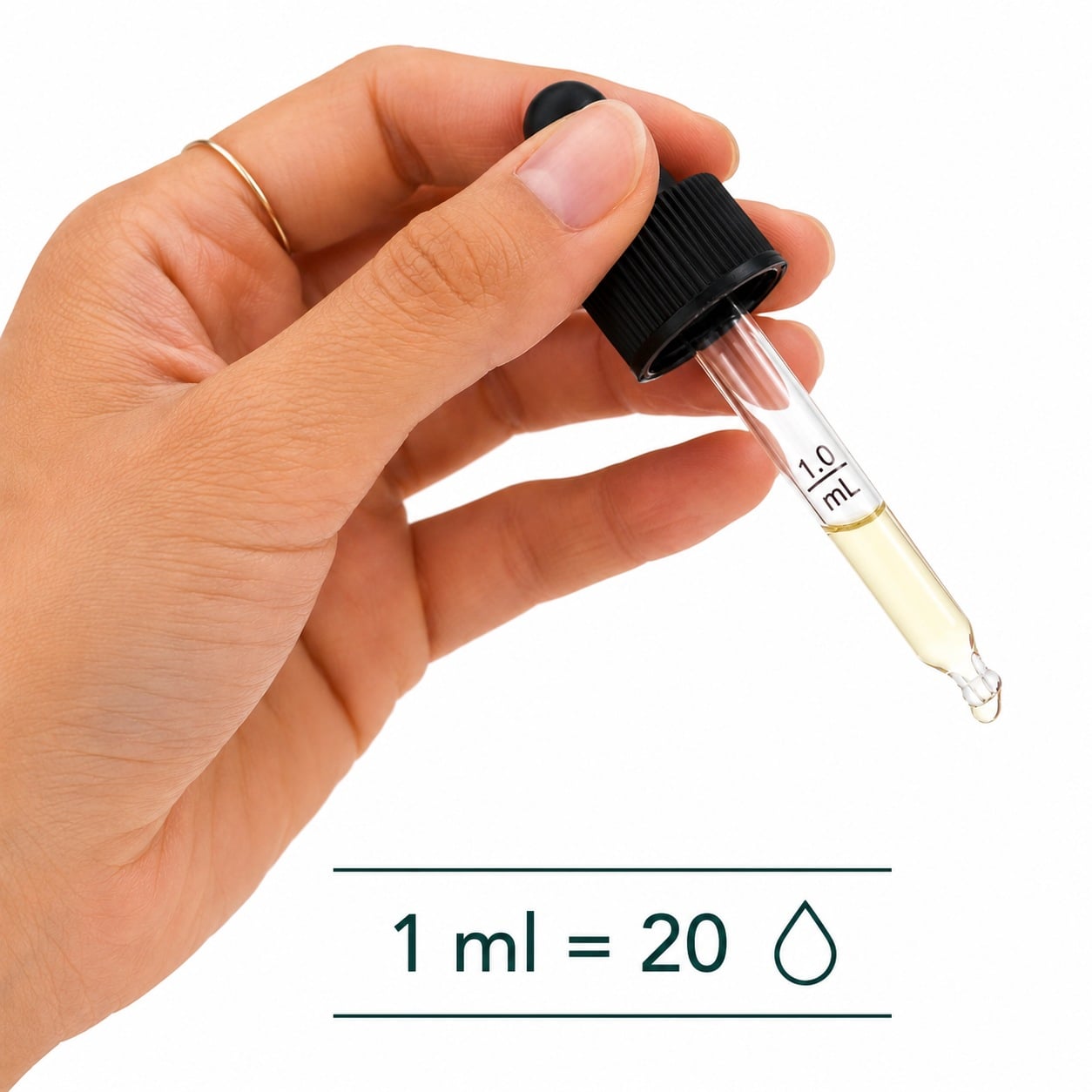
How much CBD am I taking? Convert percentage to mg
To find out whether you are approaching high amounts or to prevent excessive consumption without realising it, convert the CBD oil percentage to mg (milligrams):
- CBD Oil 5% ≈ 50 mg/ml → 2.5 mg per drop
- CBD Oil 10% ≈ 100 mg/ml → 5 mg per drop
- CBD Oil 20% ≈ 200 mg/ml → 10 mg per drop
- CBD Oil 30% ≈ 300 mg/ml → 15 mg per drop
So, 50 mg of CBD (the upper end of the usual use ranges) would be roughly equivalent to a full dropper of a 5% CBD oil, 10 drops of a 10% or 5 drops of a 20%. You will find more information in our guide to CBD oil percentages.
Factors that influence a possible CBD overdose
Not everyone reacts the same way to CBD (8). The most relevant factors are:
- Body weight: people with a lower body weight may notice effects at lower doses.
- Individual sensitivity: some people are more sensitive to sedative effects.
- Product quality: in Europe it is essential to buy products with laboratory analysis and clear labelling in milligrams, since some of the adverse effects attributed to CBD actually come from products contaminated with THC (10).
- Incorrectly calculated concentration: dosing errors can lead to consuming more CBD than intended.
- Concurrent use with medication: this is the factor of greatest clinical relevance.
Risk of overdose from CBD interactions with medications
One of the main risk factors is not the dose in isolation, but CBD interactions with medications. CBD can interfere with liver enzymes such as cytochrome P450 (the group of liver enzymes that metabolises most drugs), affecting the metabolism of:
- Anticoagulants
- Antiepileptics
- Antidepressants
- Benzodiazepines
There is also a report that high doses of CBD oil may be associated with severe hyperemesis (intense, repeated vomiting), which can be confused with an overdose (9). If you take medication on a long-term basis, it is advisable to consult a professional first: we explore this in CBD and medications: what interactions do they have? and in how CBD affects the liver.
What to do if you took too much CBD
If you have taken more than the usual or recommended amount:
- Stay calm
- Stop consuming
- Hydrate properly.
- Rest if you feel drowsy.
- Avoid driving or carrying out risky activities.
In most cases, the symptoms disappear within a few hours without the need for medical treatment. If the discomfort is mild, it is enough to reduce the dose in future.
When to seek help in a CBD overdose
Although the serious risk is low, it is recommended to seek medical attention if:
- The symptoms are intense or persistent.
- There is pre-existing liver disease.
- You have combined CBD with medications, or if medications are taken on a long-term basis.
- Allergic reactions appear (swelling, difficulty breathing).
- It involves a minor or a pregnant person who has taken CBD.
- There has been an accidental ingestion of a large amount.
If you have any serious doubts, you can go to a health centre, an emergency service or a poison information service. Also check who should not take it in our guide to CBD contraindications.
CBD consumption and regulation in Europe (Novel Food and EFSA)
In the European Union, the use of CBD as a food or food supplement remains pending authorisation, and the EFSA has only set a provisional intake level of around 2 mg/day.
In other countries there are already authorised food supplements and foods containing CBD, but the European Union's regulatory framework still takes a more conservative approach than other markets. While its approval is being resolved, the CBD oils sold in European countries are regulated for external use and labelled as such.
As for legality, CBD is legal in Spain and in Europe if it complies with European regulations, with a content below 0.3% THC.
References
- Linge, R., et al. (2016). Cannabidiol induces rapid-acting antidepressant-like effects and enhances cortical 5-HT/glutamate neurotransmission: role of 5-HT1A receptors. Neuropharmacology, 103, 16–26. https://doi.org/10.1016/j.neuropharm.2015.12.017
- World Health Organization. (2017). Cannabidiol (compound of cannabis). World Health Organization
- Huestis, M. A., et al. (2019). Cannabidiol Adverse Effects and Toxicity. Current Neuropharmacology, 17(10), 974–989. https://doi.org/10.2174/1570159X17666190603171901
- Oberbarnscheidt, T., & Miller, N. S. (2020). The Impact of Cannabidiol on Psychiatric and Medical Conditions. Journal of Clinical Medicine Research, 12(7), 393–403. https://doi.org/10.14740/jocmr4159
- Bergamaschi, M. M., et al. (2011). Safety and side effects of cannabidiol, a Cannabis sativa constituent. Current Drug Safety, 6(4), 237–249. https://doi.org/10.2174/157488611798280924
- Cooper, Z.D., & Williams, A.R. (2019). Cannabis and Cannabinoid Intoxication and Toxicity. In: Cannabis Use Disorders. Springer, Cham. https://doi.org/10.1007/978-3-319-90365-1_12
- Madeo, G., et al. (2023). Update on Cannabidiol Clinical Toxicity and Adverse Effects: A Systematic Review. Current Neuropharmacology, 21(11), 2323–2342. https://doi.org/10.2174/1570159X21666230322143401
- Watkins, P. B., et al. (2021). Cannabidiol and Abnormal Liver Chemistries in Healthy Adults. Clinical Pharmacology and Therapeutics, 109(5), 1224–1231. https://doi.org/10.1002/cpt.2071
- Laborde-Casterot, H., et al. (2020). Does cannabidiol induce cannabinoid hyperemesis syndrome? Clinical Toxicology, 58(12), 1351–1352. https://doi.org/10.1080/15563650.2020.1736298
- Lachenmeier, D. W., et al. (2019). Are adverse effects of cannabidiol (CBD) products caused by tetrahydrocannabinol (THC) contamination? F1000Research, 8, 1394. https://doi.org/10.12688/f1000research.19931.7
- Lachenmeier, D. W., et al. (2023). Does Cannabidiol (CBD) in Food Supplements Pose a Serious Health Risk? Consequences of the EFSA Clock Stop Regarding Novel Food Authorisation. Psychoactives, 2(1), 66–75. https://doi.org/10.3390/psychoactives2010005
- Capano, A., Weaver, R., & Burkman, E. (2020). Evaluation of the effects of CBD hemp extract on opioid use and quality of life indicators in chronic pain patients: a prospective cohort study. Postgraduate Medicine, 132(1), 56–61. https://doi.org/10.1080/00325481.2019.1685298
- Shannon, S., Lewis, N., Lee, H., & Hughes, S. (2019). Cannabidiol in Anxiety and Sleep: A Large Case Series. The Permanente Journal, 23, 18–041. https://doi.org/10.7812/TPP/18-041
- Linares, I. M., et al. (2019). Cannabidiol presents an inverted U-shaped dose-response curve in a simulated public speaking test. Revista Brasileira de Psiquiatria, 41(1), 9–14. https://doi.org/10.1590/1516-4446-2017-0015
Conclusion: should you worry about a CBD overdose?
In short, it is possible to suffer a CBD overdose, but what counts as “too much” will vary from one person to another, depending on their physiology and how long they have been taking CBD.
However, regardless of your personal tolerance threshold, taking excessively high doses increases the risk of experiencing unpleasant side effects, such as nausea, vomiting and diarrhoea.
Therefore, it is recommended to find a safe dose that suits your needs, starting with a low dose and increasing it slowly over time (while staying below the recommended maximum daily dose), or consulting our CBD dosing guide. This will allow you to enjoy all the potential benefits of CBD while minimising any chance of experiencing CBD-overdose-like effects.
This article is for informational purposes only and does not constitute medical advice. Cannactiva products are not medicines or food supplements and are marketed in accordance with European regulations for external use. This information and Cannactiva products are not intended to diagnose, treat, cure or prevent any disease. If you take medication or have a health condition, consult a healthcare professional before using CBD.


