
Not sure whether CBD could interact with the medication you are taking? In this guide we explain the main known interactions between CBD products and the most common drugs, and which drug groups call for extra care and caution.
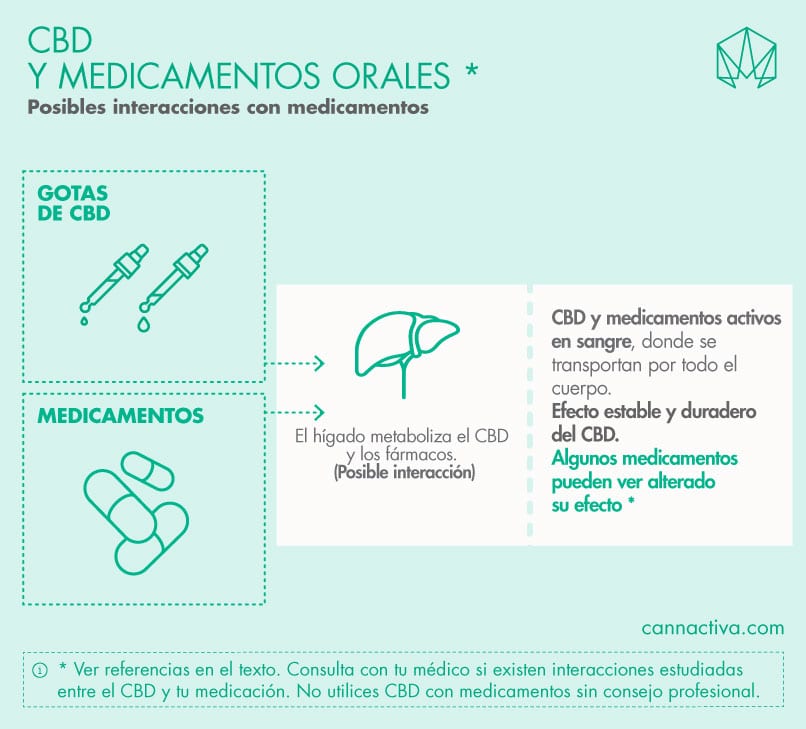
In general, if you are on medication you should know that CBD can interact with several drugs. Most CBD interactions take place in the liver, where CBD and many medicines share the same metabolism.
This is an informational article and does not replace medical advice. CBD products, such as CBD oils, are not medicines or food supplements and are intended for external use. If you are undergoing treatment, talk to your doctor or pharmacist before using CBD.
What is CBD?
Cannabidiol (CBD) is one of the main cannabinoids in the hemp plant (Cannabis sativa). Unlike THC, it is not psychoactive. The World Health Organization (WHO) recognises that it has a good safety and tolerability profile in humans, with no potential for abuse or dependence. That said, the safety of cannabidiol changes once other medicines are involved.
The main reason to be cautious when combining CBD with medication is that both are metabolised (processed) in the liver. When they coincide, they can overload the organ and alter how much of the drug stays active in the body (slowing down or speeding up the metabolism of other medicines).
This does not always mean the drug's effect increases: sometimes its adverse effects or even its toxicity go up, and other times its effectiveness can be reduced.
Which medications should you be careful with when taking CBD?
It is worth paying special attention to anticoagulants, antidepressants, antiepileptics, benzodiazepines and some painkillers. Topical CBD barely reaches the bloodstream, so it rarely interacts.
Effects are usually mild (drowsiness, dizziness, nausea), but some drugs have a narrow safety margin and require monitoring. The list below is a general guide. Every case is individual: always check with your doctor if you are on medication.
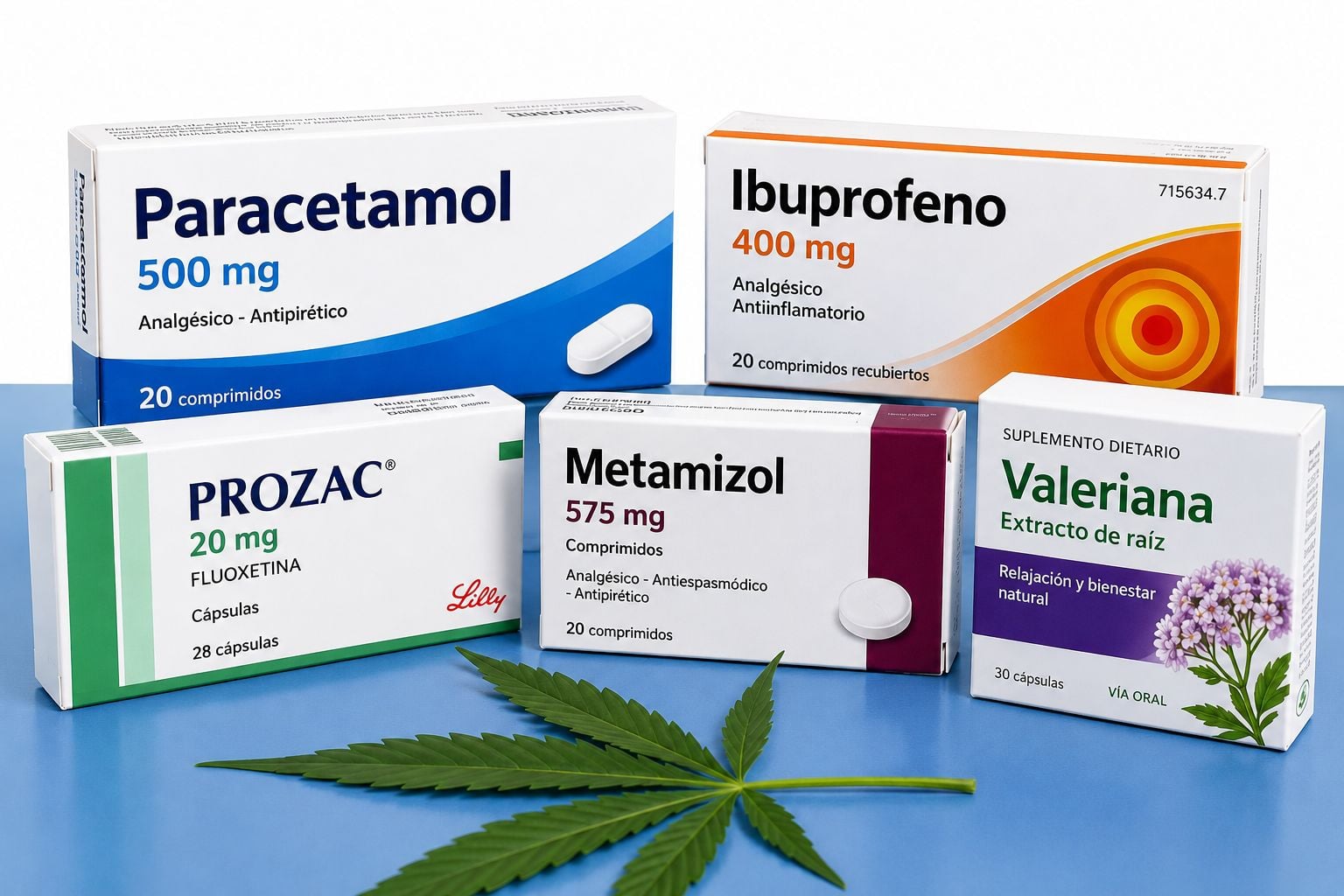
- Anticoagulants (Sintrom, warfarin): CBD may increase their effect and they are narrow-margin drugs - medical supervision required, do not combine without it.
- Antidepressants (SSRIs): possible extra sedation and changes in their levels - consult your doctor and watch for drowsiness.
- Antiepileptics and benzodiazepines: some see their concentration rise (topiramate, clobazam) - monitoring and dose adjustment by the specialist.
- Painkillers and opioids: possible synergy; paracetamol shares liver metabolism - do not exceed the dose, consult your doctor.
- NSAIDs (ibuprofen, diclofenac): added liver load with prolonged use - occasional use is fine, consider the topical route.
- Thyroid hormone (levothyroxine): possible alteration of its metabolism - consult your doctor.
- Topical route (cream/massage): barely reaches the bloodstream - minimal interaction risk.
CBD and non-steroidal anti-inflammatory drugs (NSAIDs)
Cannabinoid blends, including cannabidiol, given alongside NSAIDs such as ibuprofen and diclofenac increased anti-inflammatory activity in an in vitro study (5). This suggests the anti-inflammatory dose could be lowered when given together with CBD. Since most NSAIDs are metabolised in the liver just like CBD, reducing the dose also helps avoid toxic effects. More detail in can you take CBD with ibuprofen, naproxen or diclofenac?.
CBD, painkillers and opioids
For acetylsalicylic acid (aspirin), no risky interaction with CBD has been described in the scientific literature. Paracetamol, on the other hand, can cause liver failure on its own in case of overdose, a risk that rises when taken with another liver-metabolised drug such as CBD (6); this is why not exceeding the dose may be advisable. As for opioids, CBD may have an additive effect. We expand on this in CBD with paracetamol, metamizole and opioids.
CBD and anticoagulants (Sintrom, warfarin)
Oral anticoagulants such as acenocoumarol (Sintrom) or warfarin have a narrow therapeutic margin: small changes in their concentration can alter blood clotting. CBD may raise their levels in the blood, so this combination requires medical monitoring. We cover it in detail in CBD and Sintrom: does it affect blood clotting?.
CBD and antidepressants (SSRIs: sertraline, fluoxetine)
Antidepressants, especially SSRIs (such as sertraline or fluoxetine), share liver metabolism with CBD and, on top of that, both can cause drowsiness. The combination may increase sedation or alter the drug's levels. Do not stop or adjust them on your own. More information in CBD with antidepressants: interactions and risks.
CBD, antiepileptics and benzodiazepines
Medicines for anxiety or epilepsy with active ingredients such as valproate, levetiracetam, phenobarbital, clonazepam, phenytoin, carbamazepine and pregabalin showed no changes in their blood concentration when given with oral CBD (7). Even so, CBD may have anxiolytic effects that add to those of benzodiazepines and other sedatives, which can lead to unwanted drowsiness. You will find more information in our article on CBD for anxiety.
On the other hand, medicines such as topiramate, rufinamide, zonisamide and eslicarbazepine did see their blood concentration rise when used with cannabidiol (7). The build-up of these drugs can trigger toxic effects in the patient.
Thyroid hormone (levothyroxine) and other narrow-margin drugs
The Department of Pharmacology at the University of Pennsylvania published a list of liver-metabolised active ingredients to be especially careful with when combined with cannabinoids. These are the drugs with the narrowest therapeutic index, whose small variations in plasma levels can make them lose effectiveness or cause adverse reactions. Among them, besides anticoagulants, are synthetic thyroid hormone (levothyroxine) and some birth control pills (ethinylestradiol).
Why does CBD interact? The role of the liver
Most interactions between CBD and medication occur with drugs that are also metabolised in the liver. Both the cannabinoids and the other drug compete for the same liver enzymes - the cytochrome P450, the liver's enzyme system that processes many medicines - which can cause one of the two to build up and adverse effects to appear (3). We explain it in depth in how CBD affects the liver.
Pharmacokinetics studies how a substance is absorbed, distributed, metabolised and eliminated in the body. To act, CBD has to reach the bloodstream and, from there, the target cells, which are the ones that have cannabinoid receptors.
Differences between inhaled, oral and topical CBD
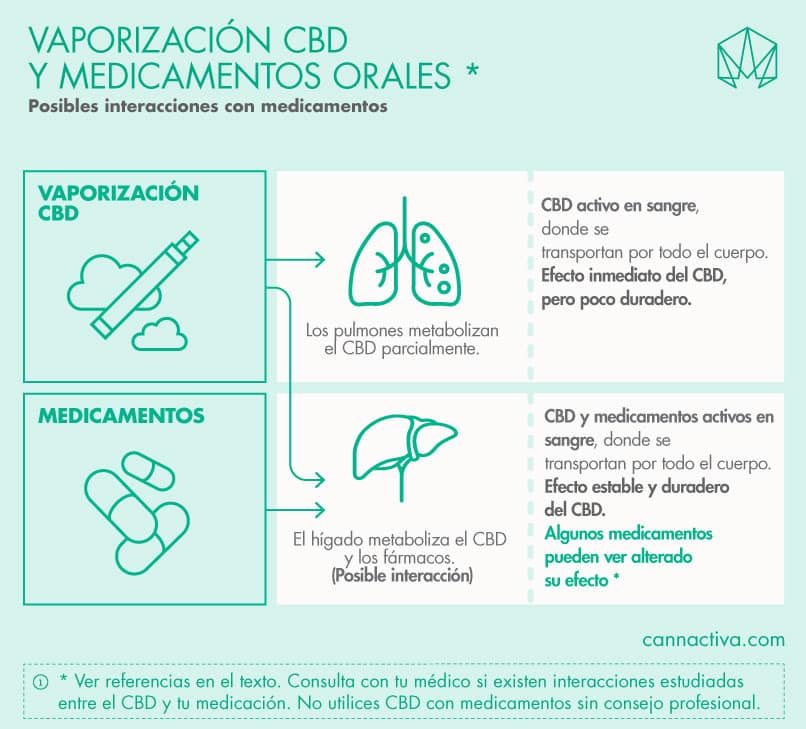
The more contact the tissue has with blood vessels, the fewer barriers a substance has to reach the blood. That is why inhaled substances act almost immediately: the lungs are full of tiny blood vessels. When vaping, part of the cannabidiol is also metabolised in the lung itself, so the chance of liver-metabolism interactions decreases (2). You will find more detail in our guide to vaping CBD.
By the oral route, the effect is more delayed, because CBD has to cross the gastrointestinal tract and pass through the liver before reaching the blood, where it is more likely to share enzymes with other drugs.
By the topical route (creams, balms, massage oil), CBD barely crosses the skin into the blood, so the likelihood of a drug interaction is minimal. It is the most sensible option if you are on medication.
Interactions through added effect (pharmacodynamics)
Pharmacodynamics refers to the effects a substance has on the body. Pharmacodynamic interactions occur when two substances act on the same targets (the same cell, receptor or enzyme), producing an additive, synergistic or antagonistic response. When CBD is used together with other medicines, only your doctor can explain what each prescribed drug is for and how they combine.
The possible effects of cannabidiol interacting with drugs are very varied but, in general, mild: nausea, diarrhoea, fatigue, dizziness, headaches or anxiety (4); you can check the detail in CBD side effects. There are also non-visible effects, such as a rise in liver enzymes, that only show up in blood tests. Take special care with other substances that depress the central nervous system: mixing CBD and alcohol or combining it with sedatives can increase drowsiness.
CBD with Parkinson's and chemotherapy
CBD showed good tolerability when given to patients on conventional treatments for Parkinson's disease in a 2020 study. However, a rise in liver enzymes (an indicator of some toxicity) was observed with doses above 20 mg/kg of CBD (8). For this reason, using cannabidiol with anti-Parkinson medication should be supervised by the specialist. You can read more in CBD for Parkinson's.
As for chemotherapy, irinotecan and docetaxel showed no changes in their blood concentrations when, in a study carried out in the Netherlands, patients consumed a medicinal cannabis herbal tea (9). Expand on this in CBD and cancer.
Frequently asked questions about CBD and medication
Which medications are contraindicated with CBD?
There is no closed list, but it is worth watching above all those with liver metabolism and a narrow margin: anticoagulants (Sintrom), antidepressants, some antiepileptics, benzodiazepines and painkillers such as paracetamol. We also go over the contraindications of CBD.
Can I take CBD if I take clonazepam or another benzodiazepine?
Clonazepam showed no change in its concentration with oral CBD, but the sedative effect can add up and increase drowsiness. Check with your doctor before combining them.
Does CBD interact with anticoagulants (Sintrom)?
It may increase their effect and, as they are narrow-margin drugs, it requires medical monitoring. We detail it in CBD and Sintrom.
Can you take CBD with antidepressants?
It may increase sedation or alter their levels. Do not stop or adjust your medication on your own; talk to your doctor.
Does topical CBD cream interact with medication?
By the topical route CBD barely reaches the bloodstream, so the interaction risk is minimal. It is the most sensible option if you are on medication.
How long should I leave between CBD and my medication?
It depends on the drug and the route; there is no universal rule. It can help to know how long CBD stays in your system, but the schedule should be set by your doctor.
Our recommendation
If you are on medication and want to use CBD with the lowest interaction risk, the external use routes are the most sensible option, because they barely reach the bloodstream. You can browse our range of CBD oils and topical formats such as creams and cosmetics. If in doubt, check first with your doctor or pharmacist.
If you have further questions about CBD interactions with other medicines, check with your specialist doctor before using cannabidiol products. If you are a healthcare professional, we recommend reviewing the references in this post.
This is an informational article that is not intended to prevent, diagnose or treat any disease. Its content may complement, but never replace, the diagnosis or treatment of any disease or symptom. Cannactiva products are not medicines. Consult your doctor before using CBD.
References
- M., & Campbell, A. (2021). Drug Prescribing: Drug-Drug Interactions. FP essentials, 508, 25-32.
- Labiris, N. R., & Dolovich, M. B. (2003). Pulmonary drug delivery. Part I: physiological factors affecting therapeutic effectiveness of aerosolized medications. British Journal of Clinical Pharmacology, 56(6), 588-599.
- Qian, Y., Gurley, B. J., & Markowitz, J. S. (2019). The Potential for Pharmacokinetic Interactions Between Cannabis Products and Conventional Medications. Journal of Clinical Psychopharmacology, 39(5), 462-471.
- Kalaba, M., et al. (2022). Longitudinal Relationship between the Introduction of Medicinal Cannabis and Polypharmacy. International Journal of Clinical Practice, 2022, 8535207.
- Vinayaka, A. C., et al. (2022). Phytocannabinoids Act Synergistically with Non-Steroidal Anti-Inflammatory Drugs Reducing Inflammation in 2D and 3D In Vitro Models. Pharmaceuticals (Basel), 15(12), 1559.
- Ewing, L. E., et al. (2019). Paradoxical Patterns of Sinusoidal Obstruction Syndrome-Like Liver Injury in Aged Female CD-1 Mice Triggered by Cannabidiol-Rich Cannabis Extract and Acetaminophen Co-Administration. Molecules (Basel), 24(12), 2256.
- Gaston, T. E., et al. (2017). Interactions between cannabidiol and commonly used antiepileptic drugs. Epilepsia, 58(9), 1586-1592.
- Leehey, M. A., et al. (2020). Safety and Tolerability of Cannabidiol in Parkinson Disease: An Open Label, Dose-Escalation Study. Cannabis and Cannabinoid Research, 5(4), 326-336.
- Engels, F. K., et al. (2007). Medicinal cannabis does not influence the clinical pharmacokinetics of irinotecan and docetaxel. The Oncologist, 12(3), 291-300.


