CBD for Cats: What It’s Used For, How Many Drops to Give and When It’s Safe

Cannabidiol (CBD) is one of the hemp compounds that sparks the most interest among pet owners. More and more people wonder whether CBD could help their cat and, above all, how to use it safely. Understanding how it acts in felines, which doses have been studied and what precautions to take is key to looking after your cat responsibly.
Today on the Cannactiva blog we review what current science says about the use of CBD in cats: what it is being researched for, how it is dosed and why its safety deserves special attention in this species.
Key takeaways
- In cats, CBD is mainly studied for calming (stress from changes at home or trips to the vet) and for joint pain in older cats.
- The dose is adjusted to body weight and starts very low: studies use up to 4 mg/kg per day, but cats metabolise CBD differently from dogs and are sensitive at the liver level.
- It is not the same as giving them marijuana: CBD is not psychoactive, but always check with your vet before starting.
What is CBD and how does it work in cats?
CBD, or what cannabidiol is, is one of the main compounds in hemp (Cannabis sativa). Unlike THC, it is not psychoactive: it does not produce any “high” because it acts differently in the body.
Cats, like humans, have an endocannabinoid system that regulates bodily functions such as sleep, mood, appetite and the sensation of pain. In this way, CBD has the potential to interact with this endocannabinoid system and contribute to the cat’s well-being.
What CBD is used for in cats
CBD is being explored for various situations in cats. A survey in the United States found that dog and cat owners turn to CBD to ease pain, reduce anxiety and lessen inflammation in their pets (1). Below we look at the two most studied areas.
CBD for anxiety and stress in cats
Cats are very territorial animals and sensitive to change: a house move, the arrival of another pet, loud noises or a trip to the vet can unsettle them. That is why many owners look for ways to help them feel calmer.
Some research has shown that CBD could be useful for reducing anxiety in cats, particularly in experiments where felines were separated from their owners to induce separation anxiety. The cats that received CBD showed lower levels of anxiety (2).
CBD for pain and osteoarthritis in older cats
CBD has also been studied in pain management. One study indicated that it may reduce inflammation and ease pain in cats undergoing surgery, such as in cases of feline chronic gingivostomatitis, supporting their recovery and post-operative well-being (3). In older cats with osteoarthritis, a clinical report described an improvement in pain with a low dose, although with monitoring of liver function (6).
Effects of CBD in cats
The effects of CBD in cats can vary and may include reduced anxiety and pain relief. However, responses differ between individuals and not all cats experience the same effects.
CBD dosage for cats: how many drops to give
Before starting, check with a vet: they can give you tailored advice taking into account your cat’s medical history and current treatments. It is recommended to start with a minimal dose and observe the cat’s response over about 14 days before considering any gradual adjustment. This precaution helps to identify the optimal dose while minimising the risk of side effects.
In scientific studies, for anxiety doses of 4 mg/kg of body weight per day (2) have been reported over two weeks; for pain and inflammation management the same dosing is suggested, 4 mg/kg per day (3), on an empty stomach for about 15 days.
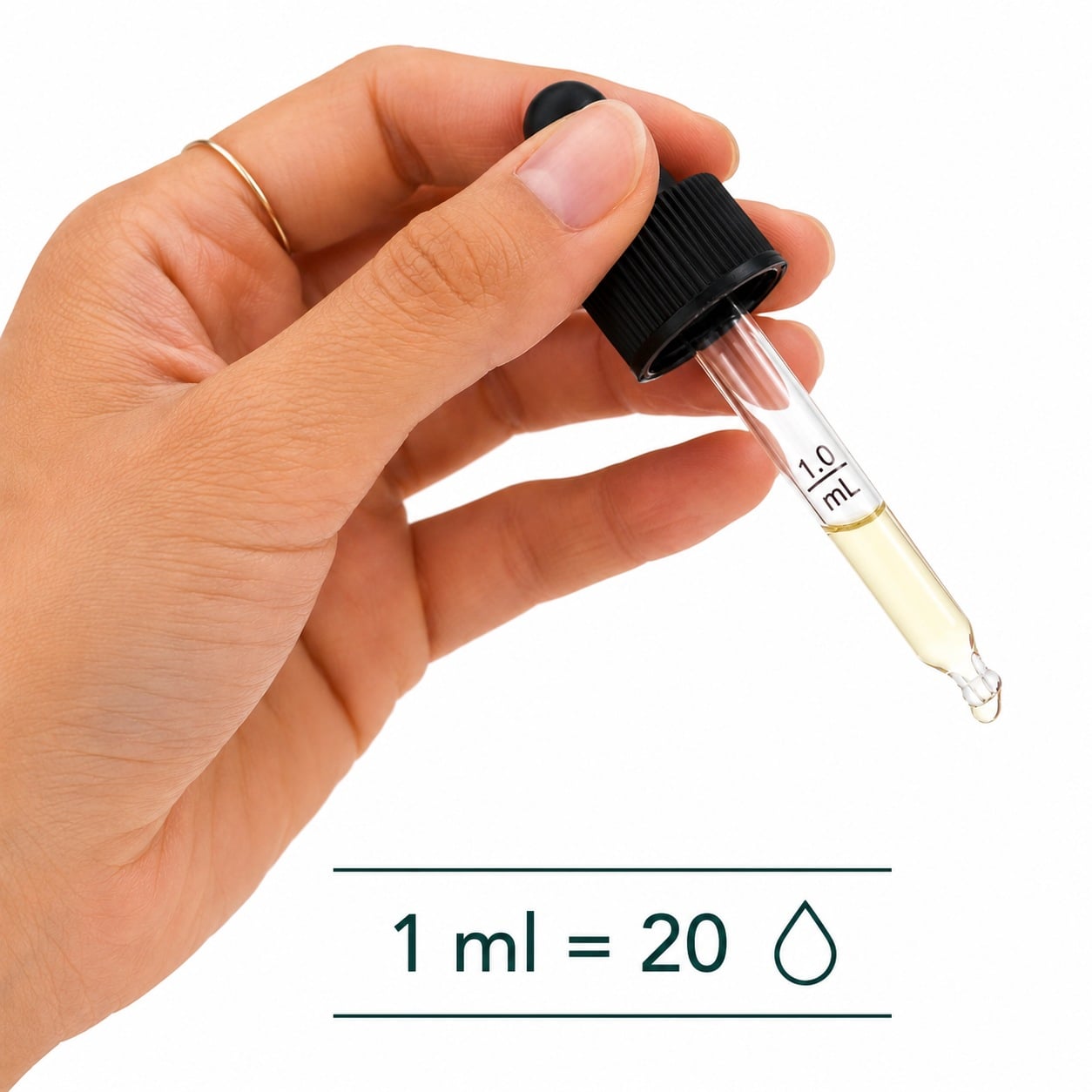
For example, in a 5 kg cat these doses would be equivalent to 16 drops of a 2.5% CBD oil. With a 10% oil, a much higher concentration, it would be just 4 drops. This is why it is important to always pay attention to the concentration of the oil.
You can read more about how to calculate drops and milligrams in our guide to CBD dosage.
How to give CBD to a cat
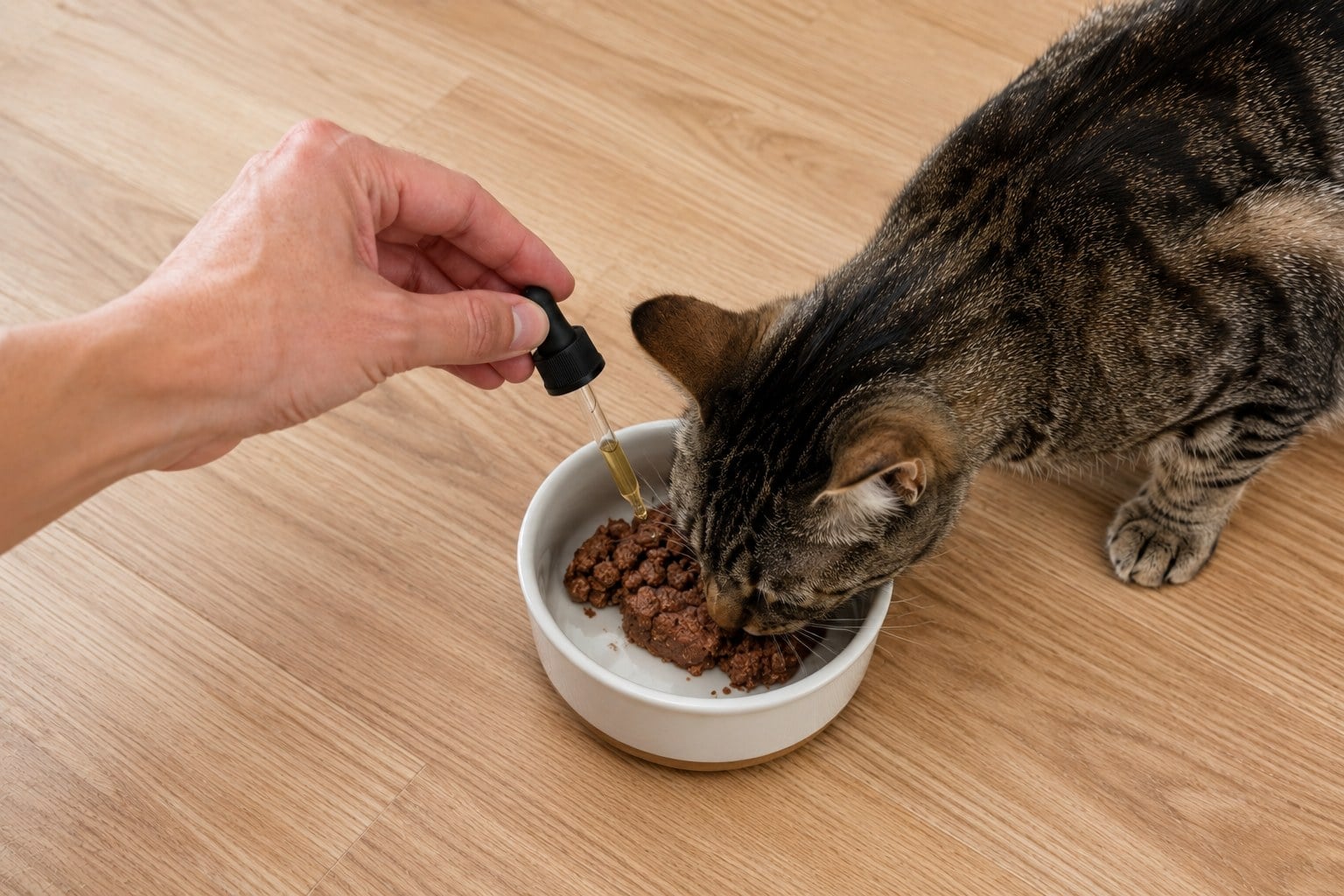
CBD is given to cats orally, through oils or by adding it to their food. The method can affect absorption: the studies that reported effective doses gave it on an empty stomach, but there is evidence that giving it with food could increase its absorption up to ninefold (8). Oils with a drop dispenser allow the amount to be adjusted more precisely.
CBD products in general, including those from Cannactiva, are not veterinary products or medicines. In Europe CBD is not authorised for oral use in animals, so for pets only external use is considered. Check with your vet before using CBD with your cat.
CBD safety in cats: the liver and precautions
Given cats’ sensitivity to supplements and medicines, starting with low doses is essential to reduce the risk of adverse effects and allow for close observation. It has been suggested that cats metabolise cannabidiol differently from other animals, with lower blood concentrations of CBD than equivalent doses in dogs (9). This calls for caution to avoid altering the liver enzymes, especially because liver disorders are common in adult cats.
In fact, studies of CBD in healthy cats report at least some case of liver enzyme alteration, which underlines the importance of being cautious when giving CBD oil to cats. This is linked to the limited glucuronidation capacity of the cat’s liver, which affects the metabolism and excretion of CBD and other cannabinoids (9). You can read more about how CBD affects the liver. The effective dose varies according to the cat’s size, age and condition: the priority is to use a very low dose and scale up slowly only if needed, taking extra precautions, and always consult the vet.
Side effects of CBD in cats
Although it is generally considered safe, CBD can cause side effects in some cats, such as gastrointestinal discomfort and sedation (1). It is advisable to fine-tune the dose and keep an eye on the animal. Among the signs observed during administration of the oil are excessive licking and head movements (4).
Many gastrointestinal effects are associated with the type of carrier oil in the formula: medium-chain triglyceride oils (such as coconut or palm) tend to cause these problems in cats (5), and have also been linked to increases in liver enzymes (5). A clinical report described a cat treated with 0.5 mg/kg per day for 30 days for the pain of chronic osteoarthritis: the dose was effective, but liver alterations were observed (6). Another study safely applied 4 mg/kg per day for 12 weeks using fish oil as a carrier and, even so, one cat recorded an enzyme alteration (4). The longest study assessed 4 mg/kg per day for up to 26 weeks, concluding that it is tolerated by healthy cats over that period (7), although liver alterations may occur in some cases.
As for THC (the psychoactive compound in marijuana), although it is not usually toxic to cats, it can cause unwanted effects; unlike CBD, it can cause prolapse of the nictitating membrane (the third eyelid), a sign of disrupted feline homeostasis (5). This is why it is best for the product to contain as little THC as possible.
Does CBD interact with my cat’s medication?
CBD can interact with other medicines by affecting the liver enzymes responsible for metabolising drugs. Check with your vet before starting, especially if your cat takes medication or has any liver condition. You can see how these CBD and medication interactions work in general.
Is CBD for cats legal in Spain?
In Spain, CBD products made from industrial hemp with a THC content below 0.2% are legal. That said, CBD is not authorised as feed or a food supplement for animals, nor as a veterinary medicine, so Cannactiva products, such as our CBD oils, are sold for external use. If you want to use CBD with your cat, always check with your vet first.
Frequently asked questions about CBD for cats
How long does CBD take to work in a cat?
It depends on the cat and how it is given. Studies assess the response over about 14 days, so it is best to start with low doses and observe. Giving it together with food may increase its absorption up to ninefold (8).
Can I give my cat the same CBD oil that I take?
Oils designed for people tend to have high concentrations and may contain traces of THC, to which cats are especially sensitive. If used, it must be in very low doses adjusted to body weight, always starting with the lowest concentration and with the vet’s approval.
Is giving my cat CBD the same as giving it marijuana?
No. CBD is not psychoactive and does not produce a “high”. THC is psychoactive and, although it is not usually toxic to cats, it can cause unwanted effects (5). This is why it is best for the product to contain as little THC as possible.
Is there a difference between CBD for dogs and for cats?
Yes. Cats metabolise CBD differently from dogs, with lower blood concentrations and greater liver sensitivity (9). This is why the dose and monitoring are not interchangeable. If you also have a dog, see our CBD for dogs guide.
Conclusion
Although CBD looks promising for cats, using it safely means taking care over the dose, the quality of the product and possible interactions with other medicines. Always start with low doses and consult your vet to ensure the best care for your feline companion. You can keep learning about the benefits of CBD for well-being on our blog.
This article is for informational purposes only and does not constitute veterinary advice. Cannactiva products are not medicines or feed: in most European countries CBD is not regulated for oral use and they are intended for external use. They are not designed to diagnose, treat, cure or prevent any disease. Always consult your vet before giving CBD to your cat, especially if it takes medication or has liver problems.
References
- Corsato Alvarenga, I., Panickar, K. S., Hess, H., & McGrath, S. (2023). Scientific Validation of Cannabidiol for Management of Dog and Cat Diseases. Annual Review of Animal Biosciences, 11, 227-246.
- Masataka, N. (2024). Is cannabidiol (CBD) effective to ease separation anxiety in cats? Heliyon, 10(3), e25851.
- Coelho, J. C., Duarte, N., Bento da Silva, A., Bronze, M. D. R., & Mestrinho, L. A. (2023). Placebo-Controlled Trial of Daily Oral Cannabidiol as Adjunctive Treatment for Cats with Chronic Gingivostomatitis. Animals, 13(17), 2716.
- Deabold, K. A., Schwark, W. S., Wolf, L., & Wakshlag, J. J. (2019). Single-Dose Pharmacokinetics and Preliminary Safety Assessment with Use of CBD-Rich Hemp Nutraceutical in Healthy Dogs and Cats. Animals, 9(10), 832.
- Kulpa, J. E., Paulionis, L. J., Eglit, G. M., & Vaughn, D. M. (2021). Safety and tolerability of escalating cannabinoid doses in healthy cats. Journal of Feline Medicine and Surgery, 23(12), 1162-1175.
- Gutierre, E., Crosignani, N., García-Carnelli, C., di Mateo, A., & Recchi, L. (2023). A case report of CBD and THC as analgesic therapy in a cat with chronic osteoarthritic pain. Veterinary Medicine and Science, 9(3), 1021-1025.
- Coltherd, J. C., Bednall, R., Bakke, A. M., Ellerby, Z., Newman, C., Watson, P., Logan, D. W., & Holcombe, L. J. (2024). Healthy cats tolerate long-term daily feeding of Cannabidiol. Frontiers in Veterinary Science, 10, 1324622.
- Jukier, T., Cruz-Espindola, C., Martin, D., & Boothe, D. M. (2023). Disposition of a single oral dose of a cannabidiol medication in healthy cats. Frontiers in Veterinary Science, 10, 1181517.
- Schwark, W. S., & Wakshlag, J. J. (2023). A One Health perspective on comparative cannabidiol and cannabidiolic acid pharmacokinetics and biotransformation in humans and domestic animals. American Journal of Veterinary Research, 84(5), ajvr.23.02.0031.


