
Anxiety is part of modern life. The fast pace, work-related stress, constant uncertainty and even an excess of digital stimuli mean that many people look for natural alternatives to feel calmer and more balanced. In this context, CBD oils have become one of the most sought-after options around the world.
But what is really behind this popularity? Can CBD help with anxiety? Is it safe? In this article we explain what CBD is, how it acts in the body and what the evidence says about its effects on anxiety.
What is CBD and why is it linked to anxiety relief?
CBD (cannabidiol) is one of the main natural compounds in the Cannabis sativa plant. Unlike THC, it is non-psychoactive, which means it does not produce a “high” or alter perception.
The relevance of CBD for anxiety stems from its interaction with the endocannabinoid system, a network of structures and receptors present in the human body that participates in key functions such as mood, sleep, stress response and internal balance or homeostasis (1).
The endocannabinoid system and anxiety
From a biological and evolutionary point of view, anxiety has an adaptive function: it prepares the body to react to potential threats. The endocannabinoid system acts as an internal regulator, but when these physical responses to threats persist over time without any real danger, or when we are exposed to prolonged stress, this system can become dysregulated (2).
CBD does not act as a sedative; rather, it helps to modulate the processes related to stress and anxiety, supporting a state of greater calm and emotional stability (3).
CBD vs THC: how they differ (and why it matters if you have anxiety)
One of the biggest myths is confusing CBD with recreational marijuana, so it is important to clarify:
- CBD (cannabidiol): non-psychoactive, legal in most of Europe when obtained from industrial hemp (less than 0.2% THC), and used in oils, cosmetics and resins.
- THC (tetrahydrocannabinol): psychoactive, alters perception, and in most European countries its sale for human consumption is restricted.
For more detail you can read about the differences between CBD and THC.
Unlike THC, CBD not only avoids unwanted mental effects, it also shows a favourable safety profile in people with anxiety, as it does not intensify symptoms of nervousness nor lead to dependence. This is supported by the World Health Organization, which in 2018 concluded that CBD has no potential for abuse or addiction (13).
Most common anxiety disorders (and why people turn to CBD)
Anxiety is one of the most common mental health problems in Europe. Epidemiological studies indicate that pathological anxiety is more frequent in women than in men and can appear at any age. In many cases it interferes with daily life, work and social relationships, which explains the growing interest in complementary approaches to emotional well-being.
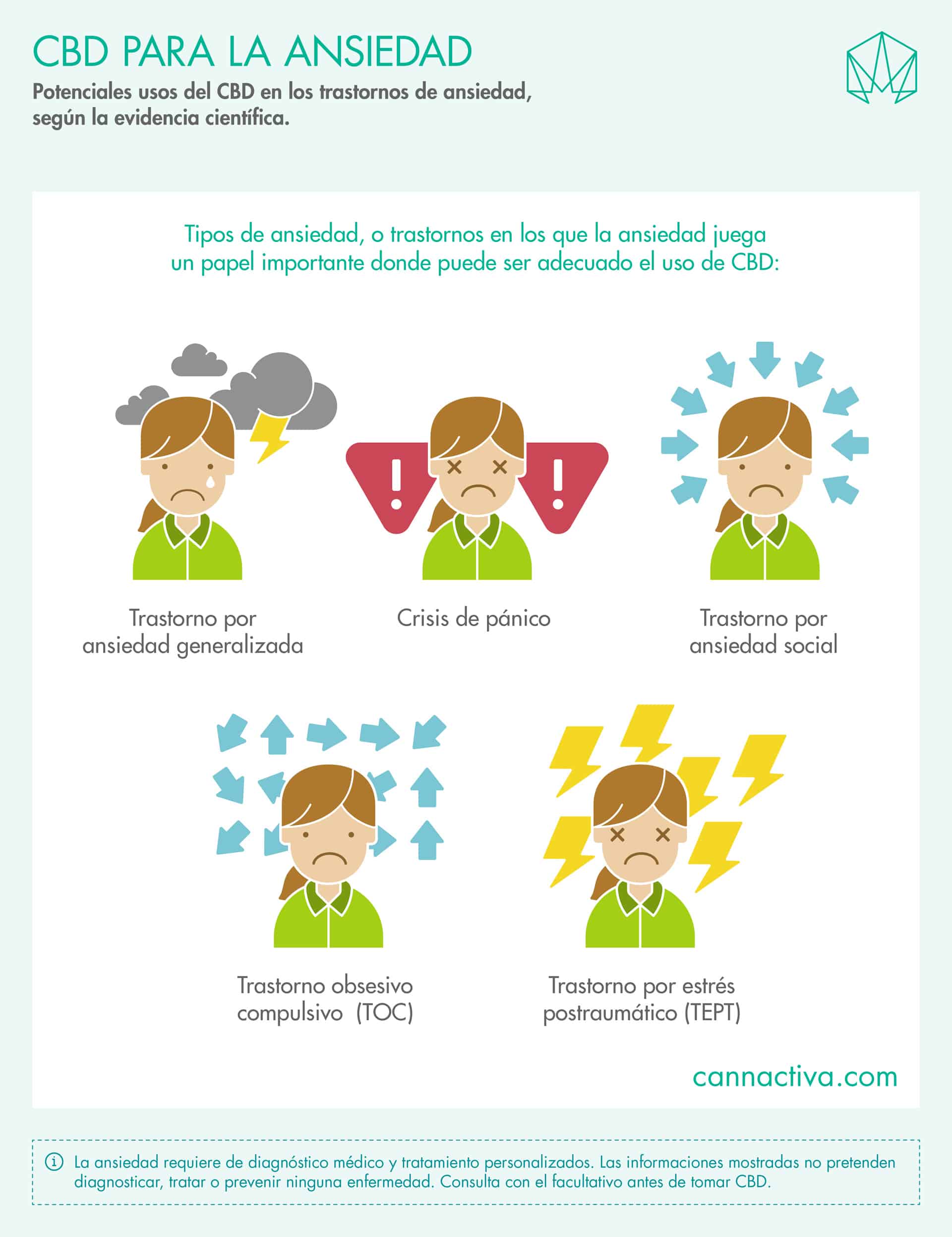
When we talk about CBD and anxiety, we are not referring to a single condition, but to a group of disorders that can manifest in different ways (4):
- Generalised anxiety
- Chronic stress
- Social anxiety
- Panic attacks
- Occasional nervousness
- Difficulty relaxing or falling asleep (a related topic is CBD for insomnia)
It is estimated that more than 10% of the European population suffers from some form of anxiety. That is why many people see CBD for anxiety as a natural option that does not create dependence (5) and can be integrated into their daily routine.

How CBD acts in the brain against anxiety
Although research is still developing, current studies indicate that CBD reduces anxiety through several complementary mechanisms:
- Modulation of the endocannabinoid system (CB1): CBD does not directly activate the CB1 receptor, but indirectly regulates its activity, influencing the brain circuits of fear and anxiety.
- Interaction with serotonin (5-HT1A receptor): CBD acts as a functional agonist of this receptor (i.e. it activates it indirectly and in a modulated way), which is involved in regulating mood and the stress response (6).
- Regulation of the TRPV1 receptor: this receptor (a body sensor involved in the stress response) helps explain why moderate doses of CBD can reduce anxiety, while very high doses may lose effectiveness (7).
- Modulation of the brain’s fear circuits: CBD reduces activation of the amygdala (the brain’s “alarm centre”) and improves its communication with the prefrontal cortex (the area that regulates rational thinking) during stressful situations (8).
In addition, CBD indirectly interacts with other neurotransmitters such as GABA and dopamine, which take part in regulating the physical symptoms associated with anxiety, such as muscle tension or constant restlessness.
It is important to remember that CBD does not replace medical treatment, but it can be a complement within a holistic approach to well-being.
Potential benefits of CBD for anxiety and emotional well-being
The benefits of CBD for anxiety most commonly reported by users and preliminary studies are:
- Support for emotional balance
- A sense of relaxation without drowsiness
- Better adaptation to everyday stress
- Contribution to a more restorative rest
- Good overall tolerability
These effects are not immediate and not the same for everyone. The effect of CBD depends on factors such as dosage, consistency, individual sensitivity and the type of CBD product (oils, flowers and creams).
Does CBD help anxiety? What the science says
Scientific evidence on CBD for anxiety has grown significantly over the last decade. The available data suggest that CBD could be a promising candidate for the complementary approach to generalised anxiety disorder, social anxiety, panic episodes and other conditions in which anxiety is a central component, such as post-traumatic stress disorder (PTSD) or obsessive-compulsive disorder (OCD) (9, 10).
Some recent studies indicate that full-spectrum CBD oil, derived from hemp and at relatively low doses, may contribute to improving anxiety, mood and quality of life (11). A similar pattern has been observed in research on CBD and depression.
Even so, European health authorities agree that further long-term studies are needed, so it is essential to avoid overblown promises.
CBD oil dosage for anxiety: how much CBD to take and how many drops
There is no universal CBD dosage, as each body responds differently. Although it has been suggested that administering low, chronic doses of CBD (daily) or an acute dose of CBD (i.e. a single intake) can reduce anxiety-related behaviours (3), these effects have been observed with hemp-derived products such as full-spectrum CBD oils. If you want to go deeper into the calculation, you can read our guide on CBD oil dosage.
Clinical studies have used CBD doses ranging from 30 to 300 mg orally, both as a single intake and on a continuous basis, especially in social anxiety and stress-induced anxiety. Interestingly, higher doses do not always increase effectiveness and may even reduce it due to activation of the TRPV1 receptor (3, 12).
Consistency at low doses is usually more important than the amount. It is always advisable to consult a healthcare professional if you take other medication, and to choose a quality oil: here is our guide on how to choose the best CBD oil.
Ways to use CBD for anxiety
There are several ways to incorporate CBD into your daily routine:
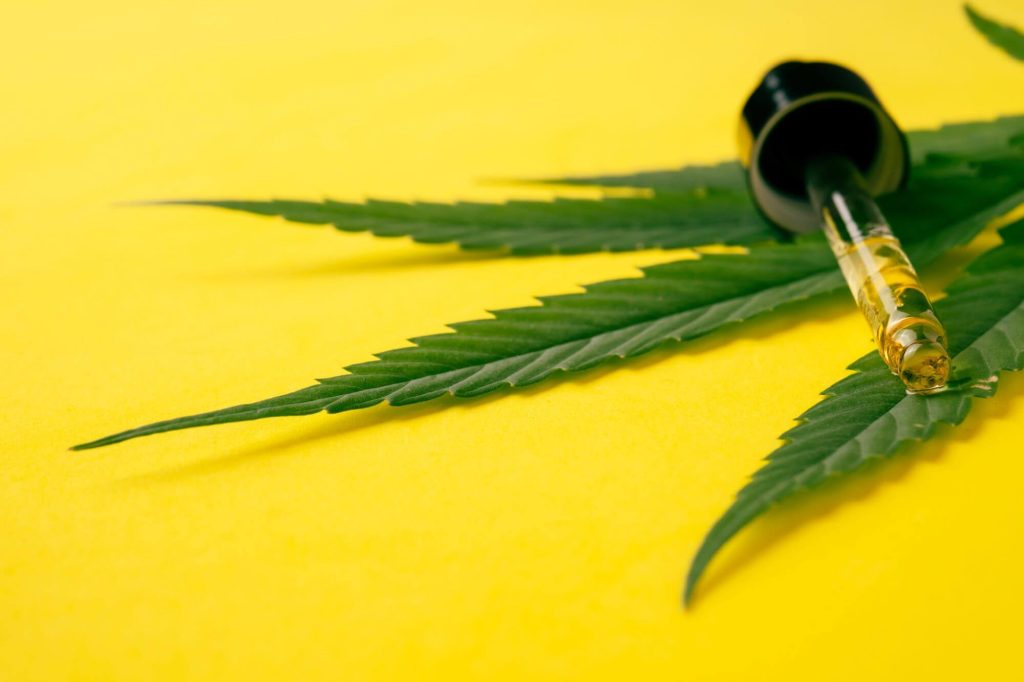
Sublingual CBD oil (the most popular format)
CBD oil for anxiety is the most popular format. It is usually placed under the tongue and allows for gradual absorption.
Other formats: CBD flowers, hash and cosmetics
CBD flowers, cosmetics and hash also exist, although for anxiety oral formats are usually preferred.
Is CBD safe? CBD anxiety side effects and precautions
CBD has a favourable safety profile, but in some people and at high doses, mild CBD side effects may appear, such as:
- Fatigue
- Dizziness
- Diarrhoea
- Dry mouth
- Lower blood pressure
Is CBD legal for anxiety? European regulation
As of today, no over-the-counter CBD product is authorised in the European Union as a treatment for anxiety. CBD itself is not a narcotic —the World Health Organization (2018) and the Court of Justice of the European Union (Kanavape ruling, 2020) confirmed its free circulation when it comes from authorised industrial hemp—, but its legality and regulation do not mean it can be used as a medicine.
CBD oils that are freely sold are not approved or regulated to treat anxiety or any other condition; in Europe they are only permitted for external or topical use. And the only CBD-based medicine authorised in Europe, Epidyolex®, has no indication for anxiety.
So, for the time being, the use of CBD oils for anxiety is not regulated as such and, for legal reasons, no specific indications can be given. Speak to a healthcare professional if you have any questions.
Frequently asked questions about CBD and anxiety
How many drops of CBD oil should I take for anxiety?
There is no single CBD dosage for anxiety, since it depends on the person, the type of product and individual sensitivity. In a well-being context, many people start with low, consistent doses and gradually adjust. Scientific studies have used very different doses between 30 and 300 mg orally, so caution and a consultation with a healthcare professional are recommended.
How long does CBD oil take to work for anxiety?
Sublingual CBD oil usually starts to take effect within 15 to 45 minutes, although the effect can vary depending on dose, metabolism and the type of anxiety. In some cases, the benefits are felt after several days of continuous use, especially when CBD is integrated as part of a daily routine.
Does CBD cause dependence or addiction?
No. CBD is not addictive and does not create dependence, according to the available scientific evidence and the World Health Organization. Unlike THC, cannabidiol produces no psychoactive effects or withdrawal syndrome, which is why interest in it as a well-being option for anxiety continues to grow.
Conclusion: CBD as part of a holistic approach
CBD and emotional well-being are closely connected through the endocannabinoid system; this is why products such as CBD oil for anxiety are increasingly positioned as a natural well-being option. Although CBD is not a magic solution, it can be part of a mindful approach combined with healthy habits, rest and stress management.
Don’t forget to consult a healthcare professional about how to integrate CBD into your life.
Disclaimer
This article is for informational purposes only and does not constitute medical advice. The information provided here may complement, but never replace, the diagnosis or treatment of a healthcare professional. If you live with anxiety or take medication, consult your doctor before incorporating CBD into your routine. Cannactiva products are not medicines: they are marketed in accordance with European regulations for external, aromatic or ornamental use. Research on CBD continues to evolve and new evidence may emerge after the publication date.
References
- Kunos, G. (2007). Understanding metabolic homeostasis and imbalance: what is the role of the endocannabinoid system?. The American journal of medicine, 120(9 Suppl 1), S18–S24. https://doi.org/10.1016/j.amjmed.2007.06.007
- Lutz, B., Marsicano, G., Maldonado, R., & Hillard, C. J. (2015). The endocannabinoid system in guarding against fear, anxiety and stress. Nature reviews. Neuroscience, 16(12), 705–718. https://doi.org/10.1038/nrn4036
- Maldonado, R., Cabañero, D., & Martín-García, E. (2020). The endocannabinoid system in modulating fear, anxiety, and stress. Dialogues in clinical neuroscience, 22(3), 229–239. https://doi.org/10.31887/DCNS.2020.22.3/rmaldonado
- Adwas, A., Jbireal, J. & Azab, A. (2019). Anxiety: Insights into Signs, Symptoms, Etiology, Pathophysiology, and Treatment. The South African journal of medical sciences, 2, 80–91. ISSN: 2617-718.
- Korem, N., Zer-Aviv, T. M., Ganon-Elazar, E., Abush, H., & Akirav, I. (2016). Targeting the endocannabinoid system to treat anxiety-related disorders. Journal of basic and clinical physiology and pharmacology, 27(3), 193–202. https://doi.org/10.1515/jbcpp-2015-0058
- Roncon, C. M., Biesdorf, C., Coimbra, N. C., Audi, E. A., Zangrossi, H., Jr, & Graeff, F. G. (2013). Cooperative regulation of anxiety and panic-related defensive behaviors in the rat periaqueductal grey matter by 5-HT1A and µ-receptors. Journal of psychopharmacology, 27(12), 1141–1148. https://doi.org/10.1177/0269881113485144
- Lichenstein, S. D. (2022). THC, CBD, and Anxiety: A review of recent findings on the anxiolytic and anxiogenic effects of cannabis' primary cannabinoids. Current addiction reports, 9(4), 473–485. https://doi.org/10.1007/s40429-022-00450-7
- Crippa, J. A., Derenusson, G. N., Ferrari, T. B., Wichert-Ana, L., Duran, F. L., Martin-Santos, R., et al. (2011). Neural basis of anxiolytic effects of cannabidiol (CBD) in generalized social anxiety disorder: a preliminary report. Journal of psychopharmacology, 25(1), 121–130. https://doi.org/10.1177/0269881110379283
- Skelley, J. W., Deas, C. M., Curren, Z., & Ennis, J. (2020). Use of cannabidiol in anxiety and anxiety-related disorders. Journal of the American Pharmacists Association, 60(1), 253–261. https://doi.org/10.1016/j.japh.2019.11.008
- Blessing, E. M., Steenkamp, M. M., Manzanares, J., & Marmar, C. R. (2015). Cannabidiol as a Potential Treatment for Anxiety Disorders. Neurotherapeutics, 12(4), 825–836. https://doi.org/10.1007/s13311-015-0387-1
- Smith, R. T., Dahlgren, M. K., Sagar, K. A., Kosereisoglu, D., & Gruber, S. A. (2025). Clinical and Cognitive Improvement Following Treatment with a Hemp-Derived, Full-Spectrum, High-Cannabidiol Product in Patients with Anxiety: An Open-Label Pilot Study. Biomedicines, 13(8), 1874. https://doi.org/10.3390/biomedicines13081874
- Han, K., Wang, J. Y., Wang, P. Y., & Peng, Y. C. (2024). Therapeutic potential of cannabidiol (CBD) in anxiety disorders: A systematic review and meta-analysis. Psychiatry research, 339, 116049. https://doi.org/10.1016/j.psychres.2024.116049
- World Health Organization (WHO Expert Committee on Drug Dependence). (2018). Cannabidiol (CBD): Critical Review Report. Fortieth Meeting, Geneva, 4–7 June 2018. https://cdn.who.int/media/docs/default-source/controlled-substances/whocbdreportmay2018-2.pdf


