
In recent years, cannabidiol (CBD), a non-psychoactive compound present in the cannabis plant, has been the subject of numerous studies for its anti-inflammatory properties and its potential benefit in the treatment of certain conditions.
In this article, we explore the underlying mechanisms that make CBD act as an anti-inflammatory, as well as the most recent clinical evidence and scientific findings. We also address the main concerns and limitations surrounding the use of CBD as an anti-inflammatory therapy, and the future prospects for research.
Introduction to CBD and inflammation
What is CBD and what properties does it have?
Cannabidiol, more commonly known as CBD, is a natural compound from the Cannabis sativa plant that does not alter the state of consciousness and to which various positive properties for wellbeing and health have been attributed.
Within CBD's pharmacological profile lies its anti-inflammatory power. As this is one of its most relevant properties, below we explain a little more about CBD's natural anti-inflammatory power.
What is inflammation?
Inflammation is a natural response of the body that occurs as a consequence of injury, irritation or infection. The purpose of inflammation is to restore the integrity or health of the tissues. In other words, the body's own immune system produces pro-inflammatory substances, which serve to attract other immune cells to the site that needs to be repaired in order to return to a normal state of health.
Therefore, inflammation, understood as an acute or one-off reaction, is beneficial and necessary for recovery to take place. But sometimes this inflammatory immune response becomes chronic, and can be harmful (1). When inflammation begins to damage the body, the use of anti-inflammatories is most recommended. These drugs are responsible for reversing or reducing the inflammatory process.
Anti-inflammatory properties of CBD
Why is CBD an anti-inflammatory?
CBD is anti-inflammatory because it is able to reduce or inhibit inflammation through its interaction with the endocannabinoid system and other signalling pathways. The endocannabinoid system is a key regulatory system that helps maintain balance (homeostasis) in the body, including the regulation of pain and inflammation.
Through its interaction with the endocannabinoid system, CBD can activate or inhibit the mechanisms that modulate the body's inflammatory response after an injury occurs or when a disease is present.
How does CBD act to reduce inflammation?
CBD interacts with the cannabinoid receptors CB1 and CB2 of the endocannabinoid system, which are present throughout the body, including the immune system. When CBD binds to these receptors, it can help reduce inflammation by inhibiting the release of pro-inflammatory substances.
CBD is a phytocannabinoid (a natural compound of the cannabis plant) that can interact with the endocannabinoid system through its inverse agonism (that is, modulating its activity) at the CB1 and CB2 receptors. It also has the ability to activate other receptors in our body, such as the vanilloid TRPV1 receptors and the peroxisome proliferator-activated receptors gamma (PPAR gamma), which are involved in inflammation and oxidation (2).
Mechanism of action of CBD as an anti-inflammatory
Once CBD interacts with these receptors or pharmacological targets, the machinery that will help relieve inflammation is activated or modulated. Some of the mechanisms responsible for CBD's anti-inflammatory properties are:
- CBD inhibits the production of compounds that are mediators of inflammation, such as cytokines and chemokines (3). These are pro-inflammatory proteins responsible for attracting immune system cells to the site where inflammation is to be generated.
- CBD reduces the activation of immune cells that contribute to inflammation, for example, T cells (4) and macrophages (5).
- It also inhibits the enzymes cyclooxygenase (COX; 6) and lipoxygenase (LOX; 7), involved in the production of prostaglandins and leukotrienes, which are inflammatory mediators.

Joint pain is one of the most common symptoms in chronic inflammatory processes of the joints. Scientific research has studied the role of cannabidiol in this context; you can find out more in our guide on CBD for joint pain.
Potential therapeutic use of CBD as an anti-inflammatory
Scientific research has described the use of CBD as an anti-inflammatory for the joints, which together with CBD's ability to modulate the immune response (8) may benefit patients with rheumatoid arthritis (9) and osteoarthritis (10).
In addition, it may help relieve skin inflammation, making CBD a very good ally for psoriasis, acne and eczema (11).
On the other hand, CBD as an anti-inflammatory may have an effect on the lungs and the digestive system (12), making it a potential therapeutic option for asthma (13) and inflammatory bowel disease (12).
What are the benefits of CBD for inflammation?
In addition to CBD's anti-inflammatory capacity, CBD is also characterised by its analgesic properties, having effects on the receptors involved in nociception (the perception of pain) (14).
Likewise, CBD has antioxidant properties, the ability to reduce oxidative stress. CBD can reduce the production of free radicals or interfere with their harmful action (15, 16). This antioxidant capacity of CBD promotes the health of our body's cells and indirectly reduces inflammation.
How to use cannabidiol for inflammation
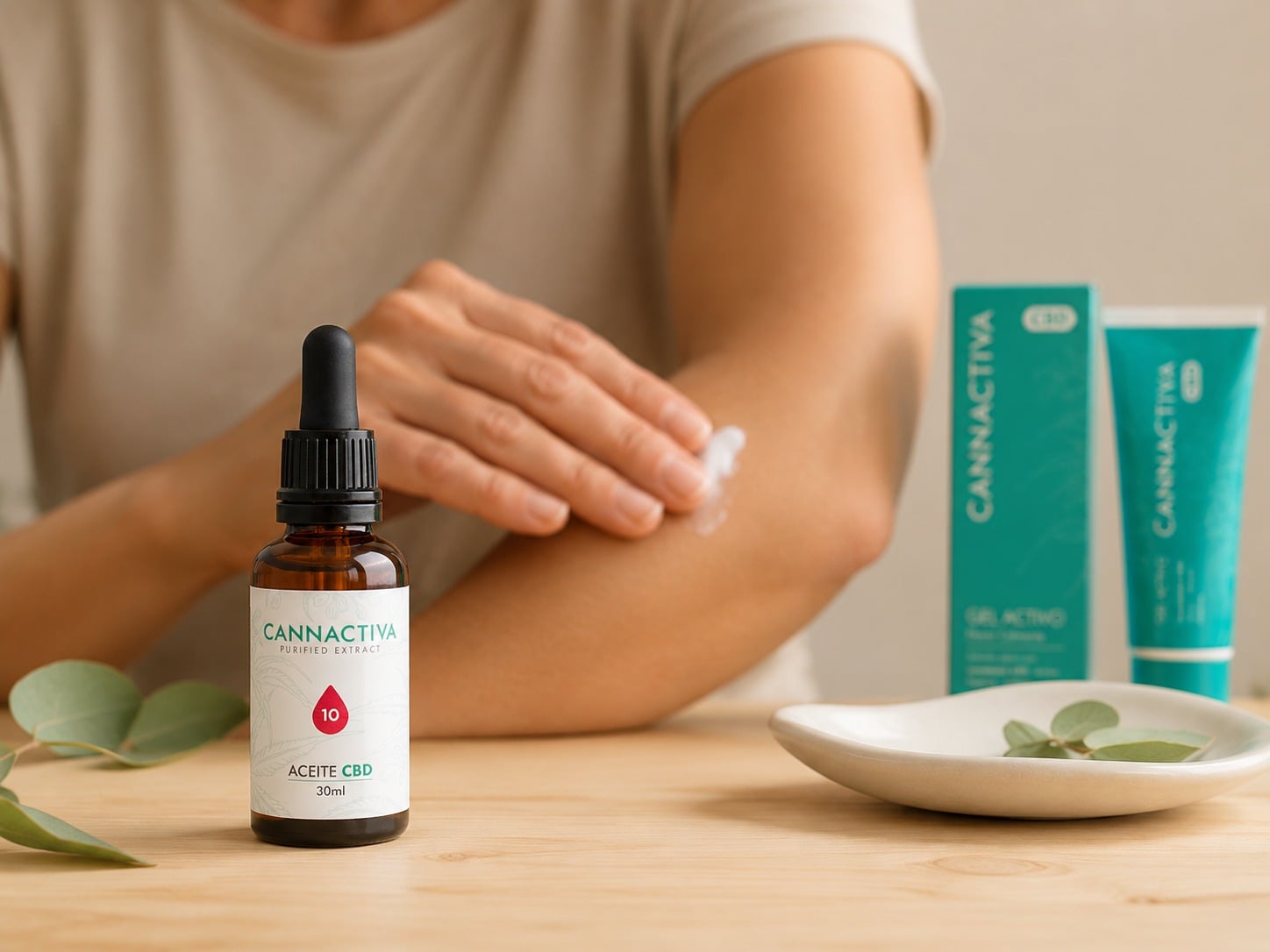
Studies have shown that CBD can act as an anti-inflammatory when applied topically, for example in CBD creams for pain, where CBD may be effective as a local anti-inflammatory and analgesic.
What is the best way to take CBD for inflammation?
A massage with the best anti-inflammatory CBD cream can help relieve pain and inflammation over the area affected by pain. We recommend using high-quality CBD physiotherapy products, made with full-spectrum CBD oil, to ensure the CBD has the right potency.

The right amount of CBD varies greatly from one person to another and depends on the type of discomfort and its intensity. If you would like guidance on how to adjust it, you can read our guide on what dose of CBD is used for pain.
The use of CBD for inflammation has also been demonstrated orally, through capsules or CBD drops. However, bear in mind that the oral use of cannabidiol is not regulated in some countries.
On the other hand, you should know that CBD is not a medicine in the proper sense of an anti-inflammatory drug. Although there are clinical studies demonstrating its anti-inflammatory effects, its use for all these conditions is not approved, at least for the time being.
If you have a significant injury or inflammation and are looking for an anti-inflammatory drug, it is more appropriate to consult your doctor about the available prescription options.
What dose of CBD is used for inflammation?
An effective dose of CBD as an anti-inflammatory does not exist as such. We recommend that you consult your doctor to find out about the most appropriate treatment for the specific condition that requires anti-inflammatory action, as well as complementary therapies with proven anti-inflammatory efficacy, such as diet, exercise or rest.
How often should I take CBD for inflammation?
Broadly speaking, CBD is used in low doses and gradually increased according to individual tolerance and the desired effects. Bear in mind that the optimal dose for each individual is highly variable.
Are there any interactions with other medicines I should be aware of when taking CBD for inflammation?
Inflammation occurs as a secondary effect of tissue damage or a primary disease. Therefore, there is a possibility that CBD may have drug interactions with the medicines being administered to treat the primary condition.
To learn more about this topic, see our post on CBD and interactions with medicines. There you can find out how the medicines you are using could be affected if you use CBD.
We remind you that this is an informative article that is not intended to prevent, diagnose or treat any disease. Its content may complement, but never replace, the diagnosis or treatment of any disease or symptom. Cannactiva products are not medicines. Consult your doctor before using CBD.
References
- Medzhitov R. (2008). Origin and physiological roles of inflammation. Nature, 454(7203), 428–435. https://doi.org/10.1038/nature07201
- Peres, F. F., Lima, A. C., Hallak, J. E. C., Crippa, J. A., Silva, R. H., & Abílio, V. C. (2018). Cannabidiol as a Promising Strategy to Treat and Prevent Movement Disorders?. Frontiers in pharmacology, 9, 482. https://doi.org/10.3389/fphar.2018.00482
- Sermet, S., Li, J., Bach, A., Crawford, R. B., & Kaminski, N. E. (2021). Cannabidiol selectively modulates interleukin (IL)-1β and IL-6 production in toll-like receptor activated human peripheral blood monocytes. Toxicology, 464, 153016. https://doi.org/10.1016/j.tox.2021.153016
- Kozela, E., Lev, N., Kaushansky, N., Eilam, R., Rimmerman, N., Levy, R., Ben-Nun, A., Juknat, A., & Vogel, Z. (2011). Cannabidiol inhibits pathogenic T cells, decreases spinal microglial activation and ameliorates multiple sclerosis-like disease in C57BL/6 mice. British journal of pharmacology, 163(7), 1507–1519. https://doi.org/10.1111/j.1476-5381.2011.01379.x
- Yekhtin, Z., Khuja, I., Meiri, D., Or, R., & Almogi-Hazan, O. (2022). Differential Effects of D9 Tetrahydrocannabinol (THC)- and Cannabidiol (CBD)-Based Cannabinoid Treatments on Macrophage Immune Function In Vitro and on Gastrointestinal Inflammation in a Murine Model. Biomedicines, 10(8), 1793. https://doi.org/10.3390/biomedicines10081793
- Cosentino, M., Legnaro, M., Luini, A., Ferrari, M., Sodergren, M., Pacchetti, B., & Marino, F. (2022). Effect of Cannabidiol on Cyclooxygenase Type 1 and 2 Expression and Function in Human Neutrophils. Cannabis and cannabinoid research, 10.1089/can.2022.0008. Advance online publication. https://doi.org/10.1089/can.2022.0008
- Massi, P., Valenti, M., Vaccani, A., Gasperi, V., Perletti, G., Marras, E., Fezza, F., Maccarrone, M., & Parolaro, D. (2008). 5-Lipoxygenase and anandamide hydrolase (FAAH) mediate the antitumor activity of cannabidiol, a non-psychoactive cannabinoid. Journal of neurochemistry, 104(4), 1091–1100. https://doi.org/10.1111/j.1471-4159.2007.05073.x
- Aziz, A. I., Nguyen, L. C., Oumeslakht, L., Bensussan, A., & Ben Mkaddem, S. (2023). Cannabinoids as Immune System Modulators: Cannabidiol Potential Therapeutic Approaches and Limitations. Cannabis and cannabinoid research, 8(2), 254–269. https://doi.org/10.1089/can.2022.0133
- Lowin, T., Tingting, R., Zurmahr, J., Classen, T., Schneider, M., & Pongratz, G. (2020). Cannabidiol (CBD): a killer for inflammatory rheumatoid arthritis synovial fibroblasts. Cell death & disease, 11(8), 714. https://doi.org/10.1038/s41419-020-02892-1
- Vela, J., Dreyer, L., Petersen, K. K., Arendt-Nielsen, L., Duch, K. S., & Kristensen, S. (2022). Cannabidiol treatment in hand osteoarthritis and psoriatic arthritis: a randomized, double-blind, placebo-controlled trial. Pain, 163(6), 1206–1214. https://doi.org/10.1097/j.pain.0000000000002466
- Sivesind, T. E., Maghfour, J., Rietcheck, H., Kamel, K., Malik, A. S., & Dellavalle, R. P. (2022). Cannabinoids for the Treatment of Dermatologic Conditions. JID innovations : skin science from molecules to population health, 2(2), 100095. https://doi.org/10.1016/j.xjidi.2022.100095
- Martínez, V., Iriondo De-Hond, A., Borrelli, F., Capasso, R., Del Castillo, M. D., & Abalo, R. (2020). Cannabidiol and Other Non-Psychoactive Cannabinoids for Prevention and Treatment of Gastrointestinal Disorders: Useful Nutraceuticals?. International journal of molecular sciences, 21(9), 3067. https://doi.org/10.3390/ijms21093067
- Vuolo, F., Abreu, S. C., Michels, M., Xisto, D. G., Blanco, N. G., Hallak, J. E., Zuardi, A. W., Crippa, J. A., Reis, C., Bahl, M., Pizzichinni, E., Maurici, R., Pizzichinni, M. M. M., Rocco, P. R. M., & Dal-Pizzol, F. (2019). Cannabidiol reduces airway inflammation and fibrosis in experimental allergic asthma. European journal of pharmacology, 843, 251–259. https://doi.org/10.1016/j.ejphar.2018.11.029
- Mlost, J., Bryk, M., & Starowicz, K. (2020). Cannabidiol for Pain Treatment: Focus on Pharmacology and Mechanism of Action. International journal of molecular sciences, 21(22), 8870. https://doi.org/10.3390/ijms21228870
- Atalay, S., Jarocka-Karpowicz, I., & Skrzydlewska, E. (2019). Antioxidative and Anti-Inflammatory Properties of Cannabidiol. Antioxidants (Basel, Switzerland), 9(1), 21. https://doi.org/10.3390/antiox9010021
- Ben-Shabat, S., Hanus, L. O., Katzavian, G., & Gallily, R. (2006). New cannabidiol derivatives: synthesis, binding to cannabinoid receptor, and evaluation of their antiinflammatory activity. Journal of medicinal chemistry, 49(3), 1113–1117. https://doi.org/10.1021/jm050709m


