Types of Hash: How Many There Are, How They Are Made and How They Differ

Hash is one of the oldest cannabis concentrates in the world, and there are many types of hash that differ in their origin, their extraction method and how they are pressed. From Moroccan hash to modern bubble hash, by way of charas, dry sift or rosin, each technique gives rise to a different texture, colour, aroma and potency.
Throughout history, each region has developed its own method to extract and work cannabis resin. In this guide we go through the main types of hash that exist, how they are produced and what their characteristics are, including the only legal type in Spain: CBD hash, made with hemp flowers without THC.
And if what you want is to understand what hash is, its effects or how to tell whether it is good quality, we cover that in our complete guide to hash. And if you go straight to the best THC-free option, we have put together the best CBD hash compared.
How many types of hash are there?
There is no fixed number: dozens of types of hash are known around the world, but almost all of them can be classified in three ways, according to how the resin is obtained and worked:
- By origin: Moroccan, Afghan, Pakistani, Nepalese, Lebanese…
- By extraction method: with or without solvents (charas, dry sift, bubble hash, rosin, BHO…).
- By pressing and texture: pollen, slab or plate, acorn…
The resin concentrates in the cannabis trichomes, where the cannabinoids (THC, CBD, CBN, HHC) and the terpenes such as myrcene, linalool, caryophyllene or pinene build up. That is why hash is more potent than the flower itself: it concentrates everything good about the plant.
Types of hash by origin
The historical distinction of hash has been made according to the country of origin, since both the typical strain of each region and the resin extraction method vary between territories. We go through the most iconic hashes by their origin:
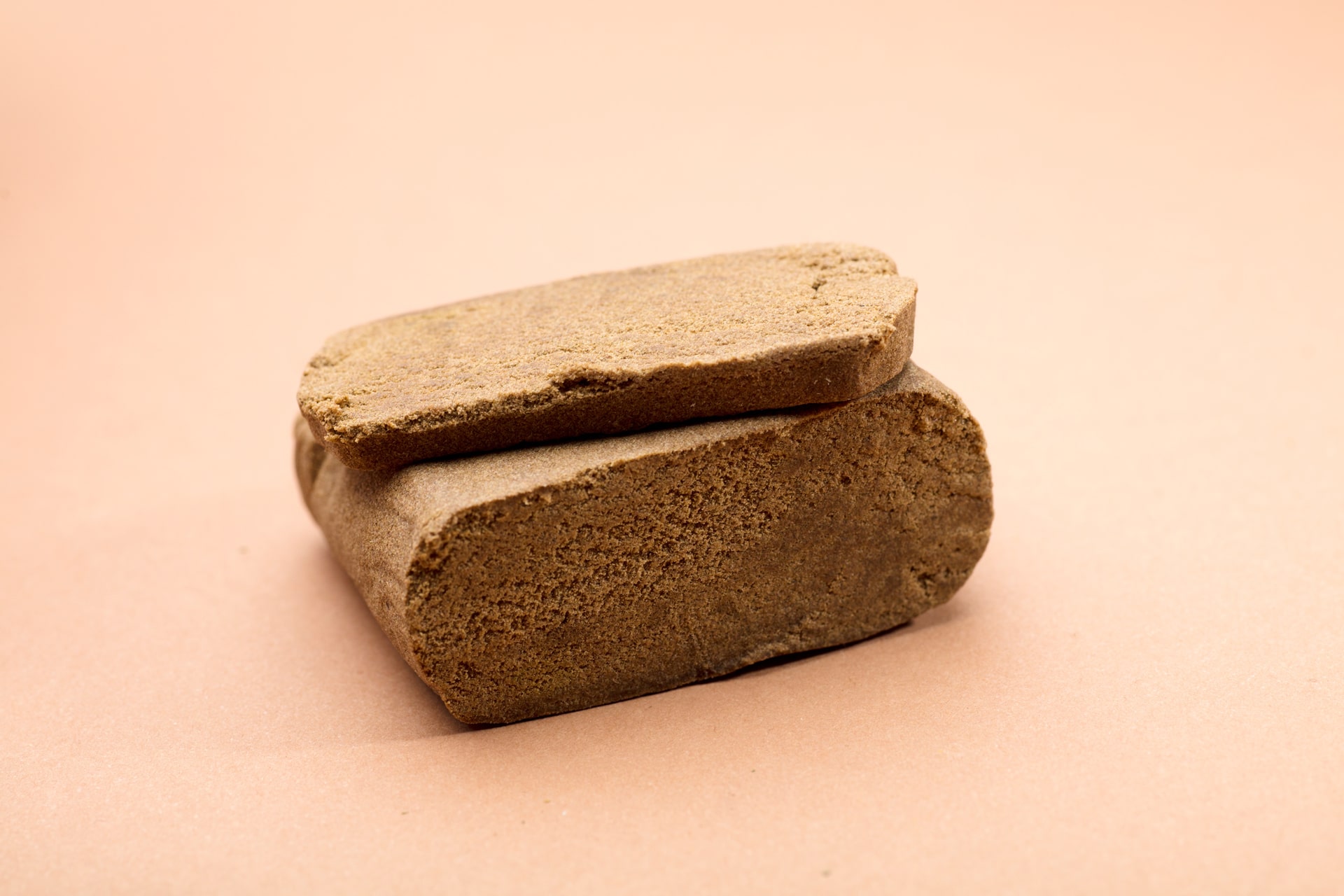
Moroccan hash
It is the most popular type of hash in Europe and Spain, thanks to its closeness to the continent. Traditionally it has always been considered one of the best in the world. The most widely used technique in Morocco is sieving: dry flowers are placed on a sieve and beaten with a stick so the resin comes loose and is filtered through. The resulting pollen or kief is pressed with heat to give it the shape of a hash plate or a ball. Because of its technique, it is known internationally as Dry Hash.
Depending on the strain, the filtering and the pressing, we find several types:
- Blond hash: also called blond pollen. Its light, mustard tone is due to it coming from strains with little THC and to gentle filtering and pressing. Light flavour and effect.
- Red hash: more potent than the blond, from Rif strains with more THC. Darker colour and a more robust slab.
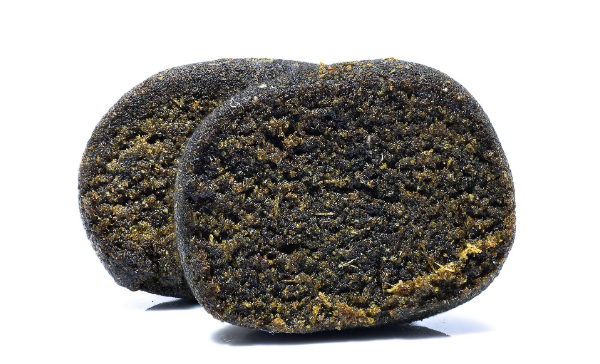
- Black hash or Hardala: black, sticky and mouldable texture. It usually comes from the Ketama area.
Afghan hash
Afghanistan is one of the cradles of cannabis: indica is believed to originate from the mountainous Hindu Kush region. Its method is similar to the Moroccan one but more complex: the resin passes through several sieves, the pollen is slowly pressed with water or tea on a hot plate and dried using skins. The process can take weeks or months, until a doughy, dense consistency is achieved, similar to caramel and black in colour. It is very potent.
Pakistani hash
The region neighbouring Afghanistan, with which it shares the Hindu Kush range, is also famous for its hash, made in a similar way and dried for months in animal skins. It is black in colour with a strong, spicy and harsh flavour, and a potent, sedating effect.
Nepalese hash
This Himalayan region is another cradle of cannabis, where it grows wild. Its hash is made using the charas technique (the same as the Indian one): the buds are rubbed with the hands so the resin sticks to them and is then separated from the fingers. The result is a sticky, creamy ball, fairly potent, although its smoke is less dense than that of neighbouring regions.
Lebanese hash
Lebanon has a long history with hash and today produces huge amounts of resin. Lebanese hash has a yellow or red tone, the result of its strains and of drying the flowers outdoors. The yellow one, from younger plants, gives a more cerebral effect; the red one, from mature plants, is more narcotic.
Other countries with iconic hash
There are more regions famous for their hash: Indian hash, also made with the charas technique (such as that of Kashmir or the prized one from Malana), Turkish hash or Dutch hash, the cradle of modern bubble hash.
Types of hash by extraction method
We can divide the types of hash according to how the resin is separated. There are two big families: solventless (manual or mechanical methods) and solvent-based (substances that dissolve the resin). We go deeper into each technique in our guide to cannabis extractions and in how CBD hash is made.
Solventless extractions (traditional hash)
- Charas: the flower —live or dry— is rubbed with the hands until the resin sticks to the skin. Using the live plant preserves volatile monoterpenes that are almost entirely lost during drying. In Nepal it gives rise to the legendary temple balls, hand-cured balls with an almost mirror-like shine.
- Dry sift: “dry” is the hash obtained by dry-sieving the flower to separate the trichomes (the kief), which are then pressed. On the street it is simply called “the dry”. It is one of the cleanest and most natural: the finer the sieve (fewer microns), the greater the purity, right up to the coveted full-melt, which melts without leaving residue. We explain it in detail in Dry Sift: what it is and how it is made, and you can try our CBD Pollen Dry Sift.
- Bubble hash, ice-o-lator or water hash: very cold water and ice are used so the resin becomes brittle and separates; it is then filtered through mesh bags of different microns. The technique was popularised by Mila Jansen, the Queen of Hash, with the Ice-O-Lator. The cleanest water hash has a light tone (so-called white hash) and, cold-cured (the piatella technique), takes on a creamy texture. More in Bubble Hash and Iceolator, or try the Bubble Hash CBD and the Iceolator 60% CBD.
- Rosin: the flower (or the hash itself) is pressed with heat and pressure, without solvents, releasing the resin. Live rosin, made with fresh frozen material, is one of the most aromatic.
Solvent-based extractions
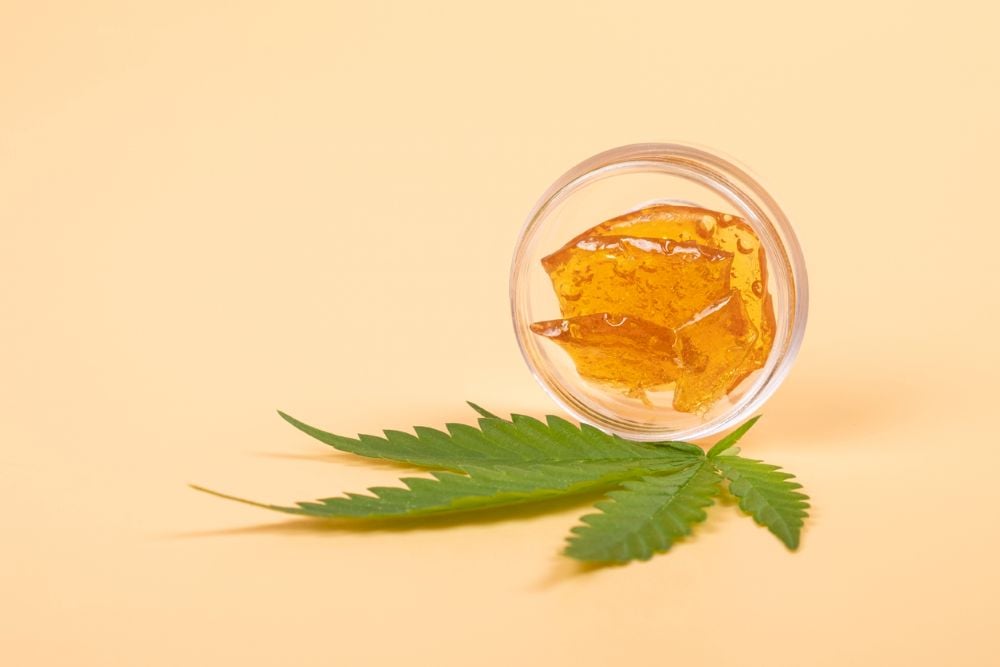
- BHO (Butane Hash Oil): uses butane gas as a solvent. Depending on the purge it gives rise to shatter, wax, budder, crumble, live resin or moonrocks. Very potent, but dangerous outside a professional closed-loop system.
- Supercritical CO2 and others: machinery that brings CO2 to a state between gas and liquid to extract the resin. Propane (PHO), ethanol (QWET) or dimethyl ether (DME) are also used.
Comparison of extraction methods
Method | Solvents | Safety | Potency |
|---|---|---|---|
Charas | No | High | Medium |
Dry sift | No | High | Medium-high |
Bubble hash | No | High | High |
Rosin | No | High | Very high |
BHO | Yes | Low | Very high |
Supercritical CO2 | Yes | Medium | Very high |
Types of hash by pressing and texture
Finally, we can tell the types of hash apart by how the resin is pressed:
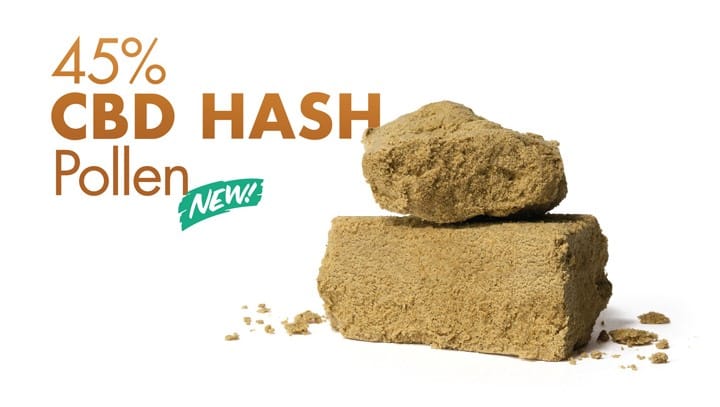
- Pollen or kief: resin that is little or not pressed at all, highly valued for its purity. It has a yellowish tone.
- Slab or plate: the most common format, pressed with heat; the colour and texture vary depending on the strain and the pressing.
- Acorn or egg: it owes its name to its shape. It is hash pressed hard into small portions; historically it was compacted this way to swallow it and get past customs checks. It is one of the formats that most arouse the curiosity of those starting to tell types of hash apart.
Which type of hash should you choose?
The choice depends on your experience and on what you are looking for:
- If you are starting out: a mild pollen or dry sift, of medium potency.
- If you are after aroma and potency: a bubble hash or ice hash, especially if it is live.
- If you want legality and no THC at all: CBD hash.
We compare the THC-free options in the best CBD hash compared.
CBD hash: the only legal type of hash
CBD hash is the only legal type of hash, because it is made with CBD flowers without THC. It offers all the ritual and aroma of traditional hash, but without the THC high or the risks of buying adulterated material on the black market. At Cannactiva you can buy CBD hash made with our THC-free CBD flowers.
Much of the modern knowledge about artisanal hash —curing, full-melt or temple balls— is owed to masters such as Frenchy Cannoli, who devoted his life to recovering the traditional art of resin.
Frequently asked questions about types of hash
Does CBD hash get you high?
No. As it is made with CBD-rich flower and without THC, it produces no psychoactive effect; it brings a relaxing sensation, not the “high”.
What is the most potent type of hash?
Among the traditional ones, Afghan and Pakistani; among the modern ones, rosin and BHO concentrate the largest amount of cannabinoids.
What is “dry” or dry hash?
It is the hash obtained by dry sieving (dry sift): the trichomes are separated from the dry flower and pressed. On the street it is simply called “the dry”, and it is one of the cleanest and most natural hashes as it uses no solvents.
What is white hash?
It is the purest and lightest-toned bubble hash, almost white, obtained with water and ice when barely any plant matter remains. The lighter and cleaner it is, the higher its quality usually is.
What does greenish-coloured hash indicate?
A marked green usually gives away an excess of plant matter (chlorophyll): poor sieving or raw material with a lot of leaf. It translates into a harsher “grassy” flavour, smoke that burns instead of melting (it does not full-melt) and less actual cannabinoid concentration. Good hash tends towards blond/golden tones (pollen, young Moroccan), cinnamon brown (slab) or dark brown/black (cured Afghan). A slight greenish hint in fresh pollen is not always bad, but an obvious green is a bad sign: the green does not come from the resin, it comes from the plant.
What is the difference between pollen and hash?
Pollen (kief) is the loose, unpressed resin; hash is that same pollen pressed into a slab, ball or acorn.
How do you store hash?
In an airtight container, away from light, heat and moisture, to preserve its terpenes and aroma. We explain it step by step in our guide on how to store hash.


