
With the vacation season approaching, many people who use CBD are wondering if they can take it with them when traveling. Is it legal to fly with CBD? What happens at the airport security checkpoint? What if the destination is outside Europe?
In general, it is not recommended to travel with CBD outside Europe. Within the EU it is possible to carry oils and creams if the THC is less than 0.3%, but each country applies its own rules. CBD flowers should not be taken on the plane because of their similarity to marijuana. Outside Europe, many countries criminalize any cannabis derivative, even without THC.
In this article we update the legal status of CBD in 2026 in each country, to help you make an informed decision before packing any product in your luggage. Cannabidiol laws continue to evolve, and while in some places its use is standardized, in others it can pose serious legal problems.
Is it legal to travel with CBD in 2026?
The short answer is: it depends on the country, and in most cases, it does not. The legality of CBD varies greatly between territories, not only in terms of its sale and consumption, but also with respect to its entry or exit across borders. Although in many countries CBD is legal under certain conditions, that does not mean you can travel with it. Some require a medical prescription, others impose a zero tolerance policy for THC (even in trace amounts), and in others it is forbidden to import cannabinoid products, even if they are available on the local market.
In addition, airlines may have their own policies and international airports apply strict security protocols, so it is crucial to be informed in advance.
In Europe, many travelers have a relaxed perception about the use of cannabis and CBD, as in most countries penalties for possession are usually light or administrative. However, in other parts of the world the law is totally different. In some countries, including toothpaste containing CBD in your luggage can be considered a serious offense.
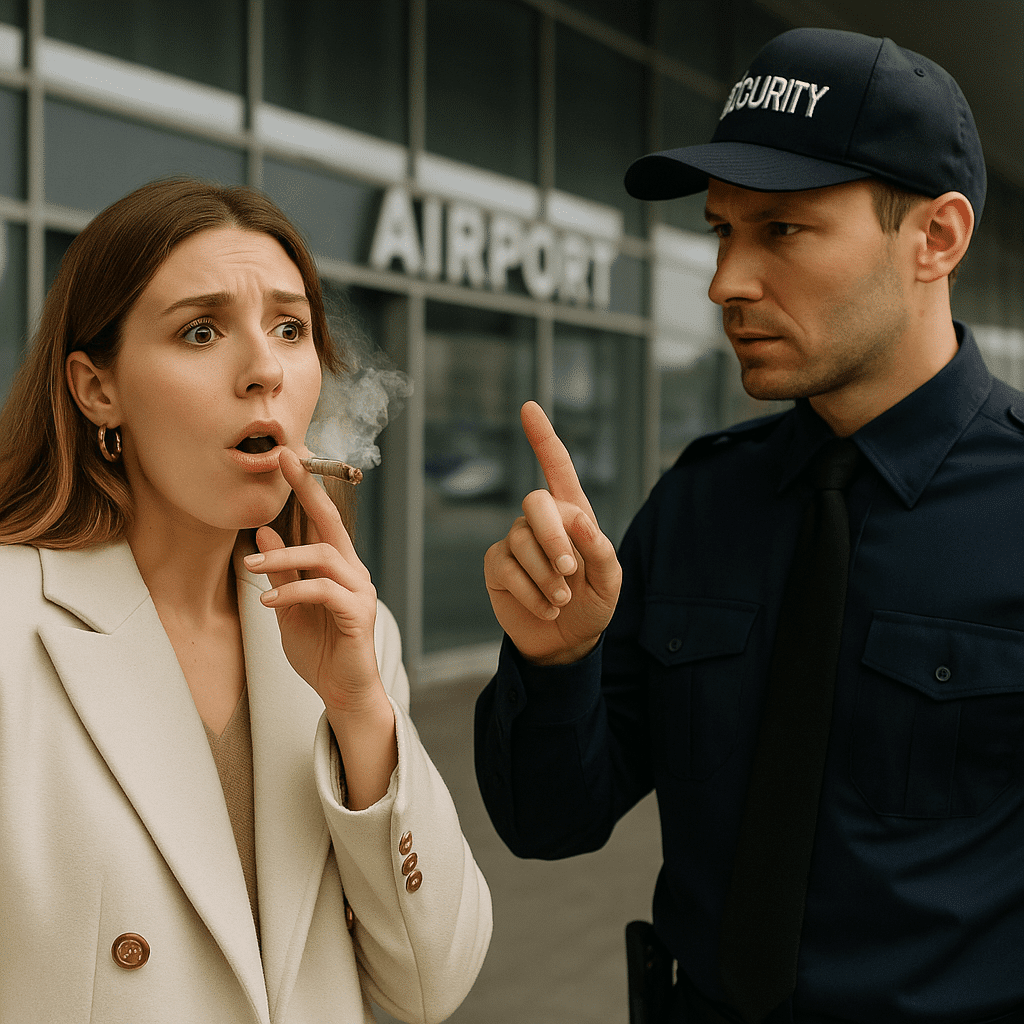
Quick summary: can I travel with CBD?
In general, we recommend not to travel with CBD. In countries where it is legal, the easiest and safest way is to buy it directly at the destination. Below is a summary of the legal situation by region in 2026. See each section of the article for more details.
Country or region | Legal summary |
|---|---|
Europe (general) | CBD oils or creams with low THC are usually allowed; CBD flowers may involve confiscation or sanction, depending on the country. Even in countries where it is legal to sell, importation may be prohibited and it is advisable to purchase it in the country of destination. |
Italy | Possible confiscation of CBD flowers and full spectrum products at airport; unstable regulatory framework. |
Germany | CBD allowed, but importation may generate controls; it is best to purchase it locally. |
United Kingdom | CBD oils generally accepted; CBD flowers prohibited with risk of sanction. There is no guarantee in airport controls, it depends on inspection, documentation and agent's criteria. It is safer to purchase the product at destination. |
United States | Possible TSA intervention and notification of authorities; not recommended for international flights. |
Canada | Crossing borders with cannabis derivatives prohibited; entails relevant penalties. |
Thailand | Financial penalties and possible imprisonment for recreational possession. |
Middle East | Very restrictive legislation; risk of prison sentences even without THC. |
Russia | Administrative sanctions or detention for small amounts; with more severe cases of imprisonment. |
Asia (general) | High penalty in several countries; in Hong Kong up to 7 years imprisonment. |
Oceania (general) | Local prescription required; in its absence, confiscation and possible sanctions. Not recommended to travel with CBD in the region. |
Africa (general) | Restrictive regulation in most countries; South Africa has limited exceptions. |
Latin America (general) | Tendency to confiscation and sanction; in some cases allowed only with medical prescription. |
General recommendations on traveling with CBD or hemp
- Consult the regulations of the country of destination and transit (stopovers). Laws change and are not always applied homogeneously.
- Check the type of product: oil, cosmetic, capsule, flower, e-liquid... Not all are allowed in the same countries.
- Avoid transporting CBD buds: because of their appearance and smell they can be mistaken for marijuana, which creates legal problems even if the product is not a narcotic.
- Always keep the original packaging, the purchase receipt and, if possible, the certificate of analysis (COA) that proves the exact THC content of the product.
- If you are traveling with therapeutic cannabis, add a medical prescription translated into the language of the destination country.
- If in doubt, the safest thing to do is not to carry CBD products and to purchase them at destination.
Can I take CBD on the plane?
CBD and airport screening: what to look out for
It is not recommended. On flights within Europe it may be possible to travel with CBD, as long as the destination country allows it and the product complies with local regulations. However, on international flights, the general recommendation is not to carry CBD products in luggage, either checked or carry-on, due to legislative differences and the risk of customs penalties.
Security controls and border authorities can detain any suspicious substance. Even if CBD is legal, THC levels cannot be tested on the spot, so they could confiscate the product and penalize you.
If you decide to take CBD oil on an intra-European flight, remember that liquids in hand luggage must be in containers of maximum 100 ml in a transparent bag of one liter. Ideally, check it in and always carry the original container along with the certificate of analysis (COA).
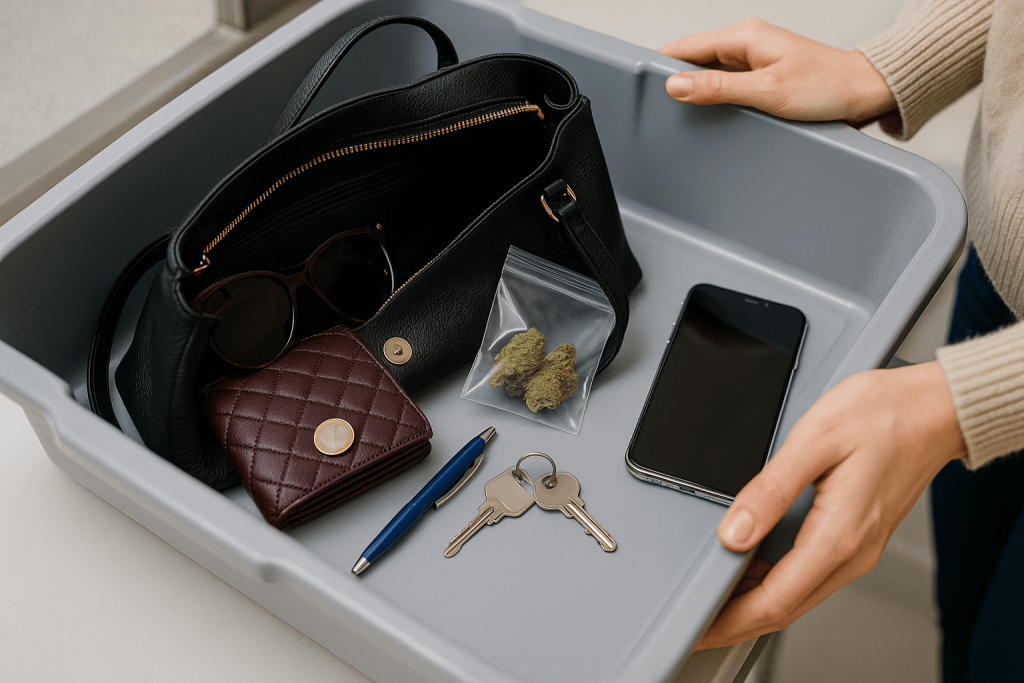
Because they look and smell like marijuana, CBD hemp flowers can be sniffed out by dogs and seized by the police, even if they are in their original packaging and you show the purchase receipt from the CBD store. It is impossible to test THC levels with reliable methods outside of a laboratory, so no one will be able to prove that it is hemp in situ. The legal consequences depend on the country you are in and the amount you are carrying.
Traveling with CBD in Europe (2026)
Europe remains one of the most tolerant regions with respect to cannabis and its derivatives, although legislation varies significantly between countries.
A prominent case is Italy, where the regulations are in the midst of change. If you travel with CBD flowers or full spectrum products, they can be confiscated by customs. In April 2025, a decree banned these products, and although the Consiglio di Stato suspended it in December 2025, the situation remains unresolved (ruling expected in May 2026). The recommendation is clear: don't bring CBD to Italy and, if you need it, buy it there. Read more about the CBD ban in Italy.
Generally speaking, traveling within Europe with hemp products such as CBD oils, creams or capsules is possible as long as the THC content is below 0.3 % and the specific regulations of the destination country are complied with. Switzerland is a notable exception, allowing up to 1 % THC, while countries in Northern and Eastern Europe may apply more restrictive criteria.
In France, CBD oils and cosmetics are legal if they contain less than 0.3% THC, so you should have no problems in a control. CBD flowers are also legal, but not for smoking or inhaling. In practice, if you carry flowers in your luggage, they may be mistaken for marijuana and you may be detained until the product is verified.
It is important to remember that, although CBD is legal in Europe, each member state independently regulates its marketing, use and entry of products. Austria, Slovakia and the Baltic countries apply particularly strict criteria and can confiscate CBD products at the border. Therefore, before traveling (especially by plane), it is recommended to consult both the local regulations and the airline's policy.
Countries such as the Netherlands maintain a policy of tolerance towards cannabis, but do not have a clear regulation on CBD. In the case of Malta, despite having legalized the personal use of cannabis, a specific regulatory framework for CBD products has not yet been developed.
On intra-European routes, for example between Spain, Portugal, France or Germany, it is possible to travel with CBD oil if it complies with the legal THC limits and is correctly labeled. Even so, it is always advisable to check the current legislation and consult with the airline before the flight.
Traveling by car or train in Europe, Road trip or interrail
If you are traveling by car, bus or train, you should not encounter many problems, as there are usually no strict border controls between Schengen countries.
At customs, CBD buds can cause you more than one setback. Hemp can be detected in drug controls, and the police could seize the product and fine you. Also note that, above certain grams (depending on the country), you could be involved in a trafficking offense.
As general recommendations:
- Carry reasonable amounts for personal use.
- If you use it for therapeutic purposes, travel with a medical certificate (translated).
- Bring prescription if your destination requires it (e.g. Norway, Denmark, Finland, Sweden). In Norway, 0 % THC.
- And if you come from outside the EU, buy CBD products in the country of destination.
Another setback can be cannabis gummies. The oral use of CBD is not regulated in many countries. For example, Belgium does not allow the entry of nutritional supplements containing CBD or parts of a cannabis plant, regardless of their THC content.
In Switzerland, the Swiss country allows a 1% THC content in CBD products, higher than the legal limit allowed in neighboring France and Germany. The sale of CBD edibles, which are not authorized in bordering countries, is also allowed.
Traveling with CBD to Germany: the new era of legal cannabis
Germany legalized recreational cannabis in April 2024. Adults can possess up to 25 grams in public. This makes it one of the most permissive European countries: you won't be fined for carrying CBD on your person within the country.
However, that doesn't mean you can cross the border with CBD without problems. Importing or exporting cannabis is still illegal, and customs can confiscate the product even if it is legal on both sides of the border. The most practical is to buy CBD directly in Germany, where products with less than 0.3% THC are sold in specialized stores. And if you travel from Germany to another country, do not bring products that exceed the THC limits of your destination.
Traveling with CBD to England
If you bring CBD oil with less than 0.2% THC to the UK, you should have no problems at the border. CBD flowers, on the other hand, are forbidden: if they are found in your luggage, they will be confiscated. We invite you to read more in our post about the legal situation of CBD in England.
Please note that the United Kingdom does not belong to the EU or the Schengen area, so you will go through customs control. If you carry oil, keep the original packaging and the COA. As for CBD edibles (gummies, capsules), the Food Standards Agency (FSA) has not yet authorized them as novel food, so you could have problems.
Traveling with CBD to the United States
The United States has a reputation for being very strict in its international borders, so, from the outset, not carrying cannabis or its derivatives in any form seems to be the best option.
You may have heard that marijuana is legal in more than 20 U.S. states, which may lead you to mistakenly think that it is safe to travel with CBD. However, regulations vary by state. At the federal level, the 2018 Farm Bill allows hemp-derived CBD as long as it contains less than 0.3% THC. However, many states restrict its use to medicinal purposes, which implies the obligation to present a valid medical prescription. Therefore, it is not recommended to enter the country with products containing cannabinoids, even if they are legalized in certain jurisdictions.
The TSA(Transportation Security Administration) warns about it on its social networks:
"We want you to have a pleasant airport experience and arrive safely at your destination. But flying with marijuana or cannabis products can really hurt your peace of mind. Let's face it, TSA officers are not looking for marijuana. Our screening procedures are focused on security and detecting potential threats. But in the event we encounter a substance that appears to be marijuana or a cannabis product, federal law requires us to notify the authorities. This includes items that are used for medicinal purposes.". These recommendations include internal flights. Therefore, even in states where it is legal, it is safest to buy it in the place where you land.
Traveling with CBD to the Middle East
If you are traveling to countries in the Middle East, make sure you do not carry any CBD or cannabis products with you.
In these regions, cannabis is heavily criminalized and laws and regulations are severe. Possessing CBD products, regardless of THC content, can lead to serious legal consequences, such as imprisonment or significant fines.
One example is the Billy Hood case, a 25-year-old Londoner sentenced to 10 years in prison for possession of a CBD vape, in Dubai in the summer of 2022.
Airlines such as Emirates, Qatar Airways or Singapore Airlines have zero-tolerance policies regarding any cannabis-derived products. Even if you have a layover and do not leave the airport, local laws apply.
Traveling with CBD to Russia
Traveling with cannabis products to Russia is not recommended under any circumstances. Local legislation criminalizes the possession of cannabis, and although quantities of less than 6 grams are usually punishable by a fine or up to 15 days of detention, the legal framework remains strict. As for CBD, the regulations are not explicit, but there is a risk that it will be classified as an isomer of THC and therefore considered illegal.
An illustrative example is the case of American athlete Brittney Griner, sentenced to nine years in prison for carrying a CBD-laced vape cartridge in her luggage. More recently, in 2024, a German tourist was arrested for bringing in cannabis-infused jelly beans. Given this uncertain legal context, the most prudent thing to do is not to bring any cannabis products into the country.
Traveling with CBD to Asia
Traveling with CBD-containing products to Asian countries carries a high legal risk and, in most cases, is not recommended. The region is characterized by extremely strict laws regarding cannabis and its derivatives, including cannabidiol, with consequences ranging from high financial fines to imprisonment.
In mainland China, although CBD is not listed as a dangerous drug, it has been banned in cosmetics since 2021 and, since September 2024, it has been classified as a controlled precursor chemical. The authorities may also consider it an isomer of THC, which opens the door to interpretations that equate it to an illegal substance. Any attempt to enter the country with products containing it, even in minute quantities, can result in severe criminal penalties.
In Hong Kong, the legislation is even more stringent: since February 2023, CBD is included in the Dangerous Drugs Ordinance (DDO). Its possession is punishable by up to seven years' imprisonment and fines of up to $1 million, and trafficking carries life imprisonment. Arrests for carrying CBD have been reported in Hong Kong.
This zero tolerance approach is replicated in countries such as Sri Lanka, Indonesia (including Bali), Maldives, Singapore, Cambodia, Vietnam or the Philippines, where CBD is directly illegal.
Thailand decriminalized cannabis in 2022, but reversed course in June 2025: cannabis is now a category 5 narcotic again. If you are caught with cannabis without a local prescription, you face fines of up to 25,000 THB (~700 €) and up to 3 months imprisonment. Products with CBD and less than 0.2% THC are still legal in Thailand, but it is not recommended to bring them from abroad: customs may treat them as cannabis.
In other countries such as Japan, CBD is legal only if it is completely free of THC, even in traces. In South Korea, medical cannabis is legal under medical prescription. In India, CBD is theoretically legal with a prescription, but its regulation is uncertain and subject to local interpretation.
Traveling with CBD to Oceania
If you are traveling to Australia, New Zealand or any Pacific Island, it is best not to carry CBD products. Aunque su uso médico es legal en ambos países, está estrictamente regulado y solo permitido con prescripción médica.
In Australia, you are allowed to enter with CBD under the "Traveller's Exemption", as long as you carry a valid prescription and a quantity for up to three months of personal treatment. The product must be declared at customs.
In New Zealand, the rules are more restrictive: personal importation is not allowed, not even with a prescription. Only the patient himself can carry CBD with him, and it must be properly documented. This applies to oils, capsules, vapes or any format with CBD, even if it does not contain THC.
In other countries in Oceania, such as Papua New Guinea, Samoa or Tonga, cannabis is illegal and there are no clear regulations on CBD. Due to their cultural proximity to Asian regions with very strict legislation, traveling with CBD may involve a high legal risk.
Traveling with CBD to Africa
Traveling with CBD-containing products to African countries is not recommended. In the vast majority of the continent, CBD is illegal or unregulated, and authorities generally apply a zero-tolerance policy to both cannabis and its derivatives.
Countries such as Morocco, Algeria, Tunisia, Egypt, Sudan, Kenya, Nigeria, Madagascar or Ivory Coast, among many others, expressly prohibit the possession of cannabis in any form, including CBD, even if it does not contain THC. Penalties can include heavy fines, detention and even imprisonment, depending on the country and the amount.
The only partial exception is South Africa, where legislation allows personal use and possession of cannabis, including CBD products, only under certain conditions. Although there is greater legal flexibility, it is not recommended to enter the country with CBD products, as import and possession regulations for travelers remain ambiguous and can lead to problems at customs.
Traveling with CBD to Canada
In Canada, although cannabis (including CBD) is legal for both medicinal and recreational use since the entry into force of the Cannabis Act in 2018, it is strictly prohibited to cross the border with any cannabis-derived product, regardless of its THC content or country of origin.
This includes oils, capsules, cosmetics, edibles and other formats with CBD, even if they are products purchased legally and without psychoactive effects.
As of 2026, Canadian border regulations remain clear and strict: bringing cannabis products into or out of the country is a federal offense, punishable by penalties that can include fines, confiscation of goods, and immigration or entry restrictions.
Traveling with CBD to Latin and Central America
As in other regions, it is not recommended to travel with CBD products to Latin American countries, as most of them only allow its use within a regulated medical framework, which implies medical prescription and compliance with specific legal requirements.
In countries such as Argentina, Chile, Peru, Brazil, Bolivia or Colombia, the use of medical cannabis is authorized, but access to CBD is limited to registered or prescribed patients, and personal importation is subject to prior approval. Introducing CBD products from abroad, even if they are for therapeutic use, may be considered illegal.
Some countries have more flexible regulations. In Uruguay, the use of cannabis is generally legalized, and CBD products can be purchased in pharmacies or authorized stores. Ecuador allows the marketing of CBD with a THC content of less than 0.1%, outside the exclusively medical field. Even so, for legal security, it is recommended to acquire these products once inside the country, and not to transport them in hand luggage or on international flights.
In most Central American countries such as Costa Rica, Honduras, El Salvador or Guatemala, cannabis is still prohibited or only allowed for strictly medicinal purposes and with prior official authorization. Local laws do not clearly contemplate the possession of CBD for foreign travelers, which can result in sanctions or confiscations at customs.
The main exception in the region is Mexico, where CBD is legal as long as it contains less than 0.2% THC. However, it is not allowed to bring CBD products on international flights, even if they comply with legal limits. This includes oils, capsules, cosmetics or vape liquids. Customs authorities can confiscate the product and, in some cases, initiate administrative proceedings.
Frequently Asked Questions about traveling with CBD (FAQ)
Conclusion
The information contained in this article is for informational purposes only and does not constitute legal advice. Regulations on CBD and cannabis derivatives vary from country to country and may change over time. If you decide to travel with CBD, we recommend expert legal advice to confirm current legislation in the destination and transit countries. Each traveler is responsible for complying with applicable local laws.
- In general, if you travel by plane it is best to leave CBD on the ground. Within Europe CBD is legal, although some countries may not allow the entry of all or some CBD products (e.g. those containing traces of THC) or require a medical prescription. In case of doubts, always consult with the flight company.
- Avoid traveling with CBD outside Europe. In countries where legal, purchase at destination.
- Always carry the original packaging, the purchase receipt and the certificate of analysis (COA) of your products.
- CBD regulations vary widely internationally and are subject to change. Always research the regulations of your destination country and the countries where you stop over.
- In 2026, important changes such as legalization in Germany, recriminalization in Thailand or the uncertain situation in Italy make it more necessary than ever to be informed before traveling.
Bon voyage, Cannactivist!
References and official sources
- Belgium - FAMHP (Federal Agency for Medicines and Health Products). Narcotics and psychotropics: CBD products. famhp.be
- Canada - Canada Border Services Agency (CBSA). Cannabis at the border. cbsa-asfc.gc.ca
- Hong Kong - Narcotics Division. Cannabidiol (CBD) - Dangerous Drugs Ordinance. nd.gov.hk
- United Kingdom - Food Standards Agency (FSA). Cannabidiol (CBD) guidance. food.gov.uk
- Italy - Farmatutela. Consiglio di Stato sospende il decreto CBD: congelata la tabella stupefacenti fino a maggio 2026. pharmatutela.com
- Thailand - Reuters. Thailand moves to recriminalise cannabis, shaking $1 billion industry. (june 2025) reuters.com
- Russia - BBC News. Brittney Griner sentenced to nine years in Russian prison. bbc.com
- Russia - BBC News. German tourist arrested in Russia over cannabis gummies (2024) bbc.com


