
Hash —or hashish— is the concentrated resin of the cannabis plant: the cannabinoid- and terpene-packed trichomes that coat the buds, separated, pressed and shaped, usually into a slab. It is far more potent than weed, and depending on its origin and how it is made it comes in many different types. In this Cannactiva guide we explain what hash is, its types, its composition, how it is made, how to tell good hash from bad, and where it stands legally.
Today, thanks to hemp strains rich in cannabidiol, you can buy legal CBD hash: the same aroma as traditional hash, but without the psychoactive effects of THC. And if you would rather skip straight to the best option, we have put together the best CBD hash compared.
In short:
- Hash (or hashish) is the concentrated resin of cannabis: pressed trichomes, far more potent than the buds themselves.
- It goes by many street names: hash, hashish, pollen, kief, soapbar, charas…
- There are many types depending on the extraction and the pressing: pollen or dry sift, bubble hash, pressed plate, Moroccan, Afghan, Lebanese…
- Good hash is recognised by its aroma, texture, colour when broken open and the flame test (full melt).
What is hash (hashish)?
Hash, or hashish, is a cannabis derivative made by separating the resin-rich trichomes from the marijuana flower, then pressing and shaping them, commonly into a slab.
One clarification clears up a lot of confusion: the loose trichomes sifted off the bud are pollen (or kief), and they are not hash yet. Hash is born when that pollen is pressed with controlled heat (around 80–90 °C): the resin heads melt together and form a stable mass. That is the line between loose pollen and hash.
In terms of potency, hash is far stronger than weed: while buds usually contain between 15 and 35% cannabinoids, hash easily reaches 40 to 60% (or more, depending on the extract) — double the concentration, or more.
Hash has long been popular across parts of India, Pakistan, Afghanistan, Nepal and Morocco. In much of Europe, imported Moroccan hash was for decades more common than herbal cannabis itself. The fascination is nothing new: in 19th-century Paris, writers such as Baudelaire, Victor Hugo, Balzac and Dumas gathered at the Club des Hashischins to experiment with its effects.
Hash composition
Hash is, in essence, concentrated resin from cannabis buds. Analyse it and you find two big families of compounds, cannabinoids and terpenes:
- THC: the most abundant cannabinoid in traditional hash and the one responsible for its psychoactive effect.
- CBD: in some traditional landrace strains (Moroccan or Afghan) it can be the second most present cannabinoid, and it is the dominant one in legal CBD hash, where it brings relaxation without the high.
- Minor cannabinoids: such as CBG, CBC or CBN. Their ratio varies with genetics and the age of the resin: some strains are rich in CBG, while CBN tends to rise as hash ages and THC oxidises (there are even resins formulated to boost it, like the Gold'n CBN Hash).
- Terpenes: responsible for the aroma and flavour (beta-caryophyllene, limonene, myrcene, pinene…), among hundreds of others.
This concentration of cannabinoids and terpenes in so little material is exactly what makes hash far more potent and aromatic than the flowers it comes from.
What hash is called: hash, hashish, pollen, soapbar…
Hash carries a whole pile of street names, and knowing them helps you understand what people mean:
- Hash / hashish: the two everyday names used around the world; both refer to the same pressed resin.
- Pollen / kief: loose, unpressed hash with the powdery texture of sifted trichomes (dry sift). We cover the differences between hashish and pollen.
- Soapbar: cheap, heavily pressed hash, often cut with other materials — the classic low-grade slab of the street market.
- Charas: hash hand-rubbed straight from the living plant into dark, sticky balls (the idea behind the classic ‘temple balls').
- Squidgy black: soft, dark, pliable hash, named for its texture.
- Standard / Moroccan: the imported pressed slabs, the most familiar format in Europe.
The difference between hash and hashish? None — they are the same thing, only the name changes.
Types of hash
Depending on its origin and, above all, on the extraction method and the pressing, there are many types of hash. These are the best known:
Pollen or Dry Sift
Trichomes separated dry by sieving; they stay loose or lightly pressed, with a powdery texture. It is the base for many other types of hash. We look at it in depth in what Dry Sift is and how it is made; when it is very pale and aromatic it is known as blond pollen.
Bubble Hash and Iceolator
Both are made with the same method: water and ice separate the trichomes without solvents (known as ice water hash); the result is a very clean, aromatic hash. The difference is not in the technique but in the product: Bubble Hash is the standard version of this family, while Iceolator is the one with the highest CBD concentration and the most carefully selected raw material — our premium hash.
Pressed-plate hash
The classic slab format. It is the traditional form of Moroccan hash. More on the hash plate.
Charas and hand-pressed hash
Hand-pressed hash: charas is made by rubbing the living plant between the hands until dark balls form, and the resin is then hand-pressed into shape — the oldest format of all.
Moroccan, Afghan, Lebanese, Pakistani and Turkish
Traditional types defined by region and pressing, each with its own colours, aromas and textures (from the gold of Moroccan to the black of Afghan).
Type | How it is made | Look | Potency |
|---|---|---|---|
Pollen / Dry Sift | Dry sieving | Loose golden powder | Medium |
Bubble Hash / Iceolator | Water and ice | Grainy, pale | High |
Pressed plate | Pressed kief slab | Brown slab | Medium-high |
Charas / hand-pressed | Hand-rubbed and pressed | Dark ball | Medium |
Moroccan / Afghan | Sieved + heat-pressed | Brown to black | Medium-high |
CBD hash | Resin from CBD flowers | Premium brown | No high (CBD) |
Each family has its own character. We cover them in detail in the main types of hash.
What is legal CBD hash?
Today, with the development of new low-THC cannabis strains, it is possible to make traditional hash that is fully legal. Cannactiva offers top-quality legal CBD hash, produced from our best CBD cannabis strains and free of THC. You can now enjoy all the aroma of good cannabis hash, without the adverse effects THC can sometimes cause.
Legal sales mean the hash is produced to the highest standards, free of contaminants and safe to use, without giving up the aromas many associate with this traditional product.
Which legal CBD hash can you buy at Cannactiva?
Use the code HASH20 to get 20% off your next hash order.
How is hash made?
Where does hash come from?
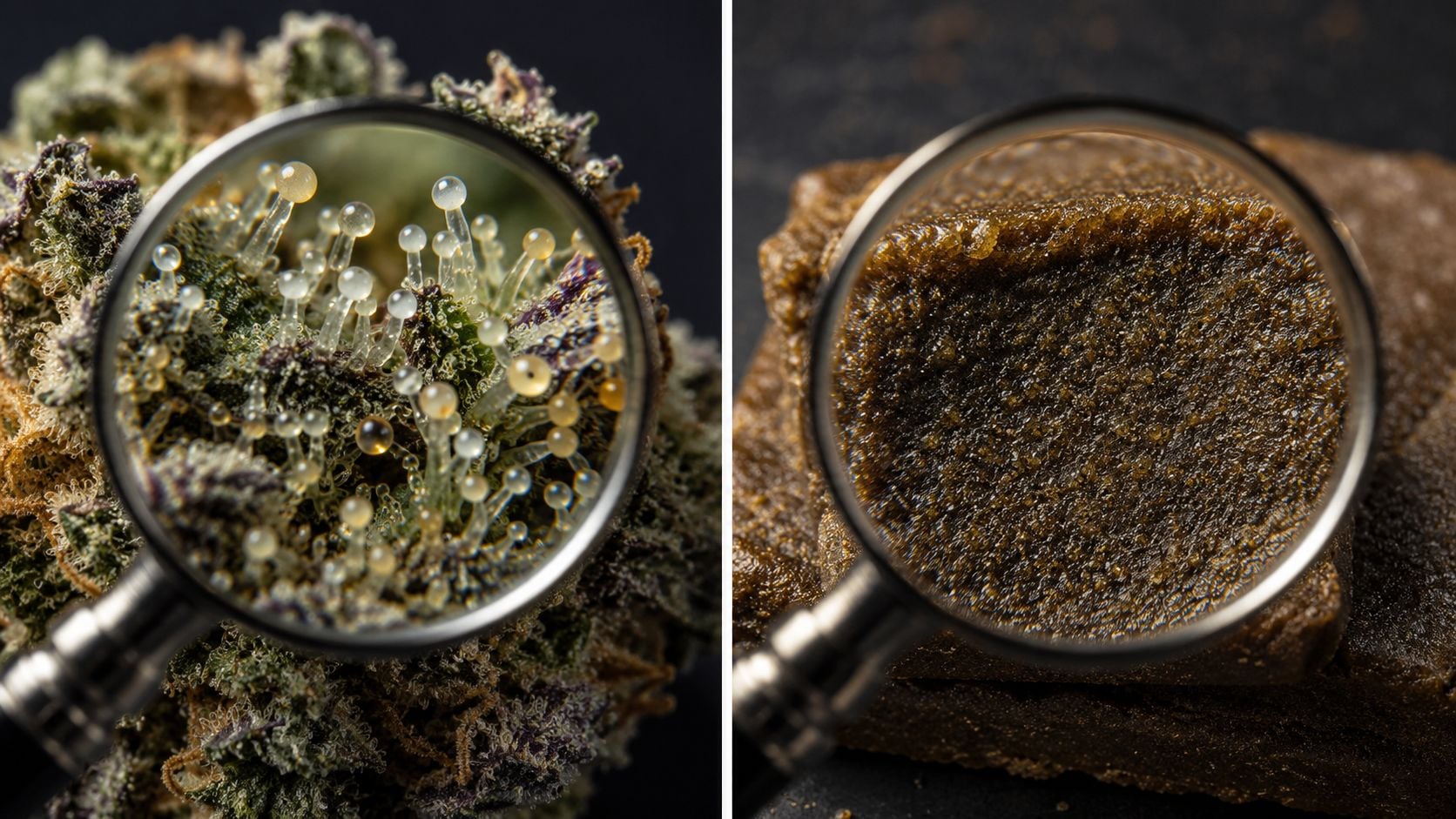
Cannabis is coated in tiny resin glands, also known as trichomes. These glands cover its flowers, stems and even the marijuana leaves, and develop during flowering, when the plant starts to form its buds.
In fact, the main sign that buds are ripe — how a grower knows they are ready to harvest — comes down to the look and colour of the resin, which turns cloudy and amber as flowering advances (you can see how to identify mature trichomes). That change happens because the trichomes fill with cannabinoids and terpenes, which is why this resin gets you high: it produces the same effects as cannabis flowers, or stronger.
A curious fact: the plant produces more trichomes as a defence against climate stress, not when it lives in ideal conditions. That is why dry regions with long summers, like Morocco's Rif mountains, are historically the cradle of potent hash: the harsh climate pushes the plant to armour itself in resin.
The effects of hash vary with the type of marijuana the resin comes from and its CBD or THC content.
How hash is made: the methods
There are several traditional methods for making hash, whether from the living plant or from dried, cured flowers. The techniques vary, but the goal is always the same: to compact the resin. We explain it step by step in how CBD hash is made.
Broadly, the artisanal, solvent-free methods are:
- Dry sieving (dry sift): the trichomes are separated from dried flowers using mesh screens; the result is pollen.
- Hand-rubbing (charas): the living plant is rubbed and the resin builds up; it is the oldest method.
- Water and ice (bubble hash): the trichomes are separated with cold water, a technique popularised by Mila Jansen with her Ice-o-lator.
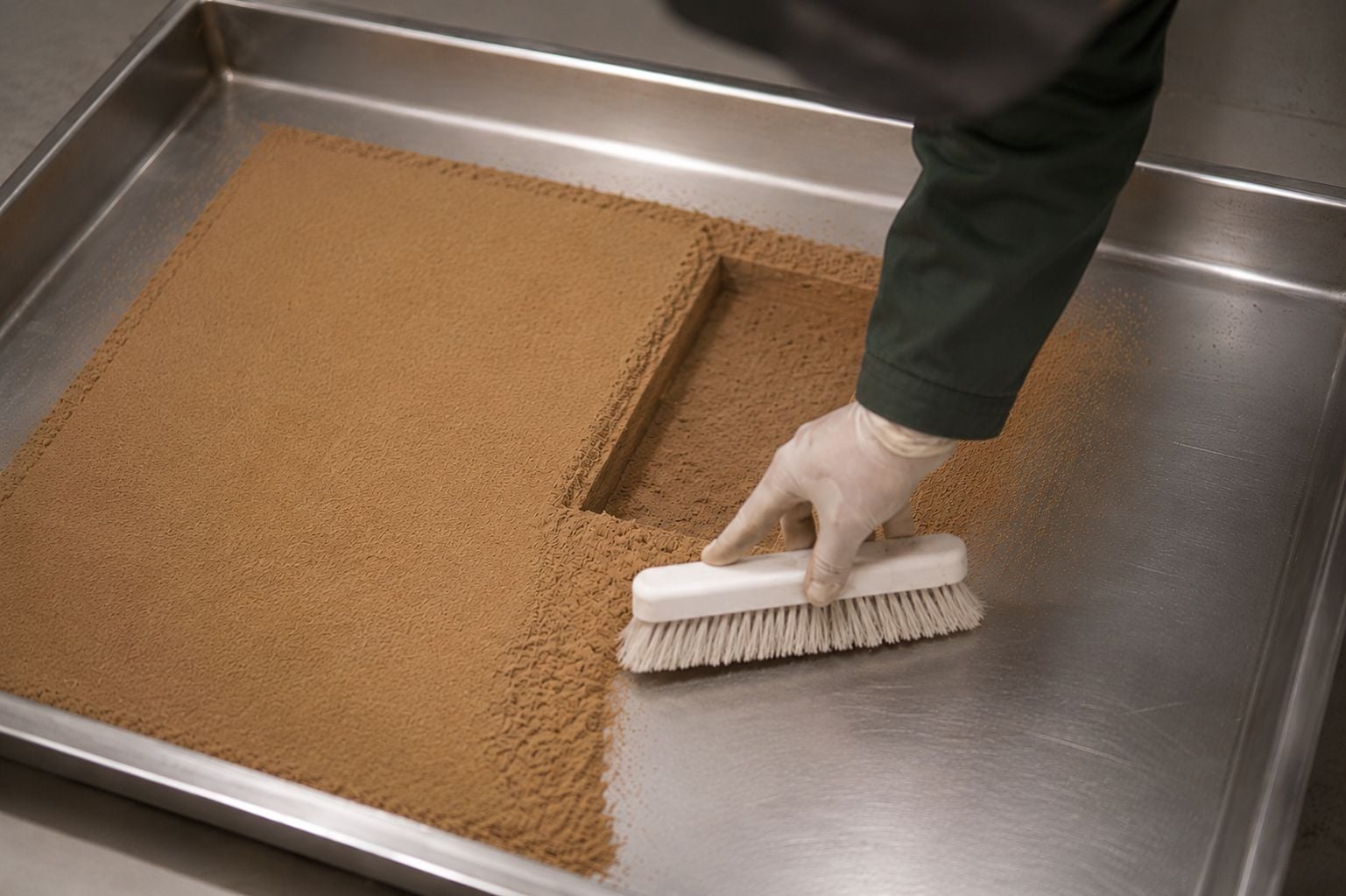
Here is a technical point many people miss: artisanal hash is sifted, not extracted. No solvent is involved (unlike solvent extractions such as BHO or chemical rosin); the resin heads are simply separated and pressed. As the master hashishin Frenchy Cannoli put it in The Lost Art of the Hashishin: “Hash is sieved resin pressed with heat; it is sifted, not extracted.”.
The real art comes afterwards: pressing and curing the hash. Heat and pressure burst the resin glands and release their oils, and a later cure — weeks or months in controlled conditions — darkens the hash and develops its full aroma. It is the resin's ‘second life'.
The aroma of hash
Much of the charm of hash is in its aroma, which comes from the resin's terpenes and intensifies with pressing and curing. Each tradition has its own profile: Moroccan hash tends to be soft and floral, while Afghan and Lebanese are more spiced. Modern bubble hash keeps fresher, fruitier notes, above all when made from fresh-frozen plants — what the industry calls live: freezing the freshly cut flower instead of drying it preserves the most volatile terpenes, which would otherwise be lost — whereas pollen dry sift always starts from dried flower and has a more earthy, classic aroma.
How to tell if hash is good
The biggest drawback of hash, especially when you do not know where it came from, is that it may be mixed with other substances. The black market has always exploited the lack of regulation to cut hash with all sorts of materials, some very harmful — tar, plastics, even ground rubber.
So the first thing to consider when buying hash is to be sure of its origin. That said, there are clear signs of quality:
- Aroma: intense, natural and cannabis-like (terpenes). A smell of plastic, rubber or chemicals is a bad sign.
- Texture: pliable; it softens with the warmth of your hand and holds its shape. Neither so dry it crumbles, nor rubbery from excess moisture.
- Colour when broken open: uniform inside, with no plant matter or ‘filler'.
- The flame test (full melt): held to a flame, good hash bubbles and melts, leaving a pale, almost white ash. Black ash that will not melt betrays impurities. Connoisseurs rate this purity on a 1-to-6-star scale: the prized 6-star (full melt) melts completely without leaving residue.
- Origin and testing: traceability and a lab Certificate of Analysis (CoA) are the best guarantee.
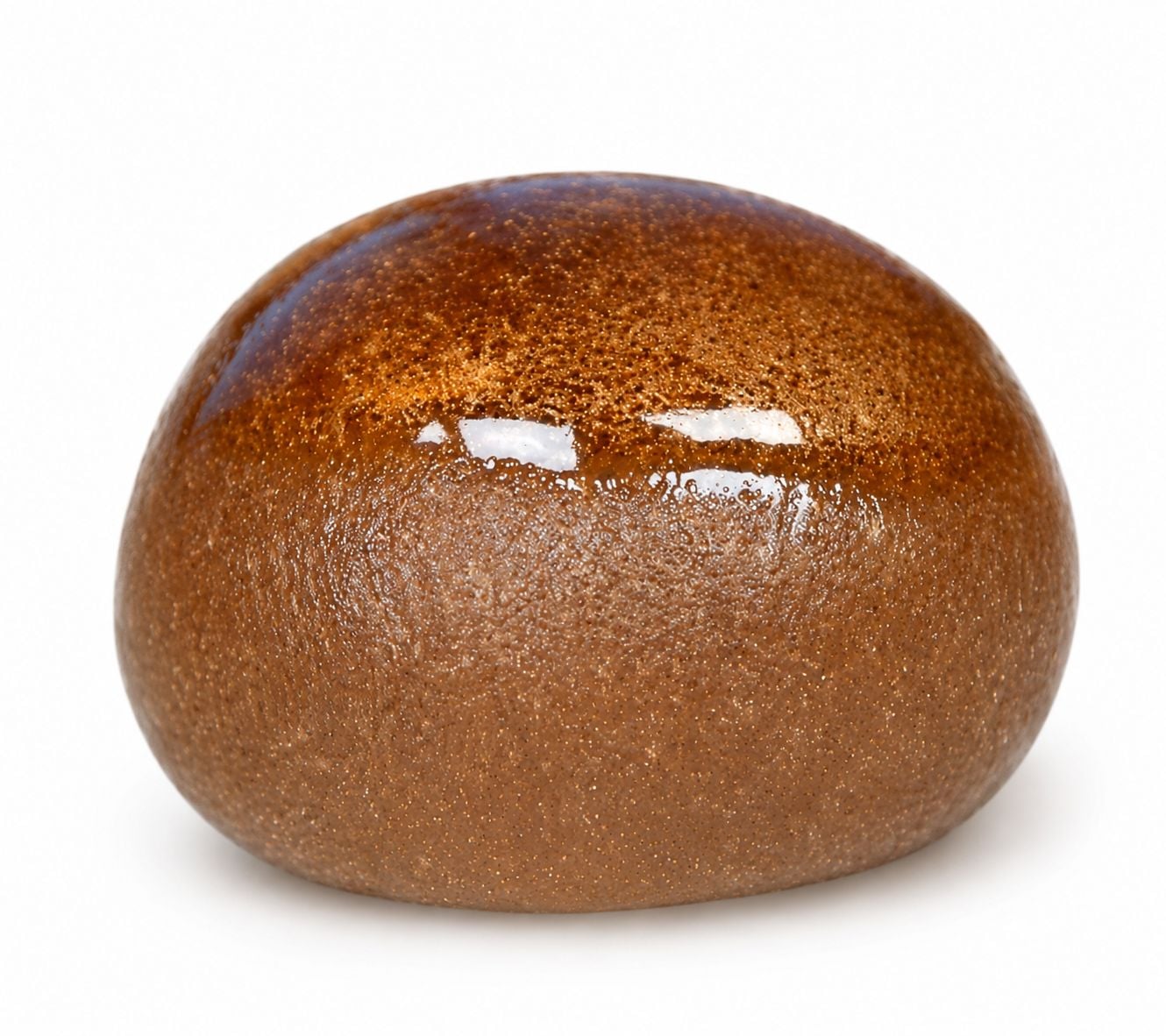
Low-quality hash can be contaminated with dirt, plastic, oils and the like that make it dangerous to use. In fact, analyses of street hash found resin adulterated with traces of faecal bacteria (samples collected on the streets of Madrid). Legal CBD hash guarantees the resin has been produced in optimal conditions.
What is the difference between hash and weed?
Hash and weed come from the same plant, Cannabis sativa, which gives us both marijuana and hemp. By marijuana we mean the whole cannabis plant or, more specifically, its flowers (the buds), used for thousands of years for their relaxing and psychoactive effects. Hash is made by separating and pressing the resin that coats those flowers.
Hash has a higher THC concentration than weed, because it is a type of cannabis extract and concentrates the cannabinoids.
In terms of effects, the main difference between marijuana buds and hash is that hash is much stronger, since it concentrates all the plant's resin.
THC content in hash and weed
THC content is far higher in hash than in marijuana buds. While weed usually contains between 15 and 35% THC, hash can reach 40 to 60% purity or even more, depending on the type of extract. Solvent extractions like BHO can top 90%, but that is another category: this guide focuses on artisanal hash (sifted, not extracted), whose usual range is that 40–60%. In the case of CBD hash, the most abundant cannabinoid is CBD instead of THC.
Also, unlike weed, hash is low in fibre and plant matter.
What effects does hash have?
Because hash is a concentrate of marijuana, it has the same kind of cannabinoids and terpenes, only in higher concentration. So its effects are essentially the same, if anything magnified.
The effects depend on the strain it comes from, as well as the presence and amount of cannabinoids and terpenes:
- If the original strain has high levels of THC (delta-9-tetrahydrocannabinol), the hash will have more cerebral, psychoactive effects.
- If the strain is CBD-dominant, the effects will be more physical, relaxing and calming.
So, depending on this dominance, hash can produce varied effects: relaxation, euphoria, increased appetite, laughter, pain relief, sleepiness…
What side effects does hash have?
As a concentrate of marijuana, samples with very high THC levels are more likely to bring side effects: a racing heart, dry mouth, anxiety, ‘whiteys', short-term memory loss, headache, loss of coordination or, in extreme cases, paranoia. They are, at heart, the effects of marijuana on the brain amplified by the high THC concentration.
Hash made from CBD flowers, like Cannactiva's, contains no THC and so does not carry those side effects: CBD hash brings out the more relaxing, calming side.
Where to find good hash
At the Cannactiva CBD shop you can buy CBD hash of high quality, made from our CBD flowers and with less than 0.2% THC.
Frequently asked questions about hash
Does CBD hash get you high?
No. CBD hash does not get you high: the psychoactive effect of cannabis comes from THC, and our hash contains less than 0.2%. CBD does not produce the high or the mental shift of THC, just a pleasant feeling of physical relaxation. We explain it in full in does CBD get you high?.
How can you tell if hash has been cut?
Be suspicious if it smells of plastic, rubber or chemicals, if breaking it open reveals plant matter or ‘filler', or if it will not melt and leaves black ash near a flame. Pure hash bubbles, melts (full melt) and leaves pale ash. The best guarantee is traceability and a lab Certificate of Analysis (CoA).
What does hash smell like?
Like cannabis: an intense, natural aroma shaped by its terpenes (earthy, spiced or citrus depending on the strain). A smell of plastic, rubber or solvent is a sign of poor quality or adulteration.
Is hash the same as hashish, pollen or soapbar?
Largely, yes. ‘Hashish', ‘soapbar' and ‘squidgy black' are all street names for the same basic product — pressed cannabis resin — while ‘pollen' or ‘kief' is that same resin before it is pressed. The name changes, but the raw material is the same; what really varies is the quality.
Which hash is best to start with?
A medium-potency hash (like a pollen or a dry sift) or, better still, a CBD hash: it gives you all the aroma and relaxation without the psychoactivity of THC, ideal for everyday use.
How do you store hash?
Somewhere cool, dry and dark, in an airtight container. The ideal conditions (according to resin storage studies) are a steady temperature of 4 to 15 °C, relative humidity of 55–62%, total darkness (UV light degrades cannabinoids) and minimal contact with oxygen, ideally in an opaque glass jar. You will find the full guide in how to store hash.
Does hash go off?
It does not ‘expire' like food. In fact, storage studies over four years show its main cannabinoids (CBD, CBDA, CBN) stay stable when kept in controlled conditions; the aroma profile holds without noticeable loss for about 12–18 months. Stored badly, though, it loses aroma and nuance fast. And a well-cured hash can even improve for a while before it starts to degrade.
Does CBD hash show up on a drug test?
Drug tests detect THC, not CBD. Legal CBD hash contains only traces of THC, so with normal use it should not show positive, though very heavy use could leave detectable traces. We explain it in full in whether CBD shows up on a drug test.


