Guide to vaping CBD and cannabis: Characteristics, effects, benefits and optimal vaporization temperatures

Vaporisation is an increasingly widespread method of inhalation. Vaporisers have become popular for their convenience and because they let you appreciate the aroma of cannabidiol (CBD) (what is CBD?) and of the plant's terpenes in a different way, avoiding the toxic by-products of combustion.
In this guide you'll learn what cannabis vaporisation is, how the different types of vaporisers work, at what temperature cannabinoids and terpenes vaporise, and what advantages it has over smoking. If you're looking for an overview of all the ways to consume CBD, we have a dedicated guide.
Introduction to cannabis vaporisation
What is cannabis vaporisation?
Vaporisation is a method in which cannabis or its extracts are heated to a controlled temperature to turn their solid or liquid form into vapour.
Cannabis is a plant that is valued more every day, not only for its concentration of cannabinoids, but also for the effects of terpenes, the compounds that give each variety its characteristic aroma and flavour.
When a vaporiser is used, it heats the cannabis flowers to produce vapours that contain cannabinoids and terpenes in gaseous form.
Applying heat to reach temperatures below the boiling point is called vaporisation. Unlike smoking —where the substance is burned and combustion by-products are inhaled—, vaporisation temperatures, always below those of combustion, allow you to inhale the vapour and the desired compounds without the toxic substances of smoke.
Uses and effects of cannabis vaporisation
Vaporisation enhances the perception of aromas of the flower variety. This is because terpenes have a lower boiling point than cannabinoids, so when heat is applied they vaporise sooner and are the first to be perceived.
People turn to vaporisation for different reasons: some prefer to savour the aromas and flavours of the varieties (it's considered ideal for tasting), others want to avoid the smoke of combustion or value its discretion. Vaporisers also let you dose precisely, something appreciated by medicinal cannabis users.
In addition, although still under study, the use of vaporised CBD to quit smoking has been described.
Effects of vaping CBD
Vaping CBD has grown in popularity as a way to feel its effects quickly, since it offers higher bioavailability and faster absorption than other routes such as CBD oil. Vaporisation allows CBD to reach the bloodstream through the lungs, avoiding digestion and liver metabolism.
When vaping CBD, the effects are generally felt within 1-3 minutes and can last between 1 and 3 hours.
As for the sensations, users who vape CBD report calm, well-being and tranquillity, improved mood, reduced stress and anxiety and improved sleep quality. Unlike marijuana, CBD doesn't get you high.
Types of vaporisers
Vaporisers are devices designed to heat cannabis at controlled temperatures. Depending on the material they vaporise, there are three main types:
Dry herb vaporisers
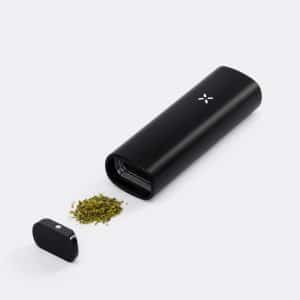
These let you vaporise dried flowers and herbs. There are portable ones —compact and discreet, like the well-known PAX vaporisers— and desktop ones, more powerful and designed for home use. Some models also support concentrate vaporisation. The material loaded into these devices is the buds: hemp flowers and, in countries where it's permitted, cannabis flowers.
Discover our selection of CBD flowers, with a wide range of aroma profiles:
Concentrate vaporisers and vape pens
Vape pens are slim, portable and discreet devices that run on cannabis extract cartridges. They are designed to vaporise concentrates and resins, which stand out for their high cannabinoid concentration and usually require higher temperatures than flowers.
If you're interested in extracts, take a look at our range of CBD hash:
Electronic cigarettes and e-liquids
Finally, there are electronic cigarette or POD type devices, designed to vaporise e-liquids (liquids for vaping). Unlike the previous ones, vaping liquid contains additives such as vegetable glycerine and propylene glycol, plus flavourings; therefore, they are not 100% natural cannabis vaporisations, but a preparation based on cannabis extract.
Cannabis vaporisation temperatures
The importance of the optimal temperature
Controlling the temperature during vaporisation is essential to achieve the desired effects. Since heat produces decarboxylation, or the activation of cannabinoids, adjusting the temperature makes it possible to regulate the amount of active cannabinoids in the inhaled vapours, allowing for a more personalised experience.
Since today's devices allow temperature control, the question is clear: at what optimal temperature should you vaporise cannabis? And, if it differs between CBD and THC, at what temperature is it best to vaporise marijuana and CBD? Let's see what the studies say.
At what temperature do cannabinoids vaporise and activate?
Everything that happens before reaching the boiling point is called vaporisation; therefore, to vaporise cannabis we must use a temperature below the boiling point of the cannabinoids.
Cannabinoids have a boiling point of between 150 and 180 ºC according to various publications. However, a recent scientific article warns that those figures can be misleading, as they don't take into account the effect of atmospheric pressure on vapour pressure and, therefore, the real boiling point (1). The known boiling point of cannabinoids corresponds to a high vacuum (0.05 Torr), whereas at ambient pressure (~760 Torr) the boiling temperatures of CBD and THC exceed 400 ºC according to another research group (2). Just as atmospheric pressure affects the boiling point, so do other thermodynamic factors.
Vaporisation is not an exact science. The boiling point measured in the laboratory for each compound varies inside the device, so it's not advisable to give it an absolute value. When vaping, personal experience and sensations are what matter most.
As for the activation of cannabinoids during vaporisation, according to a publication by the European Industrial Hemp Association (EIHA) on the decarboxylation of tetrahydrocannabinol (THC) (5), approximately 3 hours at 100 ºC are needed for complete conversion of THCA into THC; at higher temperatures the time drops sharply: about 10 minutes at 160 ºC and only a few seconds at 200 ºC.
As a rough guide, these are the approximate boiling points of the main cannabinoids (remember the earlier caveat: they are reference values, not exact ones):
- THC: 157 ºC
- CBD: 160-180 ºC
- CBN: 185 ºC
- CBC: 220 ºC
- THCV: 220 ºC
At what temperature do terpenes vaporise?
Terpenes have a lower boiling point than cannabinoids. They begin to vaporise from the moment the plant is processed, with some being lost during the drying and curing of the buds. The boiling points of the main cannabis terpenes are (6):
- Alpha and beta pinene: 155 ºC and 166 ºC
- Myrcene: 168 ºC
- Limonene: 176 ºC
- Terpinolene: 185 ºC
- Linalool: 198 ºC
- Beta-caryophyllene: 263 ºC
- Humulene: 276 ºC
- Bisabolol: 314 ºC
CBDA and THCA in vaporisation
When vaporising you may also find small concentrations of cannabinoids in their acidic form, such as CBDA. Cannabidiolic acid (CBDA) is the natural form of CBD in the hemp plant and, through vaporisation —which doesn't reach temperatures as high as combustion—, it can be released in small amounts.
Although there is no specific study with cannabidiol (CBD), it has been studied with THC. One study compared the THCA concentrations resulting from three methods: vaporisation (~200 ºC), combustion and extraction. The extract showed the largest amount of THCA, the vapour 5-10% of that figure, and in combustion nothing was identified (3). Therefore, in vaporisation it is possible to find small amounts of cannabinoids in acidic form, which do not appear in combustion.
How to choose the temperature when vaporising
The vaporisation temperature marks the difference between burned and vaporised material, and directly influences vapour production, its quality and its flavour. Vaporiser devices have their own temperature range and some allow degree-by-degree control. As the laboratory boiling point doesn't transfer exactly to the inside of the device, general recommendations are usual (7):
- Low temperature, 180-190 ºC: preserves flavour and is ideal for conserving the material, but produces mild, barely visible vapour. At this temperature not all cannabinoids may be «activated», with milder effects.
- Medium temperature, 190-200 ºC: a balance between flavour, sensations and vapour production, with more pronounced effects.
- High temperature, 200-210 ºC: more powerful effects (greater and faster cannabinoid activation) and more vapour, although it can affect the flavour.
In addition, the temperature must be adjusted to the type of material: dried flowers or concentrates; concentrates require higher temperatures. In the end, the precise temperature is a matter of personal preference: experimenting with different settings will help you find the configuration that best suits you.
That said, it's best to not exceed ~230 ºC: beyond that the material approaches the combustion point and begins to release unwanted by-products (the very ones you're trying to avoid by not smoking). Staying below that ceiling is what distinguishes vaporisation from combustion.
How to vaporise cannabis step by step: practical tips
Beyond temperature, a few details make the difference between a mediocre session and an optimal one:
- Grind the material evenly. A grinder helps achieve a texture that is neither too fine (it blocks airflow) nor too coarse (uneven extraction). A homogeneous grind favours consistent vapour.
- Dose without overloading the chamber. Overfilling it reduces air circulation and efficiency. Better a small amount well distributed.
- Preheat the device. Waiting until it reaches the set temperature (about 20-40 seconds in many models) ensures uniform vapour from the first puff.
- Inhale slowly and gently. Long, gentle puffs extract the compounds better than short, sharp ones, and are less irritating to the throat.
- Adjust to the moisture of the material. If it's very dry, lower the temperature (it vaporises sooner); if it's a bit damp, a low initial temperature (≈140 ºC) helps dry it before raising it.
- Clean the device regularly. Residue alters the flavour and reduces performance; periodic cleaning of the chamber and mouthpiece extends its lifespan.
Benefits of cannabis and CBD vaporisation
- Improves the flavour of cannabis, by preserving its natural aromas.
- It's more efficient, as it extracts the desirable compounds from the herbs.
- Reduces the toxin load of the inhaled product.
- Reduces the health harms associated with conventional methods such as smoking.
- Reduces the appearance of chronic respiratory symptoms.
Advantages of vaporisation over smoking
Fewer toxic compounds
The main advantage over the traditional inhalation method is that it produces no smoke. A vaporiser's controlled temperature generates vapours instead of smoke: the material is heated enough to turn the active components into vapour, but without burning it.
Smoke, on the other hand, is the result of combustion, which reaches very high temperatures and generates harmful by-products such as tar, carbon monoxide and carcinogenic compounds like benzene (4). By choosing vaporisation instead of combustion you can take advantage of cannabis's active compounds —CBD, THC and terpenes— without the harmful compounds of smoke.
Better aroma
In addition, vaporisation tends to better preserve the natural flavours and aromas of the plant material, offering a more pleasant experience.
Are there risks associated with vaporisation and how to minimise them?
Cannabis vaporisation is safer than other conventional methods. The possible risks are linked to the quality of the devices, the quality of the e-liquids or herbs and individual sensitivity.
Choosing a quality vaporiser is key, since a device that applies more heat than desired can produce harmful smoke. The battery must also be of good quality to maintain an appropriate temperature. The choice of e-liquids and herbs should be taken seriously, as low-quality products add unnecessary risks. Personal sensitivity to cannabis compounds should also be taken into account. Informed, responsible and moderate use is recommended at all times.
Although vaporisation avoids the risks of smoking, research into its long-term effects is still ongoing. We advise responsible and informed use.
Frequently asked questions about vaporisation
At what temperature do cannabis and CBD vaporise?
The most commonly used general range is between 160 and 210 ºC. Below that (160-180 ºC) terpenes and flavour are preserved, with a milder effect; in the medium range (180-200 ºC) flavour and potency are balanced; and in the high range (200-210 ºC) the effect is more intense, at the cost of some flavour. It's best not to exceed ~230 ºC to avoid entering combustion.
What is the difference between a vaporiser and a vape (electronic cigarette)?
A vaporiser is designed to heat dried herbs or concentrates without burning them, releasing their compounds as vapour. A vape or vape pen is a simpler device intended for e-liquids (liquids with additives such as glycerine and propylene glycol). The first works with natural plant material; the second, with a liquid preparation.
Is vaporising better than smoking?
Vaporisation avoids combustion and, with it, by-products such as tar and carcinogenic compounds from smoke. That's why it's considered a less aggressive route of inhalation. Even so, research into the long-term effects is still ongoing.
Can CBD flowers be vaporised?
It depends on the country. In Spain and most of the European Union, the sale of CBD flowers for smoking or vaporising is not permitted; they are marketed for decorative, aromatic and collector's purposes. Cannactiva's CBD flowers are sold under that framework and are not intended to be smoked or vaporised. Always check the legislation in your country.
CBD flowers and hash at Cannactiva
At Cannactiva we grow and select a wide range of CBD flowers and CBD hash from hemp with a THC content below the legal limit. Each variety has its own terpene profile and, therefore, its characteristic aroma.
If you're unsure between varieties, we help you choose in our comparison of the best CBD buds and in the guide on the differences between sativa and indica, where we explain how genetics influence the aroma and profile of each flower.
The information in this guide is for informational purposes only and does not constitute a recommendation to consume nor medical advice. In Spain and in most European Union countries, the sale of CBD flowers or hash for smoking or vaporising is not permitted. Cannactiva's CBD flowers and hash are marketed for decorative, aromatic and collector's purposes, and are not intended to be smoked, vaporised or ingested. Always check the legislation in force in your country before purchasing or using any CBD product.
References
- Eyal, A. M., et al. (2023). Vapor Pressure, Vaping, and Corrections to Misconceptions Related to Medical Cannabis’ Active Pharmaceutical Ingredients’ Physical Properties and Compositions. Cannabis and Cannabinoid Research, 8(3), 414-425.
- Lovestead, T. M., & Bruno, T. J. (2017). Determination of Cannabinoid Vapor Pressures to Aid in Vapor Phase Detection of Intoxication. Forensic Chemistry, 5, 79-85.
- Fischedick, J., Van Der Kooy, F., & Verpoorte, R. (2010). Cannabinoid receptor 1 binding activity and quantitative analysis of Cannabis sativa L. smoke and vapor. Chemical & Pharmaceutical Bulletin, 58(2), 201-207.
- Lanz, C., Mattsson, J., Soydaner, U., & Brenneisen, R. (2016). Medicinal Cannabis: In Vitro Validation of Vaporizers for the Smoke-Free Inhalation of Cannabis. PLoS One, 11(1), e0147286.
- Iffland, K., Carus, M., & Grotenhermen, F. (2016). Decarboxylation of Tetrahydrocannabinolic acid (THCA) to active THC. EIHA / nova-Institut.
- Raz, N., Eyal, A. M., & Davidson, E. M. (2022). Optimal Treatment with Cannabis Extracts Formulations Is Gained via Knowledge of Their Terpene Content. Molecules, 27(20), 6920.
- PAX. What Temperature Should I Set for My Vaporizer? (2022).


