Guide to Buying the Best CBD Oil: How to Choose the Right One

CBD oil is the most popular hemp product in Europe and, at the same time, one of the hardest to buy well: two almost identical bottles can hide very different qualities and prices. The difference lies in how it has been made and in what it actually contains.
In this guide we give you the keys to getting it right: which type of extract to choose (full spectrum, broad spectrum or isolate), which percentage to choose, how to recognise real quality and how it is used. That way you'll know exactly which CBD oil to buy before making your decision.
What is CBD oil and what is it used for?
CBD oil is a product derived from industrial hemp and the most popular and widespread format of CBD (cannabidiol) on the European market.
CBD or cannabidiol is one of the many chemical compounds present in the cannabis plant, the so-called cannabinoids. It is extracted from hemp plants (Cannabis sativa L.), specifically from the CBD buds. Hemp is a variety of cannabis with very low levels of THC, generally below 0.3%, so its extract — rich in CBD and low in THC — is not psychoactive.
CBD oils are made by diluting a cannabidiol-rich hemp extract in a carrier oil. They come in a bottle with a dropper, which makes it easy to dose them as CBD drops.
What is the difference between CBD and THC?
Unlike tetrahydrocannabinol (THC), the compound responsible for the psychoactive effects of marijuana, CBD is not psychoactive: it does not produce a “high” or alter mental perception. You can see all the differences between CBD and THC in our guide.
How does CBD oil work in the body?
CBD interacts with the endocannabinoid system, a network of receptors and molecules that helps regulate functions such as mood, sleep, the stress response and the perception of pain. Unlike THC, CBD does not produce psychoactive effects and is not addictive.
Types of CBD oil: full spectrum, broad spectrum and isolate
Not all CBD oils are the same: the type of extract and the quality of the manufacturing process make a big difference between products and often explain why two similar-looking bottles have very different prices. Depending on which hemp compounds the extract retains, we distinguish three types of CBD oil:
- Full spectrum CBD oil: contains the full range of terpenes and cannabinoids naturally present in the hemp plant, mainly CBD but also other minor cannabinoids, such as CBN, CBG and traces of THC. It is the only one that offers the entourage effect, the synergy between all the components of cannabis that enhances the effect of CBD. At Cannactiva, we only use full spectrum CBD oil because we believe it is the one that offers the best benefits.
- Broad spectrum CBD oil: contains terpenes and cannabinoids, but is completely free of THC (not even traces). Similar to full spectrum in composition, although the absence of THC may limit the entourage effect.
- CBD isolate oil: contains only pure or isolated CBD. It is the least complete of the three, as it does not include other hemp compounds.
Each type has advantages depending on what you are looking for. You have the full comparison in CBD full spectrum vs broad spectrum vs isolate.
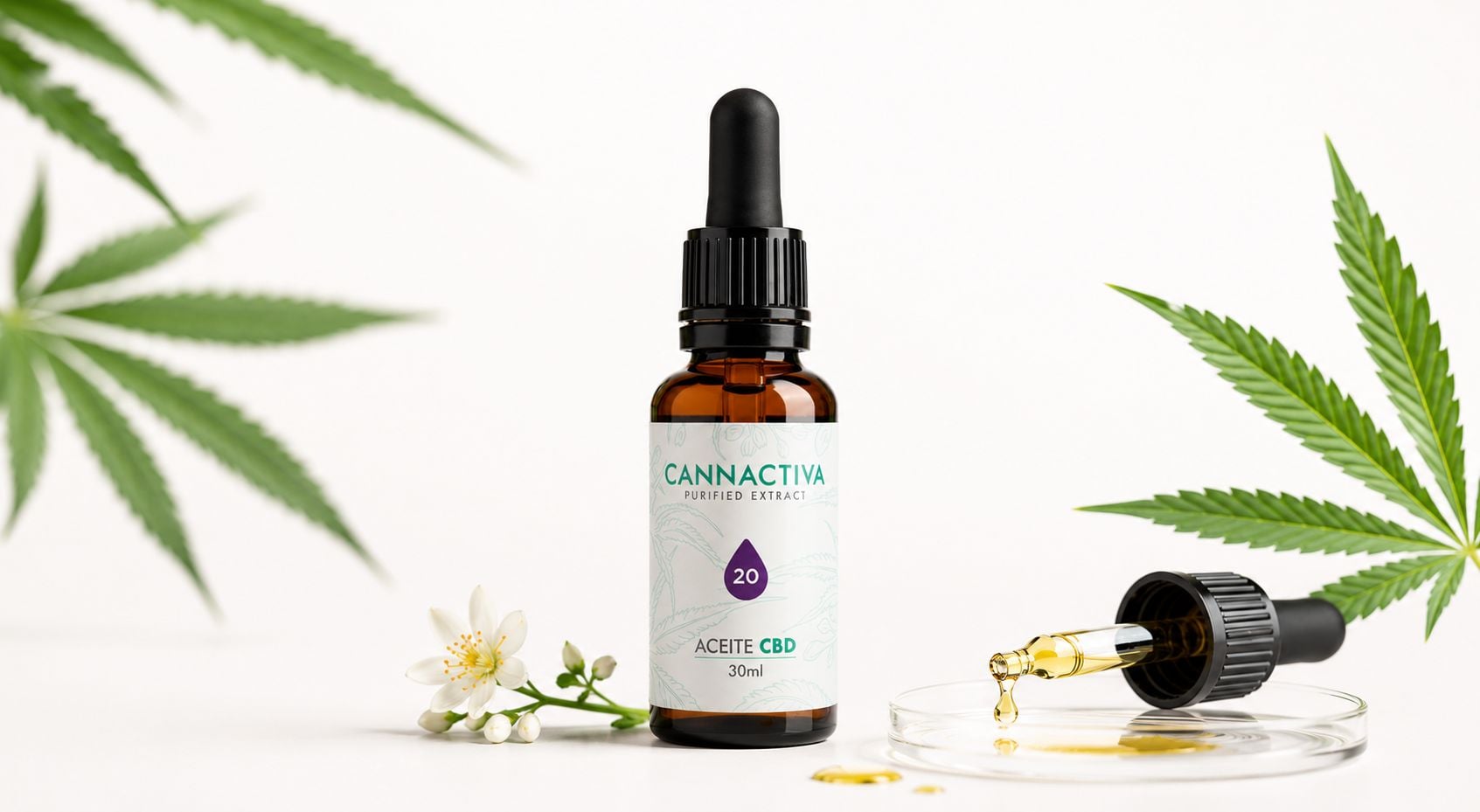
CBD oil quality: factors to consider
CBD oil extraction method
There are different extraction methods for obtaining CBD from the plant, and not all of them are equally effective and safe. The potency and content of cannabinoids and terpenes vary depending on the extraction method.
The safest and most effective method is supercritical CO2 CBD extraction, a process that uses carbon dioxide in a supercritical state, applying controlled pressure and temperature, to separate and obtain CBD from hemp. It guarantees a high-quality final product. Other, less advisable methods use ethanol, butane or other potentially toxic solvents, which may leave residues in the oil.
Laboratory analysis (CoA)
Independent laboratory analysis, or Certificate of Analysis (CoA), is the most important quality factor. Before buying a CBD oil, make sure the brand tests its products in independent laboratories that verify the cannabinoid content, especially CBD and THC. Cannactiva's CBD oils are tested regularly in independent laboratories to guarantee their precise cannabinoid content.
CBD oil ingredients and carrier oil
Every CBD oil has at least two key ingredients: cannabidiol (CBD) and a carrier oil, which dilutes the CBD and allows for better dosing. Among the most common carrier oils are hemp seed oil, olive oil and MCT or coconut oil.
At Cannactiva we favour hemp oil, because it combines hemp compounds with CBD and offers an ideal 3:1 ratio of essential omega-6 and omega-3 fatty acids.
Colour
The colour of CBD oil depends on the degree of processing and generally indicates neither good nor bad quality. Raw oils have a dark or amber colour, due to the presence of chlorophyll; purified oils are golden or light in colour because they have been through a filtering process. Purified oils are the most popular because their aroma is more neutral and they keep better.
Which CBD oil percentage should you choose?
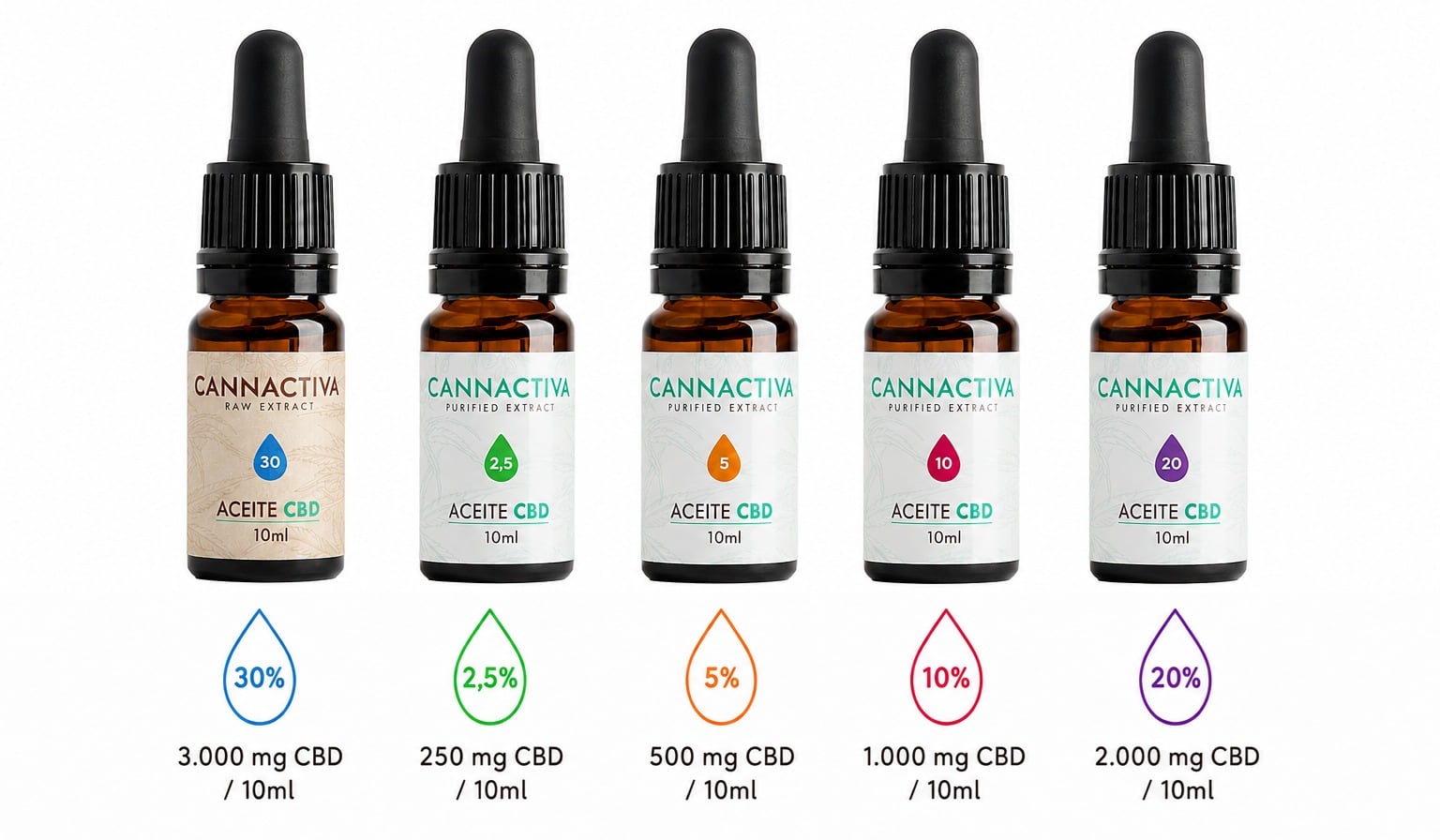
CBD oils are available in various concentrations, shown on the label as a percentage (%) and as milligrams (mg) per drop or per vial (1 vial equals 1 ml). The higher the concentration, the more CBD in each drop and, therefore, the fewer drops needed to reach the same amount.
If you have never tried CBD, you could start with low or medium concentrations, such as the 5% CBD oil. Higher concentrations, of 20% CBD and 30% CBD, are usually chosen by experienced users.
As a general guide:
- Beginners or mild needs: 5% CBD oil.
- Standard use or intermediate experience: 10% CBD oil.
- Experienced users or intense needs: 20%–30% CBD oil.
We explain it in detail in our guide on CBD oil percentages.
How to use CBD oil
CBD oil allows for different ways of use, which we review in our guide on how to consume CBD. The permitted route depends on the regulations of the country where the product is purchased:
- Topical use (on the skin): applied directly to the desired area. It is the most widespread way of using CBD oils in the European Union.
- Sublingual CBD: in countries where it is authorised (such as Canada, Switzerland or the USA), a few drops are placed under the tongue for a few seconds for rapid absorption through the oral mucosa.
- Oral use (ingestion): available in some countries outside the EU. It is added to drinks or food; the effects take longer to appear because of the digestive process.
In the European Union, oral or sublingual use of CBD oils is not authorised as a food product (Novel Foods regulation). Cannactiva's CBD oils are sold exclusively for external (topical) use. CBD can also be applied to the skin through CBD cosmetics products, which incorporate other active cosmetic ingredients.
What dose of CBD oil should you use?
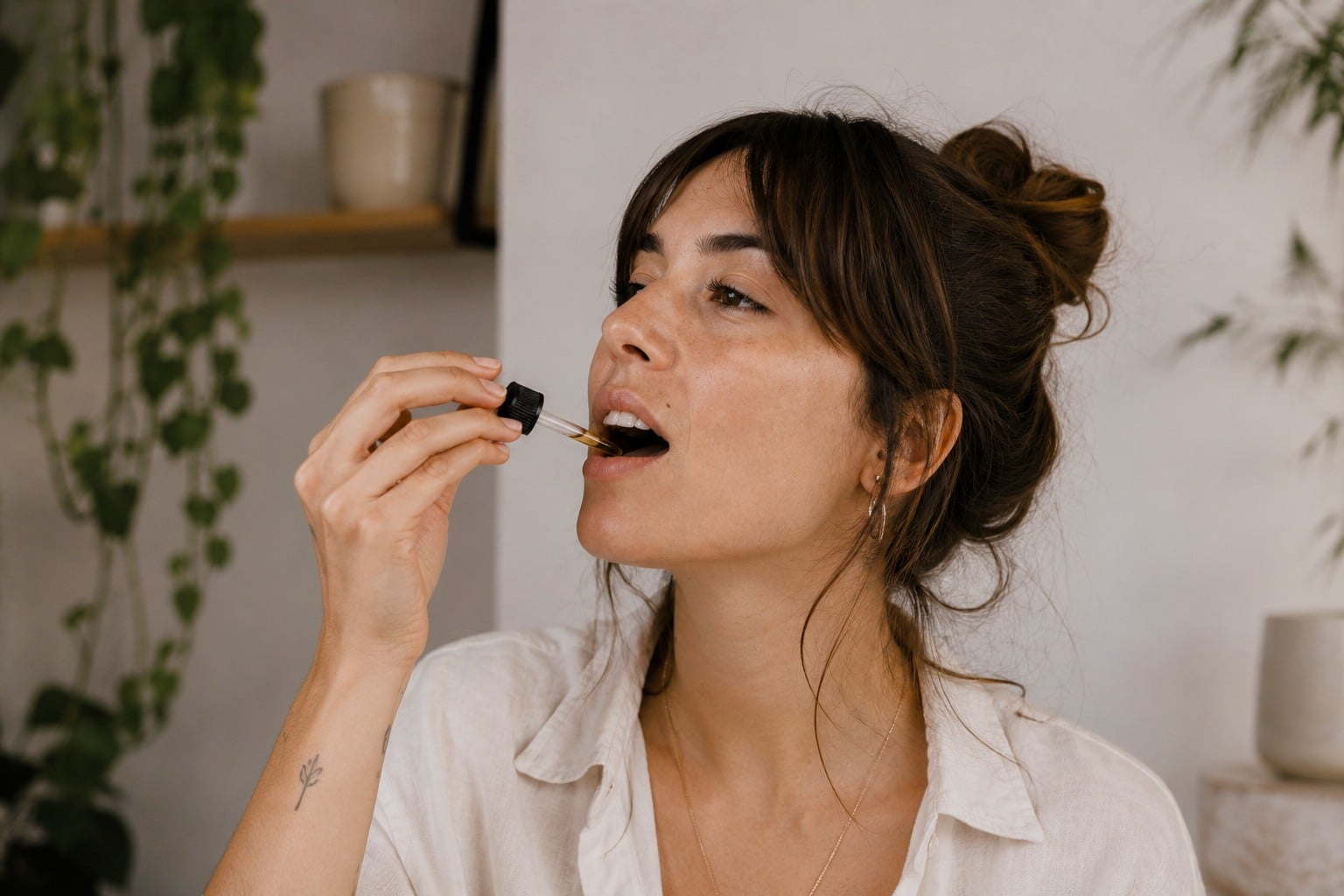
There is no single dose for everyone: it varies depending on the person and their needs. The following information is general and refers to countries where the oral or sublingual route is authorised (Cannactiva oils are sold for external use). You have all the keys in our guide on the optimal CBD dose.
Everyone responds differently to CBD, so the most sensible thing is to start with low amounts and observe how your body reacts. Sometimes the effect is subtle, so it is worth waiting a few days before adjusting the amount, and only if necessary.
How to store CBD oil
Storing CBD oil properly helps maintain its quality and potency. Keep it in a cool, dark and dry place, away from light and heat, close the container tightly and avoid contact between the dropper and your fingers. Use it within a reasonable time from manufacture and, if you notice changes in colour, smell or consistency, discard it.
You have the full guide in how to store CBD oil.
Side effects and precautions of CBD oil
CBD is generally considered well tolerated, but it can produce mild effects such as drowsiness, dry mouth, changes in appetite or slight digestive discomfort, especially when starting out or with high amounts. In addition, it can interact with some medicines. If you take medication or have a health condition, consult your healthcare professional before using CBD. You can find more information in our articles on the side effects of CBD.
Is CBD oil legal? Regulation in Europe
CBD oil regulation varies by country. In the European Union, hemp and CBD are legal as long as the THC content stays within the permitted limits (0.3% in most member states, although some allow up to 1%).
As for the way it is used, CBD oils are sold in the EU for external (topical) use. Oral or sublingual use is not authorised as a food product in most countries, as the assessment of CBD as a novel food (Novel Food) by EFSA has not concluded. Countries such as Canada, Switzerland, the United States and the United Kingdom do allow the sale of CBD oils for oral or sublingual use.
Cannactiva's CBD oils comply with current regulations and are sold for external use. Find out about your country's legislation before purchasing any CBD product, especially if you have to travel with CBD to another country.
Frequently asked questions about CBD oil
Which CBD oil should I buy if it's my first time?
If you have never tried CBD, the best thing is to start with a low concentration, such as a 5% CBD oil, full spectrum or broad spectrum. That way you can observe how your body responds and adjust according to your needs.
What is the difference between full spectrum, broad spectrum and isolate?
Full spectrum retains all the cannabinoids and terpenes of hemp (including traces of THC) and offers the entourage effect; broad spectrum is similar but without THC; and isolate is pure CBD, with no other compounds. We explain it in depth in our comparison of full spectrum vs broad spectrum vs isolate.
Does CBD oil show up positive on a drug test?
Drug tests look for THC, not CBD. Even so, full spectrum oils contain traces of THC that, with very frequent use and high doses, could build up. We clarify this in does CBD show up positive on a drug test?.
How much does a CBD oil cost?
In Spain, the price of a CBD oil usually ranges from around €10 to €60, depending on the CBD concentration, the size of the container, the type of extract and the brand. The higher the concentration, the higher the price, but also the more CBD per drop.
How long does CBD oil take to take effect?
It depends on the route of use and on each person. Sublingually (where authorised), it is usually noticeable in 15–45 minutes; applied to the skin, the effect is local and gradual. The response to CBD is individual, so it is best to start with a small amount and adjust gradually.
Why is CBD oil sold for topical use?
In the European Union, CBD is classified as a novel food (Novel Food) and its oral use is not yet authorised, because EFSA has not completed the assessment of its safety as a food. Before January 2019 — when the European Commission included CBD in the Novel Food catalogue — oils became popular for oral and sublingual use; since then, in most EU countries they are sold for external (topical) use. That is why Cannactiva's CBD oils are sold for external use.
Where can you buy quality CBD oil?
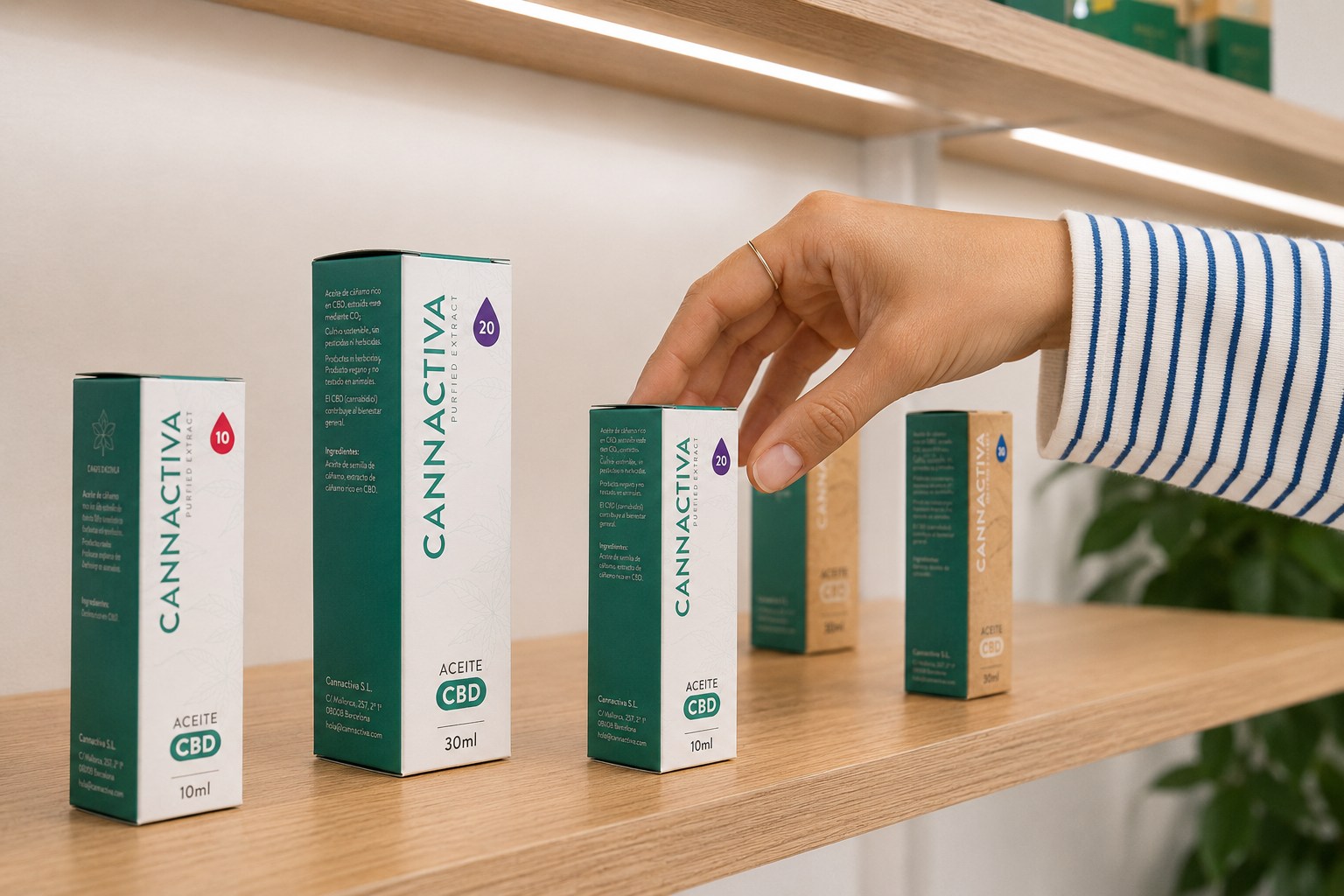
Choose brands that test their products in independent laboratories and are transparent about cannabinoid content. You can buy CBD oil in our online CBD oil shop or in our physical stores in Barcelona and Madrid.
Disclaimer: This article is for informational purposes only. It is not intended to treat, diagnose or cure any disease or symptom. Cannactiva's CBD products are not medicines and are sold for external use in accordance with European legislation. Find out about the regulations in force in your place of residence before purchasing any CBD product. Consult a health professional if you have any questions about using CBD.
References
- World Health Organization (WHO). Cannabidiol (CBD) — Critical Review Report. Expert Committee on Drug Dependence, 40th Meeting, Geneva, 4-7 June 2018. Full document (PDF)
- World Health Organization (WHO). Q&A: WHO Expert Committee on Drug Dependence — Review of cannabis. August 2018. Link
- EFSA NDA Panel. Update of the statement on safety of cannabidiol as a novel food. EFSA Journal. 2026;24(2):e9862. doi: 10.2903/j.efsa.2026.9862
- EFSA. Provisional safe level for cannabidiol as a novel food. 9 February 2026. Link
- European Commission. Novel Food status Catalogue. Link
- Regulation (EU) 2015/2283 of the European Parliament and of the Council of 25 November 2015 on novel foods (Novel Foods). EUR-Lex
- Court of Justice of the European Union. Judgment in Case C-663/18 (Kanavape case), 19 November 2020. CBD cannot be regarded as a narcotic drug. Link


