
The CBD hash or legal hash has become a very popular product. The same methods used for traditional marijuana hash can be used to make it, although it has some particularities compared with the latter. If you've ever wondered how this cannabis resin concentrate is obtained, you're in the right place.
In this post, you'll discover the fascinating process of transforming CBD flowers into a concentrate as prized as hash. And if you'd rather skip the whole process, you can always buy CBD hash already made, pressed and lab-tested.
What is CBD hash?
As we explained in our hash guide, technically hash is a cannabis extract that separates the plant material from the trichomes and concentrates the substances present in the buds, such as cannabinoids and terpenes. The result is a highly resin-concentrated product, far more potent than cannabis flowers.
CBD hash contains high levels of cannabidiol (CBD) and can be made in different ways. While traditional marijuana hash is rich in tetrahydrocannabinol (THC) and produces cerebral, euphoric effects, CBD hash, being rich in the non-psychoactive cannabinoid, produces more bodily, relaxing effects. These effects can vary depending on the cannabis strain used in the making and the proportion of cannabinoids present in the final resin.
What is kief or pollen?
Before talking about hash, it helps to understand kief, also called pollen. Kief is the trichome powder that detaches from the flowers: the resin heads loaded with cannabinoids and terpenes. It is the raw material from which almost all hash starts: when that kief is pressed with pressure and a little heat, it turns into hash. At Cannactiva you can find it pure and sifted as CBD Pollen Dry Sift.
How is CBD hash made?
All the traditional methods for making hash can be used to make CBD hash, because only the raw material changes. That is, making CBD hash simply uses the flowers of CBD-rich cannabis strains instead of THC-rich marijuana. From there, you can obtain different products: from the traditional hash plate, to Liquid Hash for vaping with a CBD Vape Pen.
CBD hash production methods
There are different traditional methods for making hash. In some, the living plant itself is used, in its substrate, before harvest; in others, the dried and cured flowers. And although the extraction and handling methods can be diverse, the result is always the same: compacting the resin of the cannabis plant (Cannabis sativa) onto a hash plate. Below we review the most common traditional ways of extracting resin:
Extracting hash from dried flowers or buds
This is the most widely used method of making hash in the world, and it consists of extracting the resin from the already harvested flowers, the marijuana buds. The key to it all is that the flowers naturally release resin as they are handled, which is why many curing and storage boxes nowadays come with integrated meshes, to store and make use of the resin that falls off the buds on its own. But we can also force the trichomes to detach ourselves.
There are several tools for extracting hash dry, and you can also try it at home. For example, with a glass or plastic container covered by a stocking, into which we place the flowers and which, when shaken upside down, makes the resin fall through the stocking. It would be similar to the powder that the grinder collects in its lower tray.
Another option is to use a taut sieve, place the flowers on top and tap the sieve with a stick to force the resin off the flowers as they shake (the result is what is known as “apaleado”, very popular in Morocco). Finally, there are machines with a motorised drum, such as the Pollinator, that do the job mechanically.
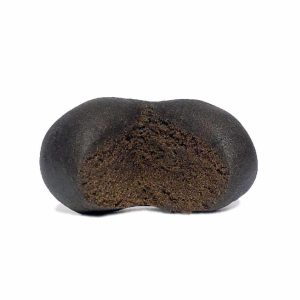
Hash extraction with ice
Ice and water can also be used to extract the resin glands from the buds. The basis of the technique is that flowers (plant matter) and trichomes react differently in water, so it is relatively easy to separate the resin by soaking the buds.
The problem is that, once wet, the resin softens and, out of the water, forms a mass that makes its handling and the subsequent hash extraction very tricky. That's why ice is used in the water — the method known as Ice-O-lator — to make those trichomes harden rather than soften. The inventor of this method was Mila Jansen, the Queen of Hash, whom we have written about before.
Thus, using meshes of different micron sizes, submerged in containers with water and ice, we get the resin to filter through easily and obtain our hash. This method can be done at home, with a bucket, water, ice and meshes, or you can buy purpose-built Bubbleator washing machines in specialised stores.
A variant of this technique uses dry ice, without water, a method that makes the trichomes very brittle so they separate easily, filtering through the mesh.
Depending on the mesh size, measured in microns, you get different quality grades: the finest fractions (around 73-120 microns) collect almost exclusively the trichome heads and produce the coveted full melt, a hash so pure it vaporises completely leaving almost no residue. From this water-and-ice method comes the Iceolator, the purest CBD resin.
See Cannactiva's Bubble Hash CBD
Hash extractions using solvents
Finally, there are the solvent-based resin extraction methods. These solvents are substances — usually gases, but also alcohol or oils — that help dissolve the trichomes so they can be processed afterwards to form hash.
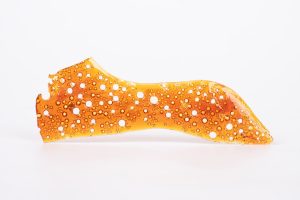
For example, butane and other gases can be used to create the well-known BHO hash (Butane Hash Oil) and its variants (Shatter, Sugar, Wax…). The problem with these gases is that they are toxic and, if the result is not purged properly, residues can remain in the hash. They are also dangerous methods, because the gases are flammable. Also, although the result is not strictly hash, the resin can be extracted as tinctures, with alcohol, or as oils, with olive oil.
Extracting hash from the living plant
This is the most primitive extraction method, very popular in regions of India or Pakistan. The result is usually known as charas hash. The process is as basic and simple as rubbing the buds of the plants with your hands until the resin sticks to your fingers. Then you simply remove it from your hands and compact it.
There are several things to bear in mind with this technique. First, choosing the right moment to do this rubbing, since if it is done too early the resin will still be “raw” and its effect very weak. Second, it is a painstaking and not very productive process: extracting one gram of hash takes roughly an hour of rubbing. And finally, although the quality of the resulting hash is excellent, it is a technique that can be aggressive towards the plant, and rubbing can degrade the buds. That's why it is usually done a couple of weeks before harvest, to let the plant regenerate the lost resin.
Nowadays, mechanised processes have been developed that achieve a similar result, though obviously not the same as the original, given its purely handcrafted nature.
Some of these extracts are used, together with kief (pollen), to make Moonrocks, flowers dipped in extract and coated with pollen.
Special processes in legal CBD hash
One particularity of CBD hash is that its THC concentration can end up higher than that of the hemp flowers, thereby exceeding the legal limits allowed for sale. For this reason, at the end of the process, it undergoes a cannabinoid analysis that certifies it keeps its THC levels within the legal limit of below 0.2%. If it exceeds them, that hash must go through an additional process.
Curing hash: the masters' signature
Pressing the resin is not the last step. The great masters of artisanal hash — like the legendary Frenchy Cannoli, who devoted his life to reviving the art of solventless hash — insisted on a stage that many forget: curing. Like a good wine, hash improves with time.
After pressing, the resin is stored well compacted (the Himalayan tradition moulds it into sealed balls, the temple balls) and left to mature in a cool, dark place for weeks or even months. During this rest the residual moisture redistributes, the terpenes round off and the aroma gains depth and complexity. A well-cured hash is smoother, tastier and more stable than a freshly pressed one.
How hash is made step by step
Although each method has its particularities, making hash always follows the same logic:
- Start with dry, cured material: CBD-rich flowers and the most resinous leaves, well dried.
- Separate the trichomes: dry with a sieve, with water and ice, or by rubbing the living plant.
- Collect the resin: the kief when dry, or the wet mass in the water methods.
- Dry the concentrate well: essential in the water methods to prevent mould.
- Press with pressure and gentle heat: until it forms a homogeneous plate, coin or ball.
- Cure: let the resin mature so it develops its full aroma and potency.
We've reached the end of this journey through the different methods of making hash. We hope you've enjoyed it although, without a doubt, the greatest satisfaction is seeing the result ;) We invite you to experience the sensations of the most relaxing hash with Cannactiva. Have a good trip!
Frequently asked questions about making hash
What is the best method to make CBD hash at home?
To get started at home, the most sensible options are the solventless methods: dry sieving (with a fine sieve, and even making use of the pollen that builds up in the grinder) and bubble hash with water and ice. Both are safe, use no flammable substances and give a clean concentrate. Gas extractions such as BHO are best left to professionals with the right equipment, given their risk of fire and residues.
How much flower do you need to obtain hash?
It depends on the method and how resinous the strain is. As a rough guide, dry sieving usually yields around 5-10% of the flower weight, and the water-and-ice method can range between 5 and 15%. In other words, from 100 g of dried flower you obtain roughly 5 to 15 g of good-quality hash.
How do you store hash once it's made?
In an airtight container, in a cool, dark, dry place, away from the light and heat that degrade cannabinoids and terpenes. That way it stays in good condition for months. You'll find more details in our guide on how to preserve cannabis.


