Is CBD Legal in Spain? Legal Status of CBD and Hemp

Is CBD legal in Spain? The short answer is yes: buying and selling CBD products is legal in Spain, as long as they come from industrial hemp and their THC content stays below the legal limit.
If you want to enjoy the best legal CBD in Spain, at Cannactiva you can buy CBD flowers and top-quality hemp derivatives. You can start with our comparison of the best CBD buds — these are some of the most popular strains:
What is CBD and why doesn’t it get you high?
Cannabidiol (CBD) is one of the main compounds in the cannabis plant. Unlike THC, CBD is not psychoactive: it doesn’t get you high or alter mental perception.
The World Health Organization (WHO) confirmed this in its 2018 report: CBD is well tolerated, has a good safety profile and shows no potential for abuse or dependence. In fact, it recommended that neither CBD nor the hemp flower be listed as controlled substances. In other words: CBD is not a narcotic.
This article offers a detailed, technical and well-informed perspective on the current situation of the hemp and CBD sector in Spain, with leading experts at both national and European level.
Is CBD legal in Spain? What the law says today (2026)
Yes, you can buy CBD legally in Spain. Products such as CBD flowers, hash and oils are sold normally in CBD shops like Cannactiva, protected by European industrial hemp regulations and by a ruling of the Court of Justice of the European Union, binding on all member states (the Kanavape case, 2020), which confirmed that CBD is not a narcotic and can move freely throughout the Union.
The problem is that this legality coexists with Spanish rules that contradict it. The clearest example is the Public Safety Act (the “Gag Law”), which allows anyone carrying cannabis in a public place to be fined, even if the product contains no THC and is not a narcotic. Proceedings are also opened against shops and growers. It is an unfair and contradictory situation that the sector and consumers themselves have been denouncing for years, and that most courts end up dismissing.
You can buy and sell it, but not grow it: the Spanish CBD paradox
Here lies the great contradiction. Spain allows the import and sale of hemp flowers and CBD from other EU countries, but does not allow hemp to be grown within the country. The very same product that is bought and sold in a Spanish shop cannot be produced in Spain.
In other words, growing hemp to obtain the flower is not permitted — regardless of THC content — so companies are forced to grow in other member states and import it. The result is absurd: production has to be taken out of the country and brought back in under the umbrella of the European single market, with the harm this causes to Spanish farmers and businesses.
Is hemp legal in Europe? The framework that protects CBD
European industrial hemp and the 0.3% THC limit
Industrial hemp is an agricultural crop permitted throughout the European Union. This was explained at the forum by Fernando Mosquera, from the Ministry of Agriculture, Fisheries and Food: Spanish law recognises it as such provided it meets two conditions:
- Coming from seeds of certified varieties in the EU common catalogue.
- Keeping a THC content below 0.3% (the Common Agricultural Policy threshold).
The Ministry itself acknowledges the problem: the hemp flower is not included among those industrial-hemp uses, and leaving it out is an obstacle for the sector, both because of the legal uncertainty and the brake on CBD derivatives. It also admits that the interpretation regarding the whole plant varies between member states, which adds even more uncertainty.
And here Spain’s incoherence becomes clear, because Europe is moving in exactly the opposite direction: the European Commission has proposed expressly recognising that all parts of the hemp plant — including leaves and flowers — are agricultural raw material when they come from authorised varieties. In addition, the European industry association EIHA, in its proposal for the 2028-2032 CAP (February 2026), is calling for a harmonised threshold of 1% THC, arguing that the current 0.3% does not reflect agronomic reality. While the EU moves towards the whole plant and 1%, Spain still fails to regulate even the basics.
And how can CBD be consumed legally?
Not all forms of use are regulated the same way in every country. Broadly speaking:
- Topical use (CBD creams and cosmetics) is legal across the entire European Union.
- CBD flowers and CBD hash are sold in most EU countries for decorative, aromatic and collectible purposes; only a few — such as Switzerland, Austria or Belgium — regulate them for smoking (as tobacco substitutes).
- Oral or food use is subject to the European Novel Food regulation, whose EU authorisation, through EFSA, is still pending.
We break this down by format and country in our guide to the legal forms of CBD use.
Why is CBD not a narcotic? The legal analysis in depth
This is the most technical part, but it is the one that fundamentally dismantles the idea that “hemp and CBD are narcotics”. The reasoning is developed by criminal law professor Araceli Manjón-Cabeza Olmeda — former director of the Cabinet of the National Drugs Plan and director of the 21st Century Drugs Chair at the UCM.
What does the 1961 Single Convention say?
The Convention states that “every plant of the genus Cannabis” falls under control, but the expert shows that it is not as categorical as it seems. She breaks it down into four key points:
Context. The definition is preceded by a decisive clause: “unless the context otherwise requires”. The drafters of the Convention did not even know about CBD, so the context requires a different reading. This is what the CJEU stressed in 2020 (the Kanavape case): no literal, incomplete interpretations. Conclusion: even though they come from the cannabis plant, neither non-psychoactive hemp nor CBD are narcotics.
Exclusions. The Convention excludes hemp from control (Article 28.2). It mentions “hemp (fibre and seeds) and horticultural uses”, but those purposes are only examples: other industrial uses are not excluded.
This reading was later endorsed by the International Narcotics Control Board (INCB) of the UN itself: in its circular E/INCB/NAR/C.L.20/2024 it acknowledged that CBD is not subject to international control and that the reference to “fibre and seeds” is only an example of industrial use, not the only possibility allowed.
The Spanish Narcotics Act of 1967. When transposing that Article 28, it removed the horticultural purposes — the argument many cling to — but in referring to industrial purposes it did not limit them to “fibre and seeds”. In other words, the law does not exclude other industrial purposes; otherwise, it would have expressly restricted them.
The exception (Article 29). If the Convention allows a narcotic to be denatured to prevent its harmful uses, there is all the more reason to allow a product that is already born denatured from the seed, such as non-psychoactive hemp. And the 1971 Convention leads to the same conclusion: only THC is controlled, not CBD.
And the European Union? The Kanavape case
The same happens at European level. The framework decision defining the offence of drug trafficking has been expanded five times to include new psychotropic substances and synthetic cannabinoids, but CBD has not entered any of those lists. In the EU, therefore, CBD is not controlled either, and the hemp plant is regulated and even eligible for subsidies.
The 2020 CJEU ruling says it bluntly: natural whole-plant CBD is not psychotropic, is not a narcotic and is not psychoactive, forms part of the Union’s trade, and any ban is contrary to the Treaty on the Functioning of the EU. As it is a preliminary ruling, its interpretation is binding on all member states.
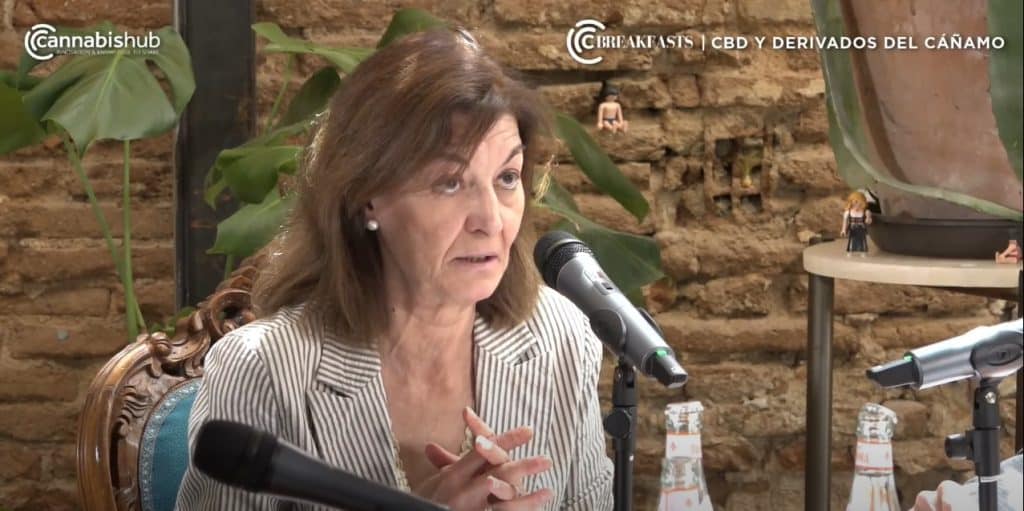
As the professor concludes: “We are not dealing with controlled products, so they cannot be the material object of the crime of drug trafficking. (...) What is needed is to regulate the market”.
The experts’ view (Cannabis Breakfast)
Europe is ahead: the EIHA and the key rulings
Giacomo Bulleri, a lawyer specialising in hemp regulation in Italy (Studio Legale Bulleri, EIHA), points out that the European trend is clear: moving towards the legality of the whole plant. This is backed by rulings such as the Hammarsten case (2003) and the Kanavape case (2020), and countries like the Czech Republic, Croatia, Poland, France and Germany have already adopted legislation along those lines. Restricting specific parts of the plant, he notes, is contrary to European law.
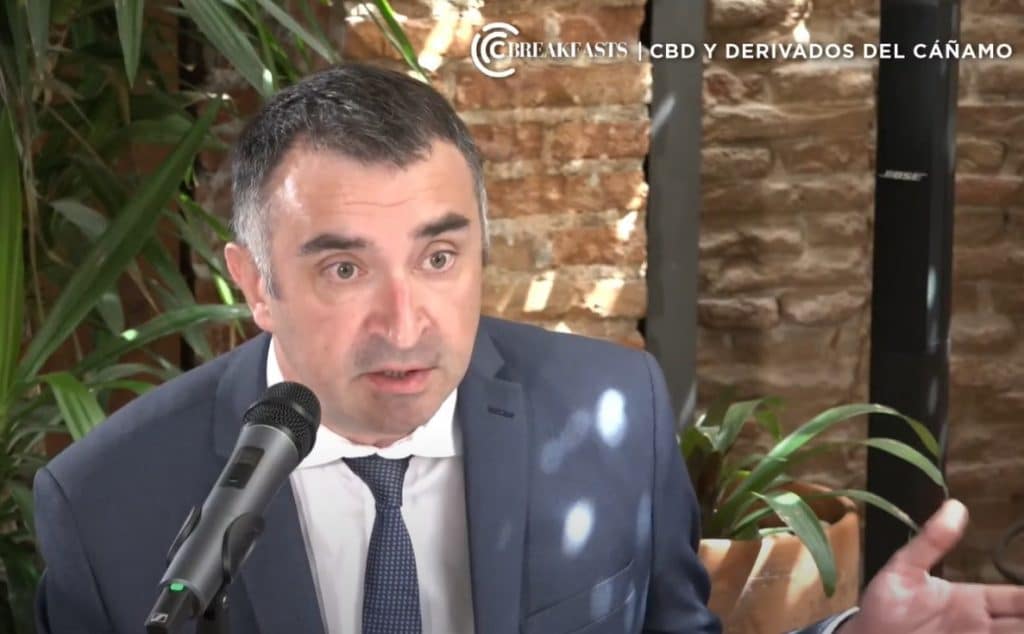
Lorenza Romanese, director of the European Industrial Hemp Association (EIHA), was emphatic: “Compared with every European country, I don’t think there is a worse country than Spain when it comes to regulating industrial hemp”.
The figures prove her right: according to the Cannamonitor 2025 report, the area of hemp cultivation in Spain collapsed by 91% between 2020 and 2024 (from 688 to barely 62 hectares), compared with the 22,000 hectares in France or the more than 7,000 in Germany. Spain is the only EU country with a declining cultivation trend.
From Germany, Florian Pichlmaier (EIHA board) explains how the legalisation of cannabis and the removal of hemp from the list of narcotics have given German farmers security and boosted investment, while Spanish companies are forced to import.
The enormous potential of hemp
Jose Luis Llerena, director of the National Agri-Food Technology Centre (CTAEX) and chairman of the ClusCann cluster, recalled the versatility of hemp: textiles, biodegradable plastics, paper, building materials (hempcrete), protein-rich food and much more. It is also a sustainable crop: it needs less water and pesticides, decontaminates soils and captures CO₂. The problem is that growing it for fibre and seed alone is not profitable: the whole plant must be allowed in order to harness its full potential.
The situation of Spanish companies
Beyond the cultivation paradox, Isidre Carballido sets out the other two fronts that CBD companies face:
- Goods seized in transit: it is common for parcels to be intercepted because they “smell of cannabis” (in reality, the smell comes from terpenes, common to all varieties), which triggers proceedings for alleged drug trafficking.
- Inspections of shops: physical stores can face seizures and legal cases for alleged harm to public health.
They almost always end up dismissed, with an absurd waste of public money. As he sums it up: “being accused of being drug traffickers for selling CBD, facing prison sentences, when there is a well-established market and thousands of CBD shops open, is, on the one hand, humiliating and insulting”. For him, hemp is the best gateway to cannabis regulation: “all we’re asking is to be allowed to stay out until 1”.
Persecution and the regulatory crisis
Bernardo Soriano, a lawyer at S&F Abogados and one of the leading voices among cannabis-expert lawyers in Spain, dismantles the supposed “natural decline” of cultivation: “In Spain, people are starting to be imprisoned for growing hemp”. Since fines depend on the quantity seized, there are proceedings claiming up to €20 million, although most end up dismissed or acquitted.
Today hemp can only be grown for flower with a special authorisation from the AEMPS, which is costly and, moreover, does not cover CBD flowers or their derivatives, because the AEMPS only has authority over medical and health purposes. (Note: regulating hemp is not the same as medical cannabis.)
His image is very clear: it is the container versus the content. “Do we control a bottle because of its shape, regardless of whether it contains water, beer or wine?”. If something is not a narcotic, it cannot be a drug or a crime. That is why more and more judges turn to the National Institute of Toxicology to calculate the psychoactivity index (the UN’s ST/NAR/40 protocol), which takes into account THC and other cannabinoids such as CBD or CBN. With that calculation, even samples above 0.7-0.8% THC may not be considered narcotics.
In fact, as the lawyer recalls, “a content below 0.3% THC is not a limit established anywhere”: it only serves to make a crop eligible for subsidies.
The 0.3% threshold is, moreover, of taxonomic, not health-related, origin, and several countries have raised it: the Czech Republic (since January 2025) and Luxembourg have set it at 1%, and the Spanish Congress of Deputies itself called for it to be set at 1% in a non-legislative motion in January 2023.
The final absurdity: when a case is dismissed in the criminal courts because there is no narcotic, some courts refer it to the administrative route, where they have invented the figure of the “narcotic authorised for industrial uses”. Since that use cannot be proven, it is presumed to be a drug… with the criminal case already dismissed!.
Fine for CBD in Spain: can it be appealed?
Users are also harmed: the Public Safety Act (the “Gag Law”) allows people to be fined for carrying CBD, even if it is not a narcotic. The good news is that these fines can be appealed: we explain how much the CBD fine is and how to appeal it.
Challenges and solutions: where is regulation heading?
The experts agree on the major challenges facing hemp in Spain:
- Comparative grievance with the rest of the EU.
- Loss of competitiveness, opportunities and investment, which go to other member states.
- Confusion between theoretical illegality and practical tolerance.
- Violation of the rights of users.
- Failure to comply with CJEU rulings.
- Overload of the administration and waste of public resources.
The solution already existed on paper: a Non-Legislative Motion for the comprehensive regulation of hemp. The sector’s request is to dust it off and work on it with all the stakeholders involved.
Since that meeting there have been developments, but not the hemp regulation the sector is calling for. In October 2025 Spain approved Royal Decree 903/2025, which regulates medical cannabis for the first time through compounded formulations in the hospital setting. It is a separate piece of regulation that does not solve the situation of CBD or non-medical hemp flowers and keeps the dependence on imports. Faced with that vacuum, the sector has taken the matter to court.
Frequently asked questions about the legality of CBD in Spain
Are CBD flowers and hash legal?
Yes, with caveats: they are sold as a product derived from industrial hemp, for aromatic or collectible purposes, not for human consumption. We review the legal forms of CBD use by country.
Is CBD the same as medical cannabis?
Medical cannabis is governed by separate regulation (in Spain, RD 903/2025). When we talk about the legality of CBD and industrial hemp we are not referring to medical cannabis.
Can I drive or travel with CBD?
It’s worth being careful: check how CBD affects driving, whether it can show up positive on a drug test and what to bear in mind when travelling with CBD.
About this talk: the Cannabis Breakfast
The contributions gathered in this article come from the second edition of the Cannabis Breakfast on the regulation of industrial hemp in Spain, held in Madrid in May 2024 and organised by CannabisHub and the 21st Century Drugs Chair. If you want to dig deeper into the debate, you can watch the full talk:
https://www.youtube.com/watch?v=bwUG3o-75AA
Thank you for reading this far. At Cannactiva we believe in the full potential of the hemp plant in our country, and we will keep working in the same direction. Thank you for being there!
Related references
- World Health Organization (WHO). Cannabidiol (CBD): Critical Review Report, 2018.
- The criminal atypicality of the cultivation and/or commercialisation of non-psychoactive cannabis (Alberto Daunis Rodríguez). Revista de Derecho Penal y Criminología, 3rd Series, No. 30 (July 2023).
- Court of Justice of the European Union (19 November 2020), Kanavape case. Press release No. 141/20.
- EFSA NDA Panel. Statement on safety of cannabidiol as a novel food. EFSA Journal. 2022;20(6):e07322.
- 1961 United Nations Single Convention on Narcotic Drugs.
- Schedule IV of the 1961 Single Convention.
- Organic Law 4/2015 on the protection of public safety (the “Gag Law”).
- Table of Minimum Psychoactive Doses of the National Institute of Toxicology.
- UN ST/NAR/40 protocol for cannabis analysis.
- The Common Agricultural Policy: 2023-27.
- Regulations (EU) No 1305/2013 and 1307/2013.
- International Narcotics Control Board (INCB). Circular E/INCB/NAR/C.L.20/2024.
- Royal Decree 903/2025, of 7 October (BOE No. 243, of 9 October 2025).
- European Industrial Hemp Association (EIHA). Proposal for the 2028-2032 CAP: whole plant and 1% THC (via MMJDaily, Feb. 2026).


